


RTI responses reveal uneven access to campus counseling, with several institutes reporting thousands of students per professional and varying levels of full-time, visiting and online mental health services.
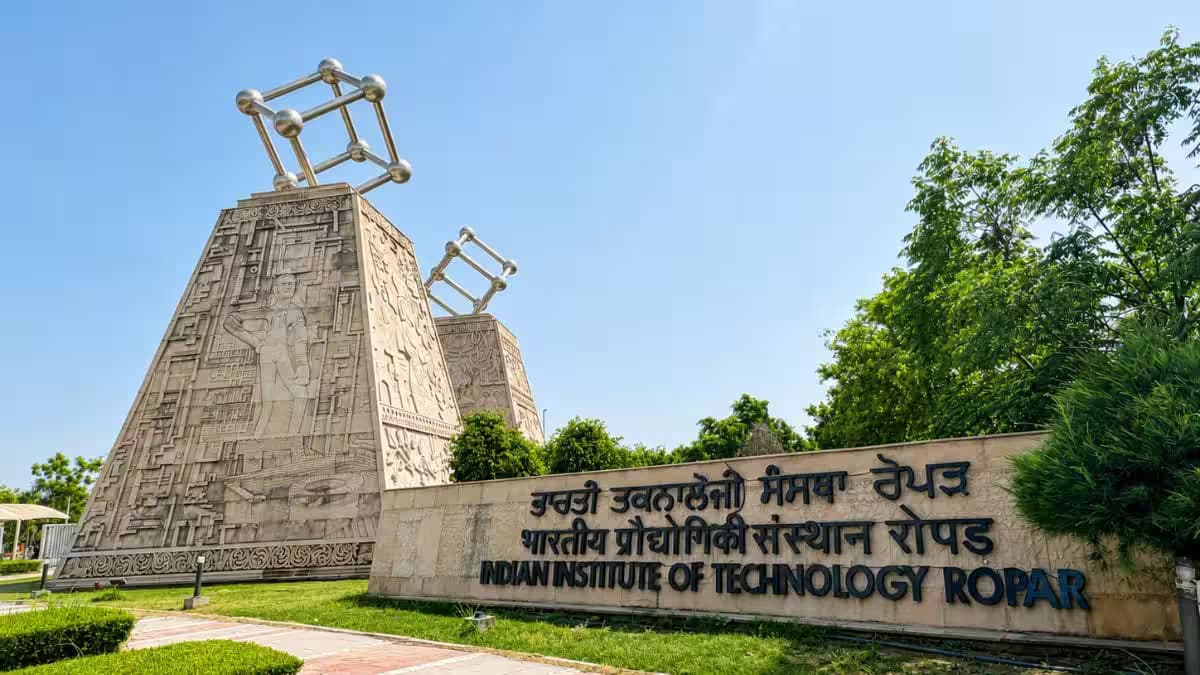
Only three of the 16 Indian Institutes of Technology (IITs) that responded to Right to Information (RTI) queries have met the University Grants Commission's (UGC) recommended counsellor-to-student ratio, raising concerns about the availability of mental health support at some of India's premier engineering institutions.
The findings, based on an analysis of RTI responses compiled by Pranav Jeevan, an alumnus of IIT Madras, reveal considerable differences in the availability of mental health professionals across the participating institutes.

At some campuses, a single mental health professional is responsible for thousands of students. IIT (BHU) has one professional for every 4,750 students, while IIT Patna has one for every 1,950 students.
The UGC recommends one mental health professional for every 500 students at larger higher education institutions. For smaller institutions with at least 100 students, the recommended ratio is one counsellor for every 100 students.
However, the RTI analysis found that only IIT Ropar, IIT Dharwad and IIT Indore met the recommended benchmark among the 16 institutes that provided information.
The figures highlight the gap between the recommended availability of mental health services and the resources currently reported by several IITs. They also raise questions about whether students can access timely professional assistance when dealing with academic pressure, personal difficulties and other mental health concerns.
Counsellor availability varies widely across IIT campuses
The RTI responses show that several IITs have substantially fewer mental health professionals than required under the UGC recommendations, despite having large student populations.
IIT Kharagpur reported 13 counselling professionals for 14,764 students, translating into one professional for every 1,135 students. IIT Roorkee had eight professionals for 10,536 students, with a ratio of one for every 1,317 students.
The situation was considerably more challenging at IIT (BHU) Varanasi, where two professionals were available for a student population of 9,500. This amounts to one professional for every 4,750 students, the highest student-to-professional ratio among the institutes listed in the analysis.
IIT Patna also reported only two professionals for its 3,899 students, resulting in a ratio of one for every 1,950 students.
IIT (ISM) Dhanbad recorded one mental health professional for every 2,589 students. IIT Mandi reported two professionals for 1,151 students per professional, while IIT Guwahati had a ratio of one for every 1,262 students.
Other institutes also reported ratios above the UGC's recommended benchmark. IIT Palakkad had one professional for every 829 students, followed by IIT Jammu at 1:735, IIT Bhilai at 1:592, IIT Tirupati at 1:567 and IIT Gandhinagar at 1:551.
In comparison, IIT Jodhpur reported seven professionals for a ratio of one for every 573 students. IIT Ropar had the most favorable ratio among the institutes, with one professional for every 369 students.
IIT Dharwad reported a ratio of one professional for every 438 students, while IIT Indore recorded one for every 477 students. Both institutes, along with IIT Ropar, were among the three that met the UGC's recommended ratio.
The RTI responses also indicate that the nature of mental health services differs across institutions, with some relying on a combination of full-time counsellors, visiting psychiatrists and online services.
IIT Guwahati reported having four full-time student counsellors and two part-time psychiatrists. The psychiatrists visit the institute hospital twice a week.
IIT Jodhpur, meanwhile, reported a wider range of services, including residential counsellors, a clinical psychologist, a visiting psychiatrist and round-the-clock online counselling facilities.
However, the comparison comes with certain limitations. The institutes have not followed a uniform method while reporting their mental health workforce through RTI responses.
Some institutions have included visiting and contractual professionals in their numbers, while others have counted only full-time employees. Consequently, the reported ratios may not be directly comparable across all 16 IITs.
Student-to-mental health professional ratio across 16 IITs
IIT | Mental health professionals | Student-to-professional ratio |
| IIT Kharagpur | 13 | 1:1,135 |
| IIT Roorkee | 8 | 1:1,317 |
| IIT (BHU) Varanasi | 2 | 1:4,750 |
| IIT Jodhpur | 7 | 1:573 |
| IIT Ropar | 8 | 1:369 |
| IIT Patna | 2 | 1:1,950 |
| IIT Tirupati | 3 | 1:567 |
| IIT Guwahati | 4 | 1:1,262 |
| IIT Jammu | 2 | 1:735 |
| IIT Gandhinagar | 6 | 1:551 |
| IIT Dharwad | Not specified | 1:438 |
| IIT Mandi | 2 | 1:1,151 |
| IIT Indore | 6 | 1:477 |
| IIT Palakkad | 2 | 1:829 |
| IIT (ISM) Dhanbad | Not specified | 1:2,589 |
| IIT Bhilai | 3 | 1:592 |
RTI data reveals student suicides at IITs
Apart from the availability of mental health professionals, the RTI queries also sought information about student deaths by suicide at the participating institutions.
IIT Kharagpur reported 10 student deaths by suicide between 2022 and October 2026. Its response recorded one case each in 2022, 2023 and 2024, followed by five cases in 2025 and two in 2026.
IIT Roorkee reported three cases during the period covered by the responses, including two in 2024 and one in 2025.
IIT (BHU) recorded three student deaths by suicide between 2022 and 2024. IIT Guwahati reported two cases, one each in 2022 and 2024.
IIT (ISM) Dhanbad reported one case in 2022 and another in 2025. These disclosures add to concerns about student well-being at the country's premier technical institutions, particularly when considered alongside the gaps in the availability of professional counselling services.
The findings come at a time when student deaths and demands for better mental health support have drawn renewed attention to campus conditions at several IITs.
Recent student deaths trigger concern and protests
At IIT Bombay, three student deaths by suicide were reported in 2026. One of the cases involved Sahil Wakode, a second-year student who died on Sept 18.
His death was followed by protests on the campus, with students raising concerns about student welfare and the institute's response to issues affecting their well-being.
The incident also brought renewed attention to the support systems available to students navigating academic expectations and personal challenges at the institution.
At IIT Delhi, the death of 31-year-old MSc Physics student Rishikesh Kumar in August also led to student protests.
The institute subsequently formed an external inquiry committee to examine the circumstances surrounding the incident. The committee is chaired by retired Delhi High Court judge Justice Mukta Gupta.
The RTI findings, which bring together information on counselling infrastructure and reported student suicides, underline the need to examine the availability and accessibility of mental health services across IIT campuses.
While some institutions have reported counselling facilities, visiting specialists and online support, the student-to-professional ratios at several others remain considerably higher than the UGC's recommendations.
The figures also point to the importance of consistent reporting of mental health staffing across institutions, particularly when visiting, contractual and full-time professionals are counted differently.
As concerns over student suicides continue to surface at India's leading technical institutions, the availability of adequate counselling staff and accessible mental health services remains an important part of the wider discussion on student welfare.
As student suicides raise alarm, RTI exposes mental health support gaps across IITs

Narayana Business School recognised by Radio City among brands driving Gujarat’s growth

Make in India in Defence: Indian Navy Signs ₹53,866-Crore Deal for 8 Indigenous Warships

NTA empanels 5,000 experts in major overhaul after NEET-UG paper leak
Odisha Laptop Scheme 2026: Rs 30,000 Assistance for 15,000 Meritorious Class 12 Students
As student suicides raise alarm, RTI exposes mental health support gaps across IITs
Make in India in Defence: Indian Navy Signs ₹53,866-Crore Deal for 8 Indigenous Warships
NTA empanels 5,000 experts in major overhaul after NEET-UG paper leak
Cyclone Murasu Makes Landfall in Andhra Pradesh: Why Did It Form, What Does Its Name Mean and Which States Are Affected?

SC Allows Green Crackers in Delhi-NCR for Two Days During Diwali 2026; Ban Returns November 9

As student suicides raise alarm, RTI exposes mental health support gaps across IITs
Narayana Business School recognised by Radio City among brands driving Gujarat’s growth
Make in India in Defence: Indian Navy Signs ₹53,866-Crore Deal for 8 Indigenous Warships
NTA empanels 5,000 experts in major overhaul after NEET-UG paper leak
Odisha Laptop Scheme 2026: Rs 30,000 Assistance for 15,000 Meritorious Class 12 Students
As student suicides raise alarm, RTI exposes mental health support gaps across IITs
Make in India in Defence: Indian Navy Signs ₹53,866-Crore Deal for 8 Indigenous Warships
NTA empanels 5,000 experts in major overhaul after NEET-UG paper leak
Cyclone Murasu Makes Landfall in Andhra Pradesh: Why Did It Form, What Does Its Name Mean and Which States Are Affected?
SC Allows Green Crackers in Delhi-NCR for Two Days During Diwali 2026; Ban Returns November 9
Copyright© educationpost.in 2026 All Rights Reserved.