


Severe Cyclonic Storm Murasu crossed the south Andhra Pradesh coast near Ongole on November 3, bringing winds of up to 120 kmph, heavy rainfall and widespread damage. The storm, whose name comes from the Tamil word for a traditional drum, has also raised concerns about flooding, agricultural losses and infrastructure damage across eastern India.
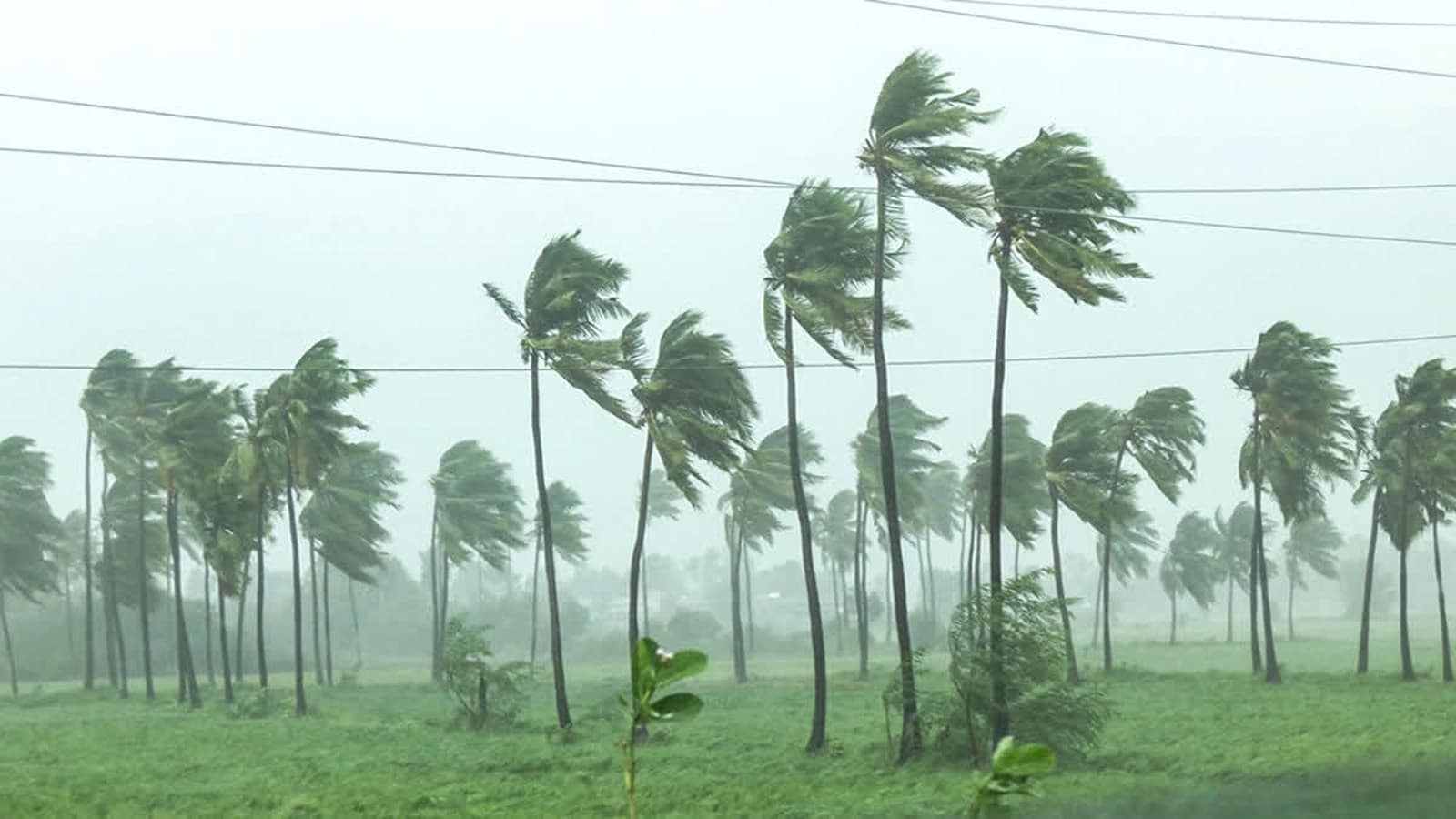
Severe Cyclonic Storm Murasu made landfall near Ongole in Andhra Pradesh on November 3, 2026.
India's eastern coastline is dealing with another severe cyclonic storm as Murasu made landfall along the south Andhra Pradesh coast in the early hours of November 3, 2026. The storm brought strong winds, heavy rainfall and flooding to several coastal districts, damaging trees, electricity infrastructure, fishing boats and standing crops.
According to the India Meteorological Department, the severe cyclonic storm crossed the coast between Nellore and Narsapur, close to Ongole, between 3:30 am and 5:30 am. It recorded sustained wind speeds of 100–110 kmph, with gusts reaching 120 kmph. Although the cyclone is expected to weaken as it moves inland, the threat of heavy rainfall, waterlogging and localized flooding remains across parts of Andhra Pradesh and neighboring states.

What Is Cyclone Murasu and When Did It Form?
Cyclone Murasu is a severe tropical cyclone that developed over the Bay of Bengal in late October 2026. The weather system initially developed as a low-pressure area over the Bay of Bengal before gradually intensifying into a depression.
According to IMD bulletins, the system developed through the following stages:
| Date | Development |
|---|---|
| October 31, 2026 | The system intensified into a depression over the Bay of Bengal. |
| November 1, 2026 | It strengthened into a deep depression and subsequently became Cyclonic Storm Murasu. |
| November 2, 2026 | Murasu intensified into a Severe Cyclonic Storm. |
| November 3, 2026 | The cyclone crossed the south Andhra Pradesh coast near Ongole. |
The system strengthened as it moved northwestward across the Bay of Bengal towards India's eastern coastline. The IMD tracked its movement using satellite observations and Doppler weather radars.
Why Did Cyclone Murasu Develop Over the Bay of Bengal?
Cyclones generally develop over tropical oceans when atmospheric and oceanic conditions support the formation and intensification of low-pressure systems. In Murasu's case, the system originated from a low-pressure disturbance over the Bay of Bengal and gradually gained strength under favorable atmospheric conditions.
Several factors contribute to cyclone formation:
1. Warm ocean temperatures: Warm sea surfaces provide moisture and energy that support the development of thunderstorms and cyclonic systems.
2. Atmospheric moisture: High moisture levels help sustain thunderstorm activity, allowing a weather disturbance to organize and intensify.
3. Low-pressure conditions: A developing low-pressure system encourages air to move towards its center, supporting the formation of organized cloud systems.
4. Earth's rotation: The Coriolis effect helps create the rotational movement associated with tropical cyclones.
5. Low vertical wind shear: Favorable wind conditions at different atmospheric heights allow a developing cyclone to maintain its structure and strengthen.
Why Is the Cyclone Named Murasu? What Does the Name Mean?
Murasu has a cultural connection with southern India. Murasu is a Tamil word referring to a traditional large drum, historically used for announcements, celebrations, public gatherings and warnings. The instrument was used to communicate important messages to large groups of people, making it an important part of traditional Tamil culture.
The name was contributed by India to the official tropical cyclone naming list maintained under the World Meteorological Organization (WMO) and the United Nations Economic and Social Commission for Asia and the Pacific (ESCAP). Interestingly, the cyclone did not receive this name because it was approaching an Indian coastline. Cyclone names follow a predetermined regional sequence, irrespective of where a storm is expected to make landfall.
Who Names Cyclones in India?
The naming of cyclones over the North Indian Ocean follows an international system coordinated through the WMO/ESCAP Panel on Tropical Cyclones.
Thirteen countries participate in the regional naming system:
Each country contributes 13 names, creating a list of 169 names.
The India Meteorological Department's Regional Specialized Meteorological Centre in New Delhi is responsible for naming qualifying tropical cyclones over the Bay of Bengal and Arabian Sea. In the current naming sequence, Bangladesh's contribution, Arnab, was followed by India's Murasu. The next name in the sequence is Iran's Akvan. Cyclone names help meteorological agencies, governments and the public communicate weather warnings without confusion.
Cyclone Murasu Landfall: Which Areas Have Been Affected?
Andhra Pradesh experienced the direct impact of Murasu as the cyclone crossed its southern coastline near Ongole. According to reports published on November 3, several coastal districts experienced heavy rainfall, strong winds and infrastructure damage.
Kothapatnam in Prakasam district recorded 16.4 cm of rainfall between 8:30 am on November 2 and 5 am on November 3. Prakasam, Bapatla, Palnadu and Guntur were among the districts reporting significant effects. The IMD had also warned of a storm surge of approximately 1–1.5 metres above the astronomical tide in vulnerable coastal areas, with Bapatla, Krishna and Prakasam districts identified as areas of concern.
Impact of Cyclone Murasu on Other States
Although Andhra Pradesh faced the direct landfall, Murasu also influenced weather conditions in neighboring states.
Telangana: The IMD forecast heavy to very heavy rainfall at isolated locations, raising concerns about waterlogging and localized flooding.
Odisha: Southern districts faced rainfall warnings, with authorities monitoring the possibility of heavy rainfall in vulnerable areas.
Tamil Nadu: Northern Tamil Nadu experienced heavy rainfall, particularly around Chennai. Rainwater accumulation disrupted normal activities, while flight cancellations and school closures were reported ahead of the cyclone's landfall.
Chhattisgarh: The IMD also forecast rainfall at several locations, with isolated heavy spells possible.
What Happens After Cyclone Murasu Makes Landfall?
A cyclone does not disappear immediately after crossing the coastline. As it moves inland, it gradually loses the warm ocean moisture and energy that sustain its intensity. However, it can continue producing heavy rainfall and strong winds. According to the IMD's November 3 forecast, Murasu was expected to weaken into a cyclonic storm by the afternoon and further into a deep depression by midnight. The immediate concerns include flash floods, agricultural losses, damaged infrastructure and disruption to transportation. Authorities have also been working to clear fallen trees, restore essential services and assist affected communities.
Why Cyclone Murasu Matters
Murasu is significant not only because of its impact on Andhra Pradesh but also because it highlights the vulnerability of India's eastern coastline to repeated tropical cyclones. Its arrival shortly after Cyclone Arnab has placed additional pressure on disaster-management authorities and coastal communities.
The situation also highlights the importance of early-warning systems, evacuation arrangements and coordination between meteorological agencies and state governments. While Murasu is expected to weaken, its consequences may continue through rainfall, flooding and infrastructure damage even after the storm loses its cyclonic intensity.

Narayana Business School recognised by Radio City among brands driving Gujarat’s growth

NTA empanels 5,000 experts in major overhaul after NEET-UG paper leak

Odisha Laptop Scheme 2026: Rs 30,000 Assistance for 15,000 Meritorious Class 12 Students

Delhi Schools Asked to Enforce SOP for Drug-Free Campuses, Set Up Anti-Tobacco Committees
Cyclone Murasu Makes Landfall in Andhra Pradesh: Why Did It Form, What Does Its Name Mean and Which States Are Affected?
NTA empanels 5,000 experts in major overhaul after NEET-UG paper leak
Cyclone Murasu Makes Landfall in Andhra Pradesh: Why Did It Form, What Does Its Name Mean and Which States Are Affected?

When students struggle, schools must act: Gujarat introduces new mental health rules

What if AI could learn from your data without taking it? India's new framework explains how

UAE schools to begin three week winter break on December 14

Narayana Business School recognised by Radio City among brands driving Gujarat’s growth
NTA empanels 5,000 experts in major overhaul after NEET-UG paper leak
Odisha Laptop Scheme 2026: Rs 30,000 Assistance for 15,000 Meritorious Class 12 Students
Delhi Schools Asked to Enforce SOP for Drug-Free Campuses, Set Up Anti-Tobacco Committees
Cyclone Murasu Makes Landfall in Andhra Pradesh: Why Did It Form, What Does Its Name Mean and Which States Are Affected?
NTA empanels 5,000 experts in major overhaul after NEET-UG paper leak
Cyclone Murasu Makes Landfall in Andhra Pradesh: Why Did It Form, What Does Its Name Mean and Which States Are Affected?
When students struggle, schools must act: Gujarat introduces new mental health rules
What if AI could learn from your data without taking it? India's new framework explains how
UAE schools to begin three week winter break on December 14
Copyright© educationpost.in 2026 All Rights Reserved.