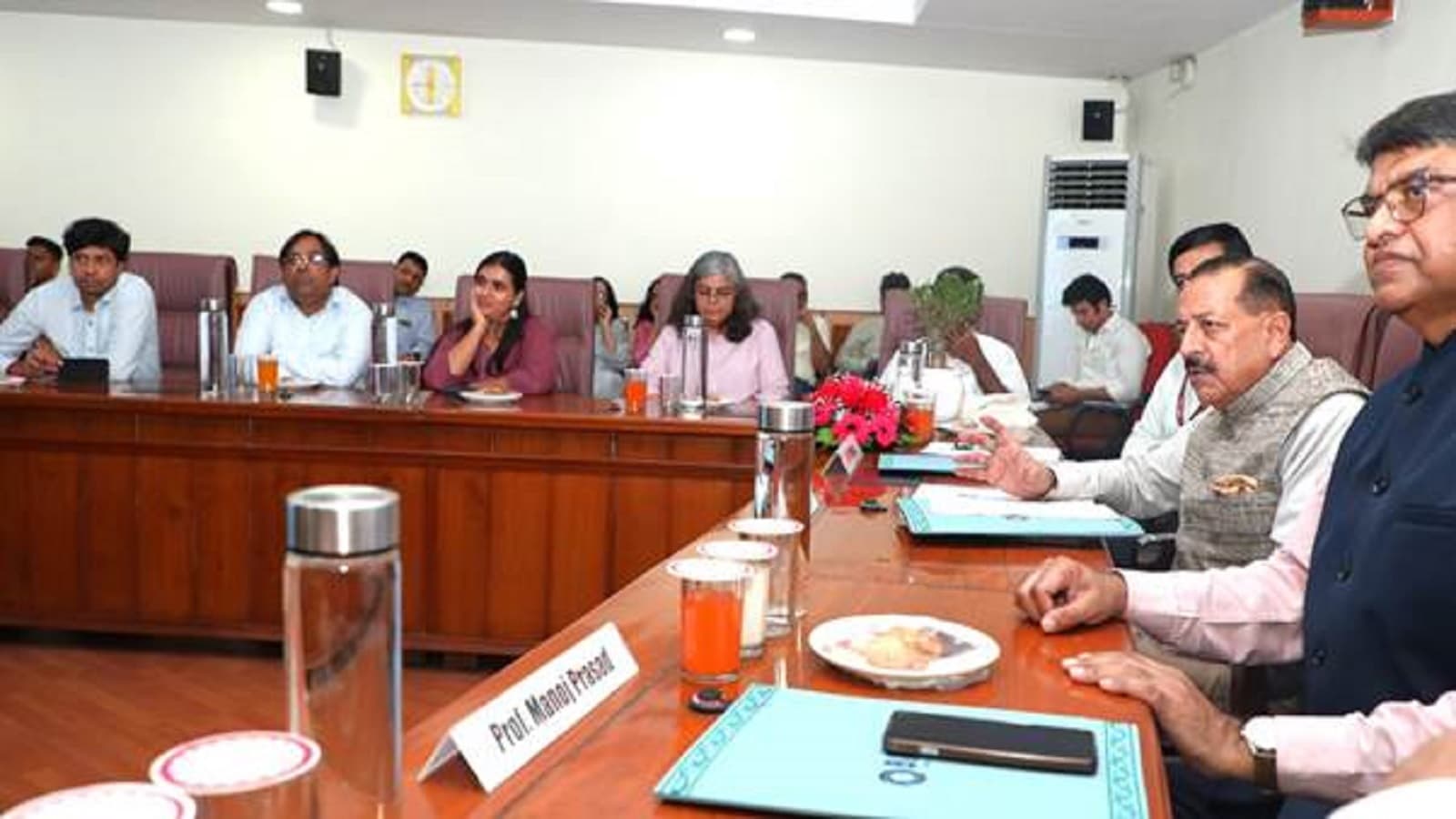
Union Minister of State for Science & Technology and Earth Sciences, Dr. Jitendra Singh on Tuesday inaugurated the "SpeedSeed Phenotyping and Resource Optimization for Unified Trait Analysis" (SPROUT) facility here, to advance development of climate-resilient crops. SPROUT at BRIC-National Institute of Plant Genome Research (BRIC-NIPGR) is a season-independent, controlled-environment facility designed for high-throughput phenotyping, precision stress screening and evaluation of germplasm, breeding populations, mutants, transgenic and genome-edited lines.
With a major focus on chickpea, the facility will help connect advances in genomics and genome editing with precise trait evaluation and breeding. The facility will strengthen the ability to move more efficiently from gene discovery to trait validation and ultimately to crop improvement. India is very geographically and agro-climatically diverse, and hence the ability to study and evaluate crops under different environmental conditions is critical for strengthening agricultural resilience.

The initiative is part of the wider BioE3 policy and the biotechnology push of the government, under which simultaneous breakthroughs are taking place in plant biotechnology and human biotechnology, the minister said. The BioE3 policy itself includes climate-resilient agriculture among its strategic thematic sectors. “Research in agriculture biotechnology has resulted in improved plant varieties and genotypes across economically important crops including rice, wheat, oilseeds, pulses, millets, fruits and vegetables, while work on plant microbiome interactions is opening possibilities for beneficial microorganisms to support sustainable crop productivity, soil health and nutrient availability,” Ministry of Science & Technology said in the statement.
Dr. Singh said that modern biotechnology must increasingly be translated into technologies that can respond to real agricultural challenges and provide tangible benefits to farmers. National Institute of Plant Genome Research (NIPGR) has also developed SpeedSeed, a separate technology for accelerated generation advancement. Optimised protocols can reduce the generation cycle in chickpea to approximately 40 days, considerably shortening conventional breeding and research timelines. “The technology can be used within SPROUT or adapted to other suitable controlled-environment facilities. Together, SPROUT and SpeedSeed can accelerate the evaluation and advancement of promising crop traits and shorten the path from research to improved varieties,” the statement noted.
Disclaimer: “This story has been published from a syndicated news feed. Only the headline and subtitle have been edited by EPN.”





.jfif&w=256&q=75)