


The law allows preventive detention in specified cases, empowers authorities to issue externment orders and provides for confiscation of properties linked to offences, drawing criticism from the Opposition and civil society groups.
The West Bengal Public Safety and Control of Anti-Social Activities Act, 2026, a law to prevent corruption, anti-social and rowdy activities in the state, has come into force after midnight on July 13.
The West Bengal Public Safety and Control of Anti-Social Activities Bill, 2026, was tabled and passed in the Assembly on June 29. Thereafter, the Bill received the assent of the West Bengal Governor, following which it became an Act.

The law gives more power to the police and general administration to act tougher to prevent corruption, anti-social and rowdy activities in the state, as it provides stricter clauses of penalty and punishments for offenders.
The Act, aimed at ensuring public safety, maintaining law and order and establishing strict control over organised anti-social activities, also distinguishes itself from the various sections of the Bharatiya Nyaya Sanhita (BNS), 2023, dealing with anti-social activities in two main provisions.
The first provision is that if a person is identified as a danger to public safety, the new state law will permit preventive detention for up to one year.
The opposition parties and a section of civil society have claimed this provision as draconian and argued that it would give a free hand to the police to detain anyone as per their "whims" and hence could be effective in silencing the opposition or criticising voices.
However, the ruling Bharatiya Janata Party (BJP) has put forth a counterargument that preventive detention will be effective only after going through the proper and detailed procedure.
For the implementation of this preventive detention provision, an advisory board will be constituted to decide whether such detention in the case of a particular individual is justified.
The advisory board will assess the reasonableness of the preventive detention. The detainee will be entitled to appoint a representative to defend himself before the board.
The board will be headed by a serving or former judge of the Calcutta High Court. It will also have two other members who are qualified as High Court judges.
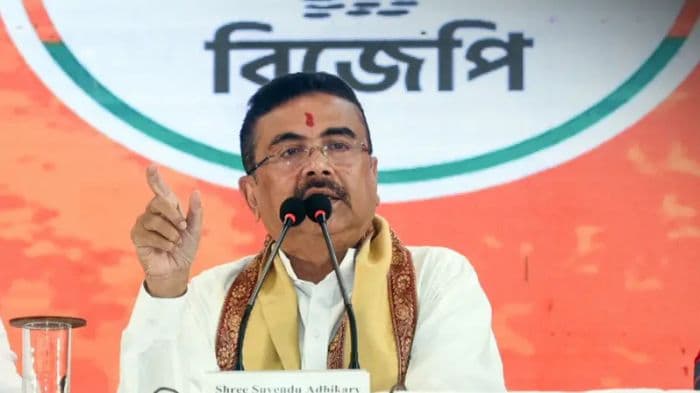
Chief Minister Suvendu Adhikari has himself allayed fears regarding preventive detention and said that the provision is not meant for "gentlemen" but for those with repeated criminal antecedents.
The second provision grants the state government the power to confiscate the property of a person involved in such an offence by invoking the appropriate provisions of the BNS.
The new law will also give the police the power to expel or prohibit a person from entering a particular area if they apprehend that the person might create unrest and provide protection to police personnel and government employees involved in its implementation.
The new law also has a provision for an “externment order”. If a District Magistrate or police officials of the rank of Superintendent or higher determine that a person, particularly a known criminal or troublemaker, poses a risk of inciting unrest in a specific location, they have the authority to mandate the individual's removal from that area or the entire district for a duration not exceeding one year.
“Except for the headline, no changes have been made to the story by Education Post staff.”

UK and EU plan three-year mobility scheme for young people as student fee talks continue

Auckland Writers Festival unveils first four authors for 2027 schools programme

New Zealand's Kāpiti college faces backlash over all-male head student appointments

Cornell researchers identify material with two forms of superconductivity, advancing quantum research

Foreign university campuses in India struggle to attract first batches despite global rankings
UK and EU plan three-year mobility scheme for young people as student fee talks continue

Japan's Okayama University uses robotics competitions to build engineering and workplace skills

Indian Navy Rescues 20 Crew from Hijacked Iranian Vessel off Somalia

Learning Mandarin, earning degrees in China: How Indonesian youth are preparing for global careers

China allows clinical medicine master's and PhD students to graduate without thesis under new pathway

UK and EU plan three-year mobility scheme for young people as student fee talks continue
Auckland Writers Festival unveils first four authors for 2027 schools programme
New Zealand's Kāpiti college faces backlash over all-male head student appointments
Cornell researchers identify material with two forms of superconductivity, advancing quantum research
Foreign university campuses in India struggle to attract first batches despite global rankings
UK and EU plan three-year mobility scheme for young people as student fee talks continue
Japan's Okayama University uses robotics competitions to build engineering and workplace skills
Indian Navy Rescues 20 Crew from Hijacked Iranian Vessel off Somalia
Learning Mandarin, earning degrees in China: How Indonesian youth are preparing for global careers
China allows clinical medicine master's and PhD students to graduate without thesis under new pathway
Copyright© educationpost.in 2026 All Rights Reserved.