


The proposed framework encourages universities to establish specialty-specific evaluation criteria, verify the quality of student projects and ensure professional qualifications retain rigorous academic and clinical standards.
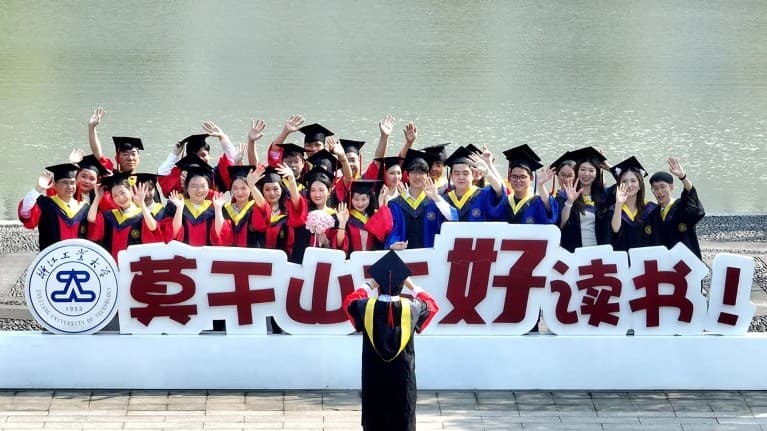
Medical postgraduate students in China will have a new option to complete their degrees without submitting a conventional research thesis, as the country expands an alternative graduation pathway based on practical achievements and professional contributions.
Under the proposed system, students pursuing professional master's and PhD degrees in clinical medicine can qualify for graduation by demonstrating work that addresses real-world medical challenges instead of completing a traditional thesis.

The development marks the second academic field in China to introduce this alternative route. Since 2024, master's and PhD students in engineering have been permitted to graduate from universities across the country by developing a new product, technique, project or installation.
On Oct 22, a group of government-appointed education advisers released draft policy documents outlining the proposed requirements for professional postgraduate students in clinical medicine.
The framework covers both master's and doctoral programs, which typically run for three years and are pursued by medical graduates and practicing physicians seeking advanced professional qualifications.
Unlike academic postgraduate programs, which emphasize research capabilities and the development of scholarly knowledge, professional degrees in China are designed to prepare students to address challenges within specific occupations.
Under the proposed framework, clinical medicine students will be able to demonstrate their capabilities through practical achievements, including an analysis of a specialized clinical case or an investigation into a problem affecting medical institutions.
The alternative route is intended to make postgraduate assessments more closely connected to the professional responsibilities students are expected to undertake after completing their degrees.
China is also preparing to extend similar graduation arrangements to other professional disciplines. According to the Academic Degrees Committee of the State Council, postgraduate programs in translation, agriculture, accounting and arts are expected to introduce comparable pathways.
These changes form part of wider reforms aimed at making professional postgraduate education more relevant to the requirements of different industries and occupations.
Practical achievements to replace conventional research requirements
The introduction of alternative graduation requirements has received support from higher education researchers, who argue that professional students should be evaluated according to the skills and contributions expected in their respective fields.
Futao Huang, a higher education policy researcher at Hiroshima University in Higashihiroshima, Japan, said the reforms represent a positive development because students preparing for professional careers should receive training and assessments that reflect the nature of those occupations.
However, he cautioned that introducing a practical achievement pathway would require clear evaluation mechanisms to maintain academic and professional standards.
“The real challenge is to develop credible, transparent and profession-specific standards for assessing practical achievements,” Huang adds.
The proposed system would allow clinical medicine students to demonstrate their professional capabilities through work that has a direct connection with medical practice.
Rather than focusing exclusively on producing a conventional academic document, students could be evaluated on how their investigations, innovations and clinical contributions address problems encountered in healthcare settings.
Such an approach could also encourage students to identify gaps in existing medical practices and develop solutions that benefit patients and healthcare institutions.
AI-powered medical software becomes first practical PhD achievement
The potential of the alternative graduation route is already visible through an early pilot case involving a clinical medicine doctoral student at Peking University Third Hospital in Beijing.
Zhou Feifei, a spinal surgeon at the hospital, said the new arrangement allows professional postgraduate students to demonstrate how their research contributes to patients and society.
He explained that the pathway could encourage students to identify challenges arising from everyday medical practice and investigate them through scientific methods.
“This will encourage them to find problems in real life and to address the problem using a scientific way,” he adds.
One of Zhou's students, Tie Dazhao, became the first person to graduate with a practical PhD in clinical medicine in June. He was selected for the pilot program in 2023.
Instead of following the conventional thesis-based route, Tie developed an artificial intelligence-powered software program designed to assist physicians in identifying and classifying a rare spinal condition.
The software can also recommend appropriate treatment strategies, providing medical professionals with additional support in clinical decision-making.
The project demonstrates how practical postgraduate work can produce tools with potential applications in healthcare settings. It also illustrates the possibility of evaluating doctoral students through technological development and solutions to specific medical problems.
The pilot case preceded the release of the draft policy documents in October and provided an example of how the proposed alternative graduation framework could operate in clinical medicine.
Universities to develop discipline-specific assessment standards
While the draft policy establishes the broader direction for the alternative graduation pathway, individual universities are being encouraged to formulate their own rules for training professional postgraduate students and determining the requirements they must satisfy before graduating.
Liping Duan, chief physician of gastroenterology at Peking University Third Hospital and a member of a national advisory committee responsible for developing the clinical medicine policy, said institutions would have an important role in implementing the framework.
One of the major challenges will be establishing consistent standards for evaluating practical achievements across different medical specialties.
Clinical disciplines differ in their methods, treatment requirements and research priorities. Consequently, an assessment approach suitable for one specialty may not necessarily be appropriate for another.
Duan highlighted this distinction while explaining the difficulties involved in creating a common evaluation framework.
“What works for cardiology may not work for dermatology, for example,” she adds.
The quality of practical achievements will also require careful monitoring, she said. Universities will need to ensure that projects submitted by students demonstrate genuine professional contributions and meet the required academic and clinical standards.
Duan also cautioned against interpreting the alternative graduation route as an easier way to obtain a postgraduate qualification.
The option to graduate without submitting a conventional thesis does not mean that students will be exempt from rigorous evaluation. Their practical work will still need to demonstrate the knowledge, competence and contributions expected at the professional master's or doctoral level.
“Some people may mistakenly think that graduation has become easier now that students can choose not to write a thesis,” Duan adds.
The proposed changes therefore seek to broaden the ways professional postgraduate students can demonstrate their capabilities while retaining the need for credible assessment and quality control.
With similar pathways expected in translation, agriculture, accounting and arts, China's postgraduate education reforms could gradually extend practical achievement-based graduation beyond engineering and clinical medicine.
IIIT-Delhi Awards Degrees to 830 Students at 15th Convocation; Recognises Academic and Research Excellence
Universal AI University Awards Degrees to 369 Graduates at 15th Convocation Ceremony
Bengaluru Water Crisis: Poor Families Spend ₹3,000 Monthly on Drinking Water, Survey Flags
Japan's Okayama University uses robotics competitions to build engineering and workplace skills

Indian Navy Rescues 20 Crew from Hijacked Iranian Vessel off Somalia
Japan's Okayama University uses robotics competitions to build engineering and workplace skills
Indian Navy Rescues 20 Crew from Hijacked Iranian Vessel off Somalia
Learning Mandarin, earning degrees in China: How Indonesian youth are preparing for global careers
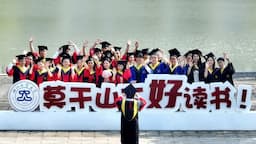
China allows clinical medicine master's and PhD students to graduate without thesis under new pathway
Delhi HC Declines Action Against ACP Over Alleged Threats to Lawyers

IIIT-Delhi Awards Degrees to 830 Students at 15th Convocation; Recognises Academic and Research Excellence
Universal AI University Awards Degrees to 369 Graduates at 15th Convocation Ceremony
Bengaluru Water Crisis: Poor Families Spend ₹3,000 Monthly on Drinking Water, Survey Flags
Japan's Okayama University uses robotics competitions to build engineering and workplace skills
Indian Navy Rescues 20 Crew from Hijacked Iranian Vessel off Somalia
Japan's Okayama University uses robotics competitions to build engineering and workplace skills
Indian Navy Rescues 20 Crew from Hijacked Iranian Vessel off Somalia
Learning Mandarin, earning degrees in China: How Indonesian youth are preparing for global careers
China allows clinical medicine master's and PhD students to graduate without thesis under new pathway
Delhi HC Declines Action Against ACP Over Alleged Threats to Lawyers
Copyright© educationpost.in 2026 All Rights Reserved.