Nobel Peace Prize 2026: Indian-origin South African jurist ‘Navi’ Pillay wins award for human rights advocacy
Her decades-long career includes landmark work on sexual violence, international criminal justice and accountability for human rights violations, including investigations into conflicts and atrocities worldwide.
Pragya Kumari09 October 2026 16:49
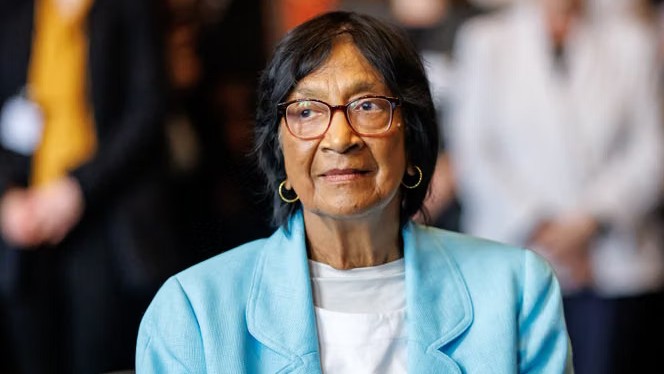
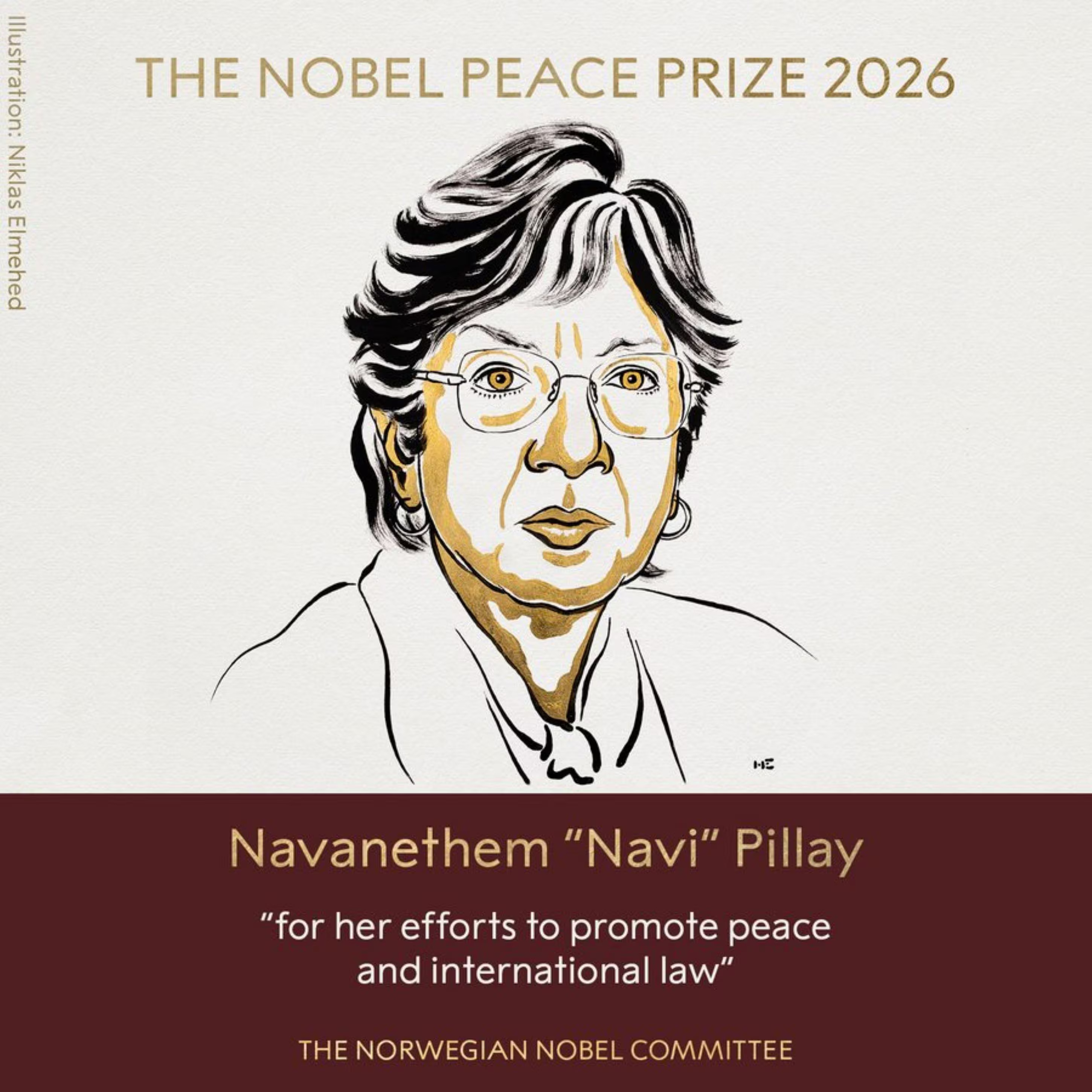
South African jurist Navanethem “Navi” Pillay has been awarded the 2026 Nobel Peace Prize for her efforts to promote peace and international law, with the Norwegian Nobel Committee recognizing her decades-long work in human rights, international justice, and the prosecution of war crimes and genocide.
Pillay, 85, is a former United Nations High Commissioner for Human Rights and has served as a judge at several major international judicial institutions.
Her career includes defending anti-apartheid activists in South Africa, serving on the International Criminal Tribunal for Rwanda, and contributing to landmark cases involving crimes against humanity and genocide.
The Nobel Committee said Pillay had helped advance a more comprehensive global legal order by holding states and national leaders accountable for violations of international law. It also highlighted her role in bringing justice to victims of violence and conflict.
Pillay learned about the award while attending an event at the Palace of Justice in Nuremberg, Germany, a venue associated with the Nuremberg Trials, which began 80 years ago.
When she heard the announcement, she reportedly asked, “is it true?” She later thanked those who gathered to congratulate her and dedicated the award to survivors of international crimes and those working to advance international justice.
The committee awarded the prize to Pillay "for her efforts to promote peace and international law." Chair of the Norwegian Nobel Committee Jørgen Watne Frydnes said her work had been instrumental in ensuring that war crimes, crimes against humanity, and genocide are prosecuted.
"Navi Pillay's commitment to universal legal principles and her firm moral compass are constants in a long career," he said. "At a time of existential challenges - including more wars and conflicts than the world has seen in a long time - international law is no longer just a supplement to peace and security. It is an absolute necessity."
Frydnes said the committee had not been able to inform Pillay of the decision in advance. He joked that his message to her would have been, "if you see a Norwegian number calling, please pick up.”
Pillay responded to the news with humor, saying "it must be a joke" before thanking those present. She also joked, "If you clap a little bit more I may share this prize with Trump," referring to US President Donald Trump, who has repeatedly said he deserves the Nobel Peace Prize. Earlier in the week, Trump had said it “would be a great discredit” to the Nobel committee if it did not select him.
Pillay dedicated her award to "all the survivors of international crimes" and the practitioners of international justice "whose compassion and courage continue to ensure that impunity will not be allowed to reign."
Navi Pillay's early life and legal career
Born in 1941 into a family of Indian Tamil origin in Durban, South Africa, Pillay grew up under the apartheid system, which enforced racial segregation and discrimination. Her father worked as a bus driver, and she was raised in a poor Indian neighborhood of the city.
Despite the restrictions of apartheid, Pillay pursued a career in law and became a pioneering figure in South Africa's legal profession. In 1967, she became the first woman to establish a law practice in Natal Province and later became the first non-white woman appointed to South Africa's High Court.
During the early years of her career, she defended anti-apartheid activists, including Nelson Mandela and others who opposed the country's racial segregation policies.
The Nobel Committee identified a common thread between this work and her later role in international justice, highlighting her sustained commitment to legal accountability and human dignity.
Her career subsequently took her to international judicial institutions, where she worked on cases involving mass atrocities, sexual violence, genocide, and other serious violations of international law.
Role in international courts and human rights investigations
Pillay served as a judge on the United Nations-backed International Criminal Tribunal for Rwanda, which was established to address crimes committed during the 1994 genocide that killed approximately 800,000 people. She served on the tribunal for several years, including four years as its president.
During her tenure, the tribunal made significant legal advances in the prosecution of sexual violence and genocide. Pillay played an important role in the recognition that rape and sexual violence could constitute crimes against humanity and acts of genocide. She also contributed to a landmark case in which a defendant faced charges of inciting genocide through propaganda.
In 2003, Pillay was elected to the International Criminal Court (ICC). She later served as United Nations High Commissioner for Human Rights from September 2008 to August 2014, leading the UN's human rights work during a period marked by conflicts and international disputes.
From 2021 to 2025, she chaired the UN Independent International Commission of Inquiry on the Occupied Palestinian Territory. The commission was established by the UN Human Rights Council to investigate alleged violations of international law in the region.
The commission concluded that Israel had committed genocidal acts in Gaza and that Israeli Prime Minister Benjamin Netanyahu and former Defense Minister Yoav Gallant had "incited the commission of genocide" through their speeches and statements.
The findings drew strong objections from Israel, which rejected the allegations and accused the commission's members of serving as "Hamas proxies."
The three-member expert panel was a fact-finding body and did not officially represent the UN as a whole. It also had no judicial authority to issue legally binding rulings.
The commission had previously concluded that Hamas and other Palestinian armed groups committed war crimes and other serious violations of international law during the October 7, 2023, attacks on Israel.
Approximately 1,200 people were killed and 251 were taken hostage in the attacks. The same report also accused Israel of war crimes.
Following the Nobel announcement, Israel's Foreign Ministry criticized the decision, describing it as a "grotesque weaponisation of an award to legitimise anti-Israel hatred and prejudice.”
In a statement, the ministry said, "Her role in the relentless, politically motivated demonisation of Israel and promotion of the genoLIE speaks volumes."
The Nobel Committee clarified that the award did not represent a position on whether Israel's military offensive in Gaza amounted to genocide. Asked about Pillay's leadership of the UN commission, Frydnes said the prize had been awarded "for her whole work."
Pillay currently serves as a judge at the International Court of Justice (ICJ), where she is involved in the case concerning allegations that Myanmar committed genocide against the Rohingya Muslim minority. The case was brought by The Gambia.
Myanmar has denied deliberately seeking to destroy the minority population. In January, a government representative told the court that the allegations were "unsubstantiated.”
Pillay's work across these institutions has focused on the responsibility of states and individuals to comply with international law and the importance of ensuring that allegations of serious crimes are investigated through legal mechanisms.
Nobel Committee highlights importance of international law
In explaining its decision, the Norwegian Nobel Committee emphasized the importance of legal institutions in preventing violence, resolving conflicts, and holding powerful individuals and governments accountable.
Frydnes said international law had become increasingly important as armed conflicts continued to spread and international legal institutions faced mounting pressure.
He said the rules-based international order had never been perfect, with powerful countries often avoiding accountability. However, he noted that diplomacy, treaties, and judicial mechanisms had helped address conflicts that might otherwise have been settled through threats or violence.
The committee also warned against the growing influence of power politics at the expense of legal frameworks and international accountability.
It argued that lasting peace depends on legal principles rather than the will of powerful states or fragile balances of power.
The award was intended to highlight the importance of strengthening international institutions and protecting the independence of judges who oversee cases involving serious violations of international law.
The committee said Pillay's independence, legal expertise, and determination had established her as one of the most respected international jurists of her generation.
It also pointed to the historical significance of international law, noting that the first Nobel Peace Prize was awarded 125 years ago and that the committee had emphasized the peaceful resolution of conflicts through legal mechanisms from the beginning.
After World War II, international legal institutions expanded, particularly through the creation of United Nations bodies. Further developments followed the end of the Cold War, bringing additional mechanisms for investigating and prosecuting serious international crimes.
However, the committee said the system continued to face unequal enforcement, with cases sometimes producing different outcomes depending on the identity of the accused and the victims.
In its announcement, the committee said, "Peace requires justice. History has shown that a world operating without the rule of law is unjust, unwise and inhumane."
It also highlighted the risks facing international judges and institutions, arguing that legal accountability remains essential to stability, trust, and peaceful coexistence.
Pillay's career, the committee said, demonstrates how legal proceedings can contribute to preventing violence, establishing responsibility for atrocities, and providing a measure of justice to survivors.
International leaders react to Pillay's Nobel win
United Nations human rights chief Volker Türk welcomed the recognition, saying it reaffirmed the central role of human rights, legal accountability, and justice in maintaining peace, security, and prosperity.
Türk described the award as particularly significant at a time when human rights were facing pressure from powerful political actors and governments.
He also said the prize recognized people around the world who dedicate their lives to defending human rights, often at considerable personal risk.
UN Secretary-General António Guterres praised Pillay as "a steadfast, independent voice of justice amidst some of the most historic international legal cases of our time."
South African President Cyril Ramaphosa also congratulated her, describing her as a "pioneering defence attorney for anti-apartheid activists." He said her work had helped "uphold human dignity and bring hope in South Africa and to peoples globally.”
Amnesty International Secretary-General Agnès Callamard, who was with Pillay when she learned of the award, called her an "inspired choice" for the Nobel Peace Prize.
"At a time when both international law and justice are under attack, when too many states attempt to hollow them out, her Nobel Peace Prize could not come at a better time," Callamard said.
The reactions highlighted the broader significance of Pillay's career, which has connected the struggle against apartheid in South Africa with efforts to establish accountability for international crimes through judicial institutions.
US reaction and debate over international justice
US President Donald Trump, who has repeatedly expressed his desire to receive the Nobel Peace Prize, also drew attention following the announcement.
Trump has previously cited his involvement in international conflicts and diplomatic efforts as reasons he should be considered for the award. Earlier in the week, he said it “would be a great discredit” to the Nobel committee if it did not select him.
After Pillay's win, Trump reposted a statement on social media claiming that the Nobel committee had "demeaned" the award by selecting someone it described as an "unabashed hater of America and Israel.”
The debate comes amid wider tensions over the authority and independence of international judicial institutions. The United States later announced sweeping sanctions targeting the ICC, saying the measures were intended to restrict the court's resources and ability to operate. The ICC described the move as an assault on the rule of law.
Pillay's Nobel recognition has consequently drawn attention to broader disagreements over the role of international courts, the enforcement of legal standards, and the accountability of states and political leaders.
The Nobel Committee, however, emphasized that the award recognized Pillay's full career rather than endorsing every conclusion reached by the commissions or courts with which she has been associated.
Previous Nobel Peace Prize winners
Pillay's selection follows Venezuelan opposition leader María Corina Machado, who received the 2025 Nobel Peace Prize for her work promoting democratic rights and seeking a peaceful transition from dictatorship to democracy.
Machado was elected to Venezuela's National Assembly in 2010 but was removed from office in 2014. Before the country's 2024 presidential election, she won the opposition primary but was barred from running. She subsequently backed opposition candidate Edmundo González Urrutia.
Supporters of González published voting records that they said demonstrated his victory over President Nicolás Maduro. Maduro's government claimed victory, while authorities intensified their crackdown on political opponents.
The Nobel Committee recognized Machado's efforts to unite Venezuela's divided opposition around free elections and representative government. She was living in hiding when the award was announced, and her daughter, Ana Corina Sosa, accepted the medal and diploma on her behalf at the December 2025 ceremony in Oslo.
In January 2026, Machado presented her Nobel Peace Prize medal to Trump during a meeting at the White House, describing the gesture as recognition of his commitment to Venezuela's freedom. Trump accepted the medal and called it a “wonderful gesture of mutual respect." The Nobel Institute clarified that the Nobel Peace Prize itself cannot be transferred to another person.
In 2024, the Nobel Peace Prize went to Nihon Hidankyo, a Japanese grassroots organization representing survivors of the atomic bombings of Hiroshima and Nagasaki, known as Hibakusha.
The organization was recognized for its campaign for a world free of nuclear weapons and its use of survivors' testimonies to demonstrate the humanitarian consequences of nuclear warfare.
Founded in 1956, Nihon Hidankyo brought together atomic bomb survivors and victims of nuclear weapons testing in the Pacific. It became Japan's largest and most representative organization of atomic bomb survivors.
The United States dropped atomic bombs on Hiroshima and Nagasaki in August 1945, killing approximately 120,000 people immediately. A comparable number subsequently died from burn and radiation injuries. Survivors faced long-term physical and social hardships, while many of their experiences remained overlooked.
Nihon Hidankyo has worked to protect the social and economic rights of survivors, including those living outside Japan, and to prevent future nuclear catastrophes. Through educational campaigns and personal accounts, it has emphasized the devastating consequences of nuclear weapons. Its guiding motto is “No more Hibakusha."
In 2023, Iranian human rights activist Narges Mohammadi won the Nobel Peace Prize for her campaign against the oppression of women in Iran and her efforts to promote human rights and freedom.
Mohammadi was imprisoned in Tehran's Evin prison when the award was announced in October 2023. She had spent more than two decades campaigning for women's rights, joined the Defenders of Human Rights Center in 2003, and subsequently challenged the death penalty and the Iranian authorities' use of torture and sexual violence.
Her activism resulted in repeated arrests and prison sentences. She was arrested 13 times and sentenced to a total of 31 years in prison and 154 lashes.
While imprisoned, Mohammadi supported the protests that erupted across Iran in 2022 after the death of Mahsa Jina Amini, a young Kurdish woman who died after being detained by Iran's morality police over her head covering.
The Iranian authorities responded to the demonstrations with a crackdown that resulted in more than 500 deaths, thousands of injuries, and at least 20,000 arrests, according to the Nobel Committee.
Mohammadi said the award would strengthen her determination to continue campaigning for “democracy, freedom and equality."
Pillay's selection for the 2026 Nobel Peace Prize continues the award's recognition of individuals and organizations working to protect human rights, challenge abuses of power, and promote peaceful and accountable societies.
Her decades of legal work have placed international law at the center of debates over justice, conflict, and the responsibility of governments to uphold fundamental rights.



.jpg&w=3840&q=75)

.jpg&w=256&q=75)



.jfif&w=256&q=75)