


The proposed association will allow eligible Indian researchers and institutions to receive direct EU research funding and lead collaborative projects under Horizon Europe’s Pillar II, covering areas such as health, artificial intelligence, space, climate and energy.
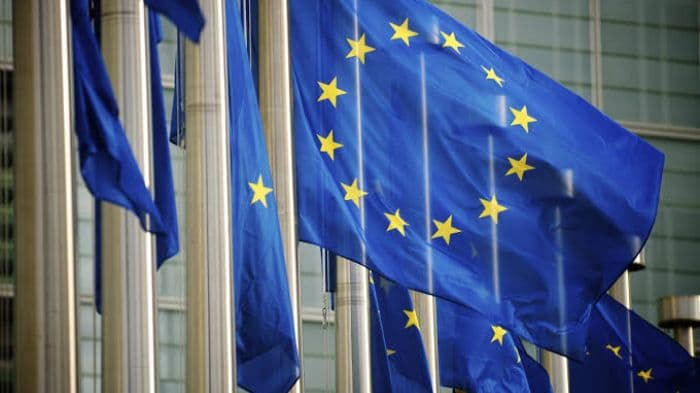
India is set to join the European Union’s (EU) Horizon Europe research and innovation programme from January 2027, following the conclusion of negotiations between the two sides on Nov 6.
The agreement will allow eligible Indian universities, research institutions, businesses and researchers to receive direct funding from the EU programme and lead collaborative research projects with European partners. The arrangement, however, is subject to the formal signing of the agreement and completion of the necessary approval procedures.

Horizon Europe is the EU’s flagship research and innovation funding programme for 2021-2027, with a total budget of €93.5 billion. The programme supports scientific research and technological development across areas including health, digital technologies, industry, climate and energy.
The European Commission described the conclusion of negotiations as an important step in strengthening scientific cooperation and the wider strategic partnership between India and the EU.
Indian institutions to receive direct research funding under Pillar II
Under the proposed association, Indian organisations will be eligible to receive direct Horizon Europe funding and lead multinational research projects under Pillar II, titled ‘Global Challenges and European Industrial Competitiveness’.
Pillar II is the programme’s largest component and supports collaborative research addressing major global challenges. Its areas of focus include health, artificial intelligence, digital technologies, advanced manufacturing, space, climate change, energy and the bioeconomy.
The association does not provide India with access to the entire Horizon Europe programme. It covers the areas included in the agreement, with participation remaining subject to the eligibility requirements and conditions of individual funding calls.
Indian organisations can already participate in many Horizon Europe research projects open to international cooperation. However, they generally have to arrange their own financing, secure Indian co-funding or obtain support from other sources. Association will change this arrangement for the programme areas covered by the agreement, allowing eligible Indian participants to compete for direct EU funding.
The opportunity to lead projects could also expand the role of Indian institutions in international research collaborations. Project coordinators are responsible for managing joint activities and representing the research consortium in its dealings with the funding authority.
India will contribute financially to Horizon Europe
India will make a financial contribution to Horizon Europe in return for participation in the programme. However, the European Commission has not announced the amount of this contribution.
The €93.5 billion figure represents the overall budget of Horizon Europe for 2021-2027 and is not funding earmarked for India. Research proposals will continue to undergo competitive evaluation, and funding will depend on the quality of applications and the conditions of individual calls.
The European Commission has said that 23 non-EU countries are associated with Horizon Europe. These include the United Kingdom, Japan, South Korea, Canada, Switzerland, Norway, Israel and New Zealand, among others.
The arrangement gives participating non-EU countries a formal route to take part in eligible EU-funded research on terms comparable to those available to organisations in member states.
It enables eligible organisations from participating countries to access funding on terms comparable to those of EU-based participants in the programme areas covered by their agreements.
India-EU research cooperation already includes joint projects
The proposed association builds on a longer history of scientific cooperation between India and the EU. Their Agreement for Scientific and Technological Cooperation was signed in 2001 and has been renewed until 2030.
Exploratory discussions on India's association with Horizon Europe began in February 2026, following the 16th India-EU Summit in New Delhi. Formal negotiations were launched in July and concluded on November 6.
The two sides have also been working together through the India-EU Trade and Technology Council, which supports cooperation in areas including semiconductors, artificial intelligence and digital technologies.
Existing collaborative research initiatives include projects addressing marine pollution, the production of renewable hydrogen from waste and the recycling of electric-vehicle batteries. These priority areas are supported by a combined investment of approximately €60 million, according to the European Commission.
The proposed association is expected to provide a more formal route for Indian and European researchers to work together through multinational projects and compete for funding under the programme.
The European Commission envisages India's association taking effect in January 2027, once the agreement has been signed and the necessary procedures have been completed.

India set to join EU’s €93.5 billion Horizon Europe research programme in January 2027

Australia study detects exam stress in university campus sewage

European Commission unveils education package to address falling basic skills and teacher shortages

UAE expands global research partnerships and links university innovation with industry

Researchers warn AI overuse could weaken students’ ability to think independently

UN Secretary-General to take Arctic scientists’ climate warnings to COP31

Nepali students form Japan's second-largest international academic community: Foreign Minister

'Mogging' explained: How bodybuilding term became Collins Word of the Year 2026

‘It’s actually very cut-throat’: 13-year-old wins New Zealand spelling bee title

Schoolchildren join desperate effort to save stranded whales on New Zealand coast

India set to join EU’s €93.5 billion Horizon Europe research programme in January 2027
Australia study detects exam stress in university campus sewage
European Commission unveils education package to address falling basic skills and teacher shortages
UAE expands global research partnerships and links university innovation with industry
Researchers warn AI overuse could weaken students’ ability to think independently
UN Secretary-General to take Arctic scientists’ climate warnings to COP31
Nepali students form Japan's second-largest international academic community: Foreign Minister
'Mogging' explained: How bodybuilding term became Collins Word of the Year 2026
‘It’s actually very cut-throat’: 13-year-old wins New Zealand spelling bee title
Schoolchildren join desperate effort to save stranded whales on New Zealand coast
Copyright© educationpost.in 2026 All Rights Reserved.