


The meeting urged expert committees to strengthen policy advice, safeguard academic credentials, improve postgraduate training practices and uphold impartiality, integrity and accountability in education governance.

China’s Ministry of Education has called on newly established expert organizations overseeing academic degrees and professional master’s education to strengthen postgraduate training, protect degree quality and support the country’s ambition to become a leading education nation.
The call came at a working meeting of the Academic Degrees Committee of the State Council and several national professional master’s degree education steering committees held in Beijing on Oct 21.

The meeting focused on improving the effectiveness of the new expert organizations and identifying priorities for master’s degree and postgraduate education.
Xiong Sihao, a member of the Party Leadership Group and vice minister of education, attended the meeting and delivered a speech.
The meeting highlighted the importance of postgraduate education in developing high-level innovative talent, strengthening national innovation capabilities and supporting economic and social development.
It also underscored the role of postgraduate training in advancing the modernization of national governance.
The meeting noted that General Secretary Xi Jinping had issued important instructions on postgraduate education, outlining its strategic importance to China’s broader development goals.
These instructions were described as providing direction for reforming and developing degree and postgraduate education in the new era, as well as fundamental guidance for future work.
The meeting emphasized that the newly established expert organizations must take responsibility for improving the quality of postgraduate education and contributing to the development of a strong education nation.
It outlined three priorities for the organizations: strengthening their understanding of national education goals, fulfilling their core responsibilities in advising on policy and maintaining academic standards, and ensuring that their work follows rigorous, impartial and practical standards.
The first priority is to maintain a broad, strategic perspective on the role of postgraduate education and the responsibilities of the expert organizations.
The meeting called on members to recognize the national importance of advanced education and understand how their work contributes to the country’s long-term development.
They were also encouraged to draw confidence from the progress China has made in postgraduate education and strengthen their determination to advance the sector further.
By examining the changing circumstances and new responsibilities associated with building a strong nation, the organizations are expected to develop a clearer sense of mission in promoting high-quality postgraduate education.
The second priority is to focus on their principal duties and serve as effective advisers and assistants in education policymaking.
The meeting stressed the need for expert organizations to support evidence-based and informed decision-making while helping maintain education standards and protect the credibility of academic degrees.
Their responsibilities also include examining postgraduate training practices at the institutional level, promoting improvements to the substance and quality of education, and strengthening communication and guidance.
These efforts are intended to encourage greater understanding and build consensus among the various stakeholders involved in postgraduate education.
The third priority is to maintain strict, practical and professional standards while carrying out their duties. The meeting called on the organizations to perform their responsibilities in accordance with relevant regulations and rules, uphold impartiality and integrity, and adopt a rigorous and self-disciplined approach to their work.
It also emphasized the importance of maintaining a pragmatic working style and continuously improving professional conduct.
These standards are expected to guide the organizations as they carry out their responsibilities in supporting postgraduate education reform and safeguarding the quality of academic degrees.
Delhi BS6 Entry Ban From November 1 Could Affect Over 10 Lakh NCR Vehicles

Study in China 2027: Top Universities, Fees, Scholarships, Visas and Career Options for Indian Students
Beyond borders: University of Johannesburg brings Chinese and African universities together to advance research

From policy advice to degree quality: China defines new priorities for postgraduate education
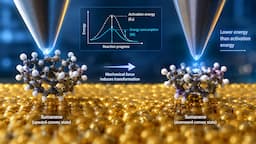
Can force beat the energy barrier? Researchers uncover new route to molecular reactions
Delhi BS6 Entry Ban From November 1 Could Affect Over 10 Lakh NCR Vehicles
Study in China 2027: Top Universities, Fees, Scholarships, Visas and Career Options for Indian Students

AI boom puts forward deployed engineers on track for ₹1 crore annual packages

Reed College’s concrete owl stolen, frozen and set on fire

Canada announces $813 million research boost to back 450-plus researchers

Delhi BS6 Entry Ban From November 1 Could Affect Over 10 Lakh NCR Vehicles
Study in China 2027: Top Universities, Fees, Scholarships, Visas and Career Options for Indian Students
Beyond borders: University of Johannesburg brings Chinese and African universities together to advance research
From policy advice to degree quality: China defines new priorities for postgraduate education
Can force beat the energy barrier? Researchers uncover new route to molecular reactions
Delhi BS6 Entry Ban From November 1 Could Affect Over 10 Lakh NCR Vehicles
Study in China 2027: Top Universities, Fees, Scholarships, Visas and Career Options for Indian Students
AI boom puts forward deployed engineers on track for ₹1 crore annual packages
Reed College’s concrete owl stolen, frozen and set on fire
Canada announces $813 million research boost to back 450-plus researchers
Copyright© educationpost.in 2026 All Rights Reserved.