


The new photoinitiators can cure liquid resins under light, with laboratory tests showing low toxicity to human cells and reduced material shrinkage. Their performance in large-scale manufacturing remains to be established.
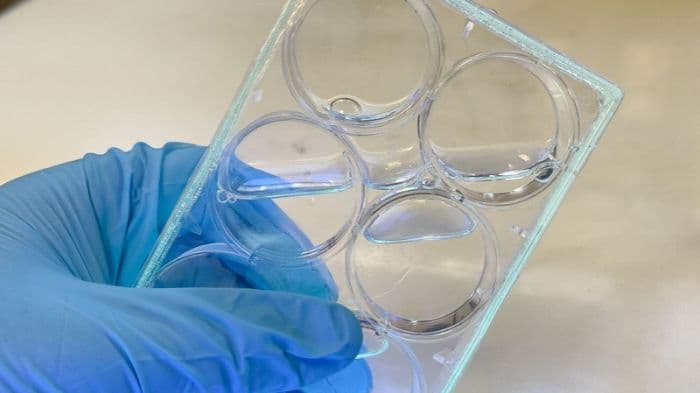
Researchers at Nanyang Technological University (NTU Singapore) have developed a new family of light-activated compounds that could offer an alternative to conventional photoinitiators used in 3D printing and advanced biomaterials.
Called aryl diazirine photoinitiators, the compounds trigger the chemical reaction that turns liquid resin into a solid when exposed to light. The research, published online in NPG Asia Materials on October 16, 2026, examines their potential for applications ranging from precision manufacturing to biomedical materials.

The university announced the findings on Oct 23. The researchers reported that the compounds showed low toxicity to human cells in laboratory tests and could help reduce shrinkage as resins harden.
How the new photoinitiators work
Photoinitiators initiate polymerisation, the process through which light-sensitive liquid resins form solid structures. They are used in technologies such as stereolithography-based 3D printing, where light selectively hardens a liquid material to build an object layer by layer.
Conventional photoinitiators can present challenges involving toxicity and water solubility. The NTU team investigated aryl diazirines as alternatives, focusing on their ability to initiate curing while releasing nitrogen gas during the process.
The researchers found that this gas release could be used to counteract some of the shrinkage that occurs when liquid resin becomes solid. Several of the compounds were also soluble in water and remained liquid at room temperature, properties that could simplify handling and support the development of water-based formulations.
Tests in dental resins and biomaterials
The team tested selected compounds in a commercial dental resin formulation. The study found that the compounds could polymerise the resin, although their performance varied according to the formulation and the wavelength of light used.
Some compounds completed curing under 405-nanometre light at an exposure dose of 2 joules per square centimetre. However, the researchers also found that achieving comparable mechanical strength could require higher exposure doses than with the conventional photoinitiator BAPO.
This trade-off is important for practical applications: a material may offer advantages in toxicity or shrinkage but still require optimisation to achieve the speed and efficiency needed for commercial production.
The team also demonstrated applications including water-tight seals and 3D-printed microfluidic channels made using a soybean-oil-based resin. Other potential uses include tissue-engineering materials, skin adhesives and food packaging.
Further validation is needed
The findings point to possible uses for light-curable materials in manufacturing and biomedical research. However, laboratory tests on human cells do not amount to clinical validation or certification for medical devices.
The researchers say further work is needed to bridge the gap between laboratory results and industrial-scale manufacturing. Performance, durability, processing speed and safety will need to be assessed for specific applications before the compounds can be adopted commercially.
The study, titled Non-toxic aryl diazirine photoinitiators, was published in NPG Asia Materials on Oct 16.

Study in China 2027: Top Universities, Fees, Scholarships, Visas and Career Options for Indian Students

From policy advice to degree quality: China defines new priorities for postgraduate education
Can force beat the energy barrier? Researchers uncover new route to molecular reactions
NTU researchers develop light-activated compounds for safer 3D printing

Delhi High Court Upholds Cash Assistance Policy for EWS Students’ School Uniforms
Study in China 2027: Top Universities, Fees, Scholarships, Visas and Career Options for Indian Students

AI boom puts forward deployed engineers on track for ₹1 crore annual packages

Reed College’s concrete owl stolen, frozen and set on fire

Canada announces $813 million research boost to back 450-plus researchers

Abu Dhabi aims to bring 2,000 Emirati teachers into private schools within five years

Study in China 2027: Top Universities, Fees, Scholarships, Visas and Career Options for Indian Students
From policy advice to degree quality: China defines new priorities for postgraduate education
Can force beat the energy barrier? Researchers uncover new route to molecular reactions
NTU researchers develop light-activated compounds for safer 3D printing
Delhi High Court Upholds Cash Assistance Policy for EWS Students’ School Uniforms
Study in China 2027: Top Universities, Fees, Scholarships, Visas and Career Options for Indian Students
AI boom puts forward deployed engineers on track for ₹1 crore annual packages
Reed College’s concrete owl stolen, frozen and set on fire
Canada announces $813 million research boost to back 450-plus researchers
Abu Dhabi aims to bring 2,000 Emirati teachers into private schools within five years
Copyright© educationpost.in 2026 All Rights Reserved.