


Delhi's winter pollution restrictions will bar non-BS6 petrol and diesel vehicles registered outside the capital until January 31, affecting commuters from Gurugram, Noida, Faridabad and Ghaziabad.
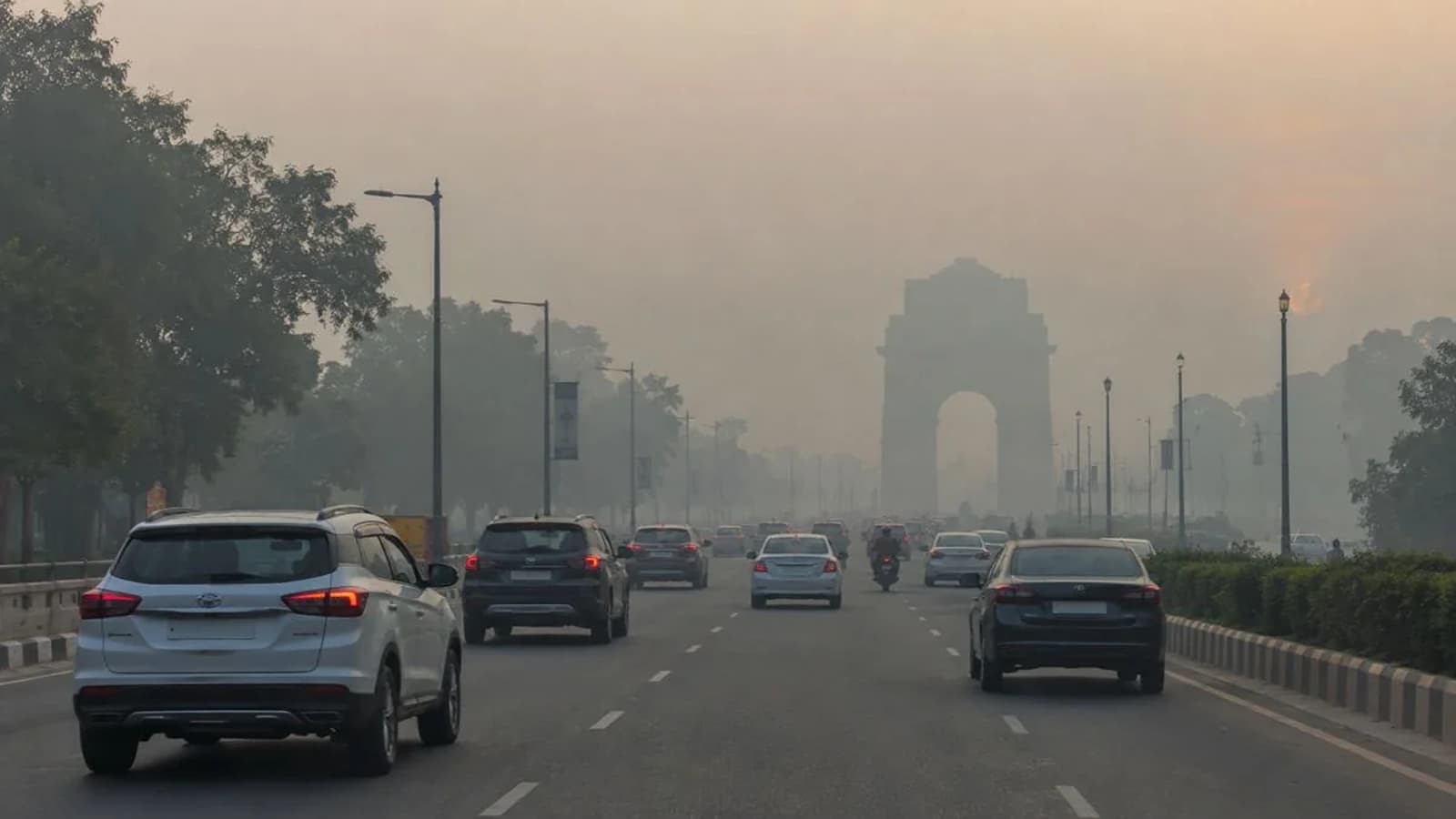
More than 10 lakh vehicles registered in neighbouring National Capital Region (NCR) districts could be affected by Delhi's decision to restrict the entry of petrol and diesel vehicles that do not comply with Bharat Stage VI (BS6) emission standards from November 1, 2026.
The restrictions, which will remain in effect until January 31, 2027, are part of the Delhi government's winter pollution-control measures. They will primarily affect owners of older vehicles travelling into the national capital from Gurugram, Faridabad, Noida, Greater Noida and Ghaziabad.

According to transport department estimates reported by The Times of India, more than 10 lakh vehicles across these neighbouring districts fall below BS6 emission standards. However, the figures represent potentially affected vehicles rather than the number of vehicles that cross Delhi's borders daily.
The decision follows the Delhi government's announcement of its Winter Action Plan, which includes stricter vehicle-emission checks, restrictions on construction activities, higher parking charges and measures intended to reduce traffic congestion during the winter pollution season.
Which NCR cities and vehicles will be affected?
Gurugram and Faridabad together have nearly two lakh vehicles that do not meet BS6 emission norms. Approximately 70% of these fall under BS3 and BS4 standards, while an estimated 50,000 commercial vehicles in the two districts also fall below BS6 requirements, according to the transport department figures cited in the report.
In Uttar Pradesh, Noida and Greater Noida account for more than four lakh vehicles below BS6 standards. More than half are BS4 vehicles, predominantly petrol cars.
Ghaziabad has approximately four lakh vehicles that do not comply with the latest emission standards, according to a senior transport department official quoted by the newspaper.
The restrictions could particularly affect people who travel to Delhi for employment, education, business and other daily activities. However, the actual number of commuters affected will depend on how many vehicles regularly enter Delhi and fall outside the notified exemptions.
The restriction applies to vehicles registered outside Delhi that do not meet BS6 standards. Delhi-registered vehicles are not covered by this specific entry prohibition, although existing vehicle-age regulations, pollution-control requirements and restrictions under the Graded Response Action Plan (GRAP) continue to apply.
Electric vehicles, CNG-powered vehicles, ambulances, fire tenders and specified essential-service vehicles are exempt from the entry restrictions.
India introduced BS6 emission standards nationwide for new vehicle registrations in April 2020. The regulations impose tighter limits on pollutants emitted by vehicles compared with earlier Bharat Stage standards.
Delhi to strengthen border checks with cameras and enforcement teams
Authorities are preparing to increase surveillance at Delhi's entry points to identify vehicles that fail to meet the prescribed standards.
Automatic Number Plate Recognition (ANPR) cameras, supported by artificial intelligence-based monitoring systems, are expected to help enforcement teams identify vehicles entering from neighbouring states.
According to the Times of India report, approximately 300 transport department enforcement personnel will be deployed to strengthen checks at border locations, particularly on routes connecting Delhi with Gurugram, Noida and Ghaziabad.
The Delhi Traffic Police has also discussed interstate coordination to prevent non-compliant vehicles from reaching the capital. Plans include displaying information about vehicle restrictions at border checkpoints and coordinating enforcement with neighbouring districts.
Delhi Environment Minister Manjinder Singh Sirsa, following a coordination meeting with officials from NCR districts on October 25, said the government intended to strengthen cooperation on enforcement and traffic management across state borders.
He identified better border management, reduced congestion and cleaner public transport as priorities for the winter pollution-control strategy.
Chief Minister Rekha Gupta announces winter restrictions
Chief Minister Rekha Gupta announced the restrictions on October 20, stating that vehicles registered outside Delhi and falling below BS6 emission standards would not be permitted to enter the city during the three-month period.
In a statement posted on X, Gupta said, "No valid PUCC, no fuel."
The Pollution Under Control Certificate (PUCC) requirement forms another part of the administration's effort to enforce vehicle-emission regulations.
The government plans to intensify checks at approximately 500 fuel stations equipped with automatic number-plate recognition technology. Vehicles without valid pollution certificates will be denied petrol, diesel, CNG or LPG, as applicable.
The wider Winter Action Plan will operate from November 1, 2026, until February 28, 2027.
The government has also announced doubled parking charges at authorised municipal parking facilities, excluding Delhi Metro parking areas, and work-from-home arrangements covering 50% of employees in government and private offices, alongside staggered working hours.
Measures targeting construction dust include restrictions on dust-generating demolition and outdoor civil construction between November 1 and January 31. A stricter suspension of construction and demolition activities is scheduled between December 10 and January 20, subject to applicable exemptions.
The administration has also proposed expanded monitoring of construction sites and greater use of public transport, including electric buses, Metro services and last-mile connectivity.
Commercial vehicles face additional restrictions
The November restrictions also coincide with previously announced measures by the Commission for Air Quality Management (CAQM), which has been tightening emission requirements for commercial vehicles entering Delhi.
Under an amendment issued in October 2025, BS4 commercial goods vehicles registered outside Delhi were given temporary permission to enter the capital until October 31, 2026. The transition period is now approaching its end.
From November 1, the revised commercial vehicle restrictions will require eligible goods vehicles entering Delhi to meet BS6 or permitted cleaner-fuel requirements, including CNG, LNG and electric propulsion, subject to applicable rules.
Separately, CAQM Direction No. 93 requires buses entering Delhi under tourist, contract-carriage and other specified permit categories to operate on BS6 diesel, CNG or electric power from November 1, 2026. The direction provides an exception for buses registered in Delhi.
These measures are distinct from the seasonal restrictions on privately owned vehicles registered outside the capital.
Will the vehicle restrictions reduce Delhi's air pollution?
The government expects restrictions on higher-emitting vehicles to help reduce pollution during winter, when stagnant atmospheric conditions can cause pollutants to accumulate near the ground.
However, vehicle restrictions alone cannot address all the sources contributing to Delhi's poor air quality. Road dust, industrial emissions, construction activities and biomass burning also contribute to pollution across the wider NCR airshed.
Environmental experts have questioned whether temporary restrictions can deliver lasting improvements without sustained action throughout the year.
Environmentalist Vimlendu Jha, speaking to Hindustan Times in September, said, "Tackling pollution requires a 365 day plan."
For commuters, the immediate concern is whether their vehicles meet the standards required for entry into Delhi. Owners of vehicles registered outside the capital will need to verify their Bharat Stage classification, ensure their pollution certificates are valid and check whether any notified exemption applies.
While the government has announced stricter border enforcement from November 1, its effectiveness will depend on consistent implementation, coordination between NCR authorities and the availability of practical alternatives for commuters who can no longer use their vehicles to enter the capital.

Study in Malaysia for Indian Students 2026: Universities, Fees, Scholarships, Visa and Career Opportunities
Delhi BS6 Entry Ban From November 1 Could Affect Over 10 Lakh NCR Vehicles

Study in Indonesia for Indian Students 2026: Top Universities, Fees, Scholarships, Visa and Career Opportunities

Study in China 2027: Top Universities, Fees, Scholarships, Visas and Career Options for Indian Students
Beyond borders: University of Johannesburg brings Chinese and African universities together to advance research
Study in Malaysia for Indian Students 2026: Universities, Fees, Scholarships, Visa and Career Opportunities
Delhi BS6 Entry Ban From November 1 Could Affect Over 10 Lakh NCR Vehicles
Study in Indonesia for Indian Students 2026: Top Universities, Fees, Scholarships, Visa and Career Opportunities
Study in China 2027: Top Universities, Fees, Scholarships, Visas and Career Options for Indian Students

AI boom puts forward deployed engineers on track for ₹1 crore annual packages

Study in Malaysia for Indian Students 2026: Universities, Fees, Scholarships, Visa and Career Opportunities
Delhi BS6 Entry Ban From November 1 Could Affect Over 10 Lakh NCR Vehicles
Study in Indonesia for Indian Students 2026: Top Universities, Fees, Scholarships, Visa and Career Opportunities
Study in China 2027: Top Universities, Fees, Scholarships, Visas and Career Options for Indian Students
Beyond borders: University of Johannesburg brings Chinese and African universities together to advance research
Study in Malaysia for Indian Students 2026: Universities, Fees, Scholarships, Visa and Career Opportunities
Delhi BS6 Entry Ban From November 1 Could Affect Over 10 Lakh NCR Vehicles
Study in Indonesia for Indian Students 2026: Top Universities, Fees, Scholarships, Visa and Career Opportunities
Study in China 2027: Top Universities, Fees, Scholarships, Visas and Career Options for Indian Students
AI boom puts forward deployed engineers on track for ₹1 crore annual packages
Copyright© educationpost.in 2026 All Rights Reserved.