


With youth unemployment remaining elevated and competition for entry-level roles intensifying, agencies offer costly placements, raising concerns about fraudulent services and widening inequality.
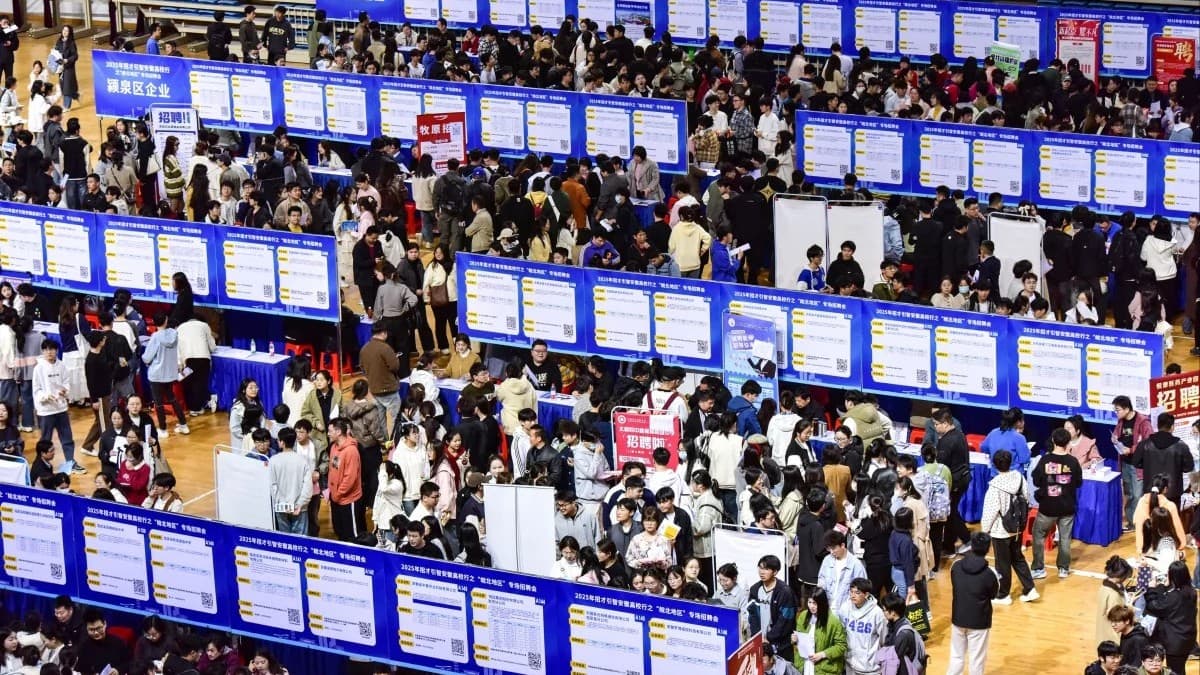
University students in China are increasingly weighing whether to secure internships through conventional applications or pay agencies thousands of yuan for placements at prominent companies, the South China Morning Post reported.
As competition for entry-level jobs intensifies, some students view these services as a way to strengthen their resumes and improve their employment prospects after graduation.

Wang Guilin, an undergraduate accounting student, is facing the same dilemma as she searches for a winter internship. She considers her academic record average and hopes to gain experience at a well-known company before graduating. However, securing an internship through standard recruitment channels has become increasingly difficult in China's crowded graduate labor market.
The second-year student is considering whether paying an intermediary for a referral could improve her chances of obtaining a placement. Such services have gained attention as students compete for limited opportunities at leading companies.
“These positions usually go to third- or fourth-year students from top-tier universities or those with strong internship records,” Wang said. “Someone in my position would consider paying for referrals to secure a place.”
Paid internship placements cost thousands of yuan
The services offered by internship agencies vary considerably. Some provide conventional career support, including resume editing and interview preparation, while others advertise guaranteed placements that rely on connections or back-door access to companies.
Despite differences in their services, the agencies can charge substantial fees. Wang said she had received quotations ranging from 6,000 yuan (about $900) to 12,000 yuan for a winter internship at a major accounting firm. She noted that these prices were lower than those charged for longer summer placements.
Reports shared by students online have cited fees of up to 30,000 yuan for a single internship placement. Such payments can amount to several times the typical monthly starting salary of a recent college graduate, raising questions about whether students can afford to purchase experience that might improve their employment prospects.
Data from Beijing-based education research consultancy MyCOS showed that undergraduates earned an average monthly salary of 6,435 yuan six months after graduation in 2025. Against this benchmark, a placement costing 30,000 yuan represents a substantial financial commitment for students and their families.
Nevertheless, some students are willing to pay for internship experience because they believe it can strengthen their applications for white-collar jobs. With employers competing for candidates who already have relevant work experience, students may feel pressure to build their resumes before completing their degrees.
China's graduate labor market intensifies competition for jobs
The growing market for paid internship placements comes as young people face persistent difficulties entering China's workforce. The country's youth unemployment rate stood at 18% in September, following an estimated 12.7 million university students graduating over the summer.
Entry-level positions have come under particular pressure, leaving some degree holders to seek employment outside their fields of study. Some have turned to food delivery and other gig-economy work, while others have taken jobs on factory floors.
The combination of slower economic growth, technological change and an increasing number of graduates entering the labor market has added to concerns about employment prospects.
Students who struggle to secure internships may find themselves competing against applicants with stronger academic credentials, more work experience or access to professional networks.
Stuart Gietel-Basten, a professor of social science and public policy at the Hong Kong University of Science and Technology (HKUST), said the pressure was contributing to widespread anxiety among young job seekers.
“In a situation with a tightening labour market – [with the risks of] artificial intelligence, plus slower overall growth, plus a growing number of young people entering the graduate labour market – there obviously is a huge amount of anxiety,” Gietel-Basten said.
He also warned that businesses and service providers could take advantage of students' concerns about their future employment.
“The worst organisations will exploit that anxiety,” he said.
Fake internship certificates raise concerns about paid services
The expanding market for internship assistance has also exposed students to fraudulent operators. Some agencies have promised professional experience and company credentials without providing genuine opportunities to work for the organizations named in their offers.
In July, state-run People’s Daily reported that a Guangzhou-based company had impersonated employees of prominent domestic and international companies to attract students. The firm assigned tasks to students remotely and issued fake internship certificates and recommendation letters after the work was completed.
The documents reportedly carried forged electronic seals, creating the appearance that students had completed internships with established companies. Such practices can leave students paying for credentials that do not represent legitimate employment experience.
The report also identified cases in which employees of major companies had illegally arranged remote internships without registering participants in their employers' human resources systems. These arrangements raised further questions about the authenticity and official recognition of placements marketed to students.
The cases illustrate the risks associated with relying on intermediaries, particularly when students cannot independently verify an internship's legitimacy. A certificate or recommendation letter obtained through an unofficial arrangement may not provide the professional credibility applicants expect when applying for jobs.
Wang said she would consider paying for an internship only if it involved working on-site. She expressed concerns about the reputation and credibility of remote placements, particularly when their connection to the advertised employer could be difficult to establish.
Student delays decision on paid internship
Despite considering the available options, Wang has decided to continue applying for internships independently for now. She hopes to gain experience at a smaller company before pursuing placements at major firms during her third year.
Her decision reflects the financial trade-off faced by students who want to improve their employment prospects but are reluctant to spend large sums on uncertain opportunities.
“The cost is indeed quite high,” Wang said. “If I’m still in the same situation next year, then I might consider a paid internship again.”
Her experience highlights the pressure on undergraduates to accumulate work experience even before graduation. For students who lack established professional networks or the academic credentials sought by leading employers, paid placement services can appear to offer an alternative route into competitive workplaces.
However, the high cost of these services and the risk of fraudulent arrangements leave students facing questions about whether the promised benefits justify the expense.
Experts warn paid internships could widen inequality
Gietel-Basten of HKUST warned that rising competition for internships and additional qualifications could deepen existing inequalities in China's education system and labor market. Students with greater financial resources may be better positioned to pay for career assistance or accept unpaid opportunities that provide access to professional experience.
This could create a situation in which access to employment depends not only on a candidate's abilities but also on their family's capacity to finance the job search. Students who cannot afford paid placements may struggle to obtain the same credentials and experience as their wealthier peers.
“My big fear is that this … would lead jobs to go not necessarily to the very best young people, but to those who have the resources and can afford to take unpaid internships or engage private sector companies to support their job search,” he said.
The growing reliance on paid internship services therefore raises broader questions about fairness in graduate recruitment. As students compete for limited opportunities, the ability to purchase professional experience risks becoming another factor separating candidates in an already highly competitive employment market.

vivo Ignite 2026 recognizes 10 student innovations from across India, offers scholarships worth up to ₹35 lakh

Canada’s new asylum rules raise concerns over protection for international students

China’s graduate job crisis fuels paid internship boom as students pay thousands to gain edge

IIM Indore opens admissions for executive program in AI and cybersecurity

Schools Closed Today, October 29: Jharkhand, Andhra Pradesh, Chhattisgarh Announce Cyclone Arnab Holidays

Bihar’s NMCH suspends 146 students over ragging: Wake-up call for medical colleges

Bihar Teacher Salary Scam 2026: ₹1.85 Crore Irregularities Detected in Three Districts

No matter how many enter, how many make it to graduation?

UK universities face £925 annual levy for each international student from 2028

Jamia moves digital: Announces online exams, extends virtual classes amid campus unrest

vivo Ignite 2026 recognizes 10 student innovations from across India, offers scholarships worth up to ₹35 lakh
Canada’s new asylum rules raise concerns over protection for international students
China’s graduate job crisis fuels paid internship boom as students pay thousands to gain edge
IIM Indore opens admissions for executive program in AI and cybersecurity
Schools Closed Today, October 29: Jharkhand, Andhra Pradesh, Chhattisgarh Announce Cyclone Arnab Holidays
Bihar’s NMCH suspends 146 students over ragging: Wake-up call for medical colleges
Bihar Teacher Salary Scam 2026: ₹1.85 Crore Irregularities Detected in Three Districts
No matter how many enter, how many make it to graduation?
UK universities face £925 annual levy for each international student from 2028
Jamia moves digital: Announces online exams, extends virtual classes amid campus unrest
Copyright© educationpost.in 2026 All Rights Reserved.