


From medical education and engineering to university admissions, government scholarships, tuition fees and post-study employment, here is what Indian students need to know before choosing Kazakhstan for higher education.
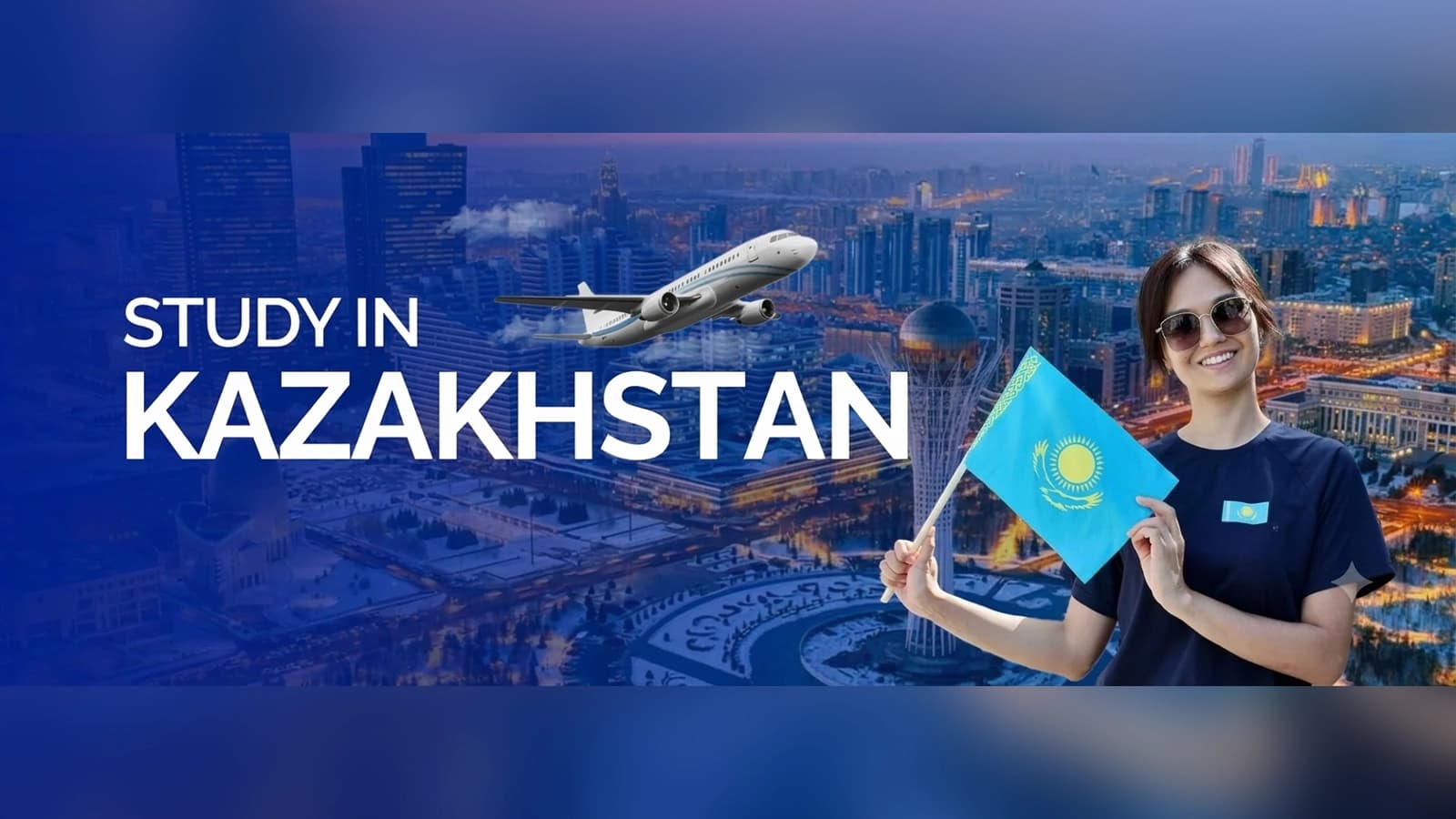
Representational Image
Kazakhstan is an option for Indian students exploring international education, particularly in medicine, engineering, information technology and science. Located in Central Asia, the country has universities offering undergraduate, postgraduate and doctoral programmes, including courses available in English.
For students planning to study abroad, Kazakhstan may offer access to specialised academic programmes and government-funded scholarships. However, choosing a university requires more than comparing tuition fees. Students should verify the recognition of their qualifications, the language of instruction, accommodation arrangements and employment opportunities before committing to a programme.

Medical education requires particular attention. A recent advisory from the Embassy of India in Astana warns that changes to the duration of medical courses beginning in the 2026–27 academic year could affect Indian applicants. Students should therefore verify current course requirements directly with their chosen university and the relevant authorities before paying fees.
Kazakhstan offers programmes in medicine, engineering, computer science, business, economics, biotechnology and other disciplines. Some universities provide English-medium programmes for international students, although Russian or Kazakh may be required for other courses or clinical training.
For Indian students, the country may be worth considering when a university offers a suitable programme, transparent fees and a qualification that meets their future career requirements.
However, students should not assume that every degree is automatically recognised in India or another country. Professional qualifications, especially medical degrees, are subject to the rules of the relevant licensing authority.
The following institutions are worth researching. The best choice depends on the programme, admission requirements, teaching language, fees and career plans.
This is a shortlist, not a definitive ranking. Before applying, students should check each university's current accreditation, programme structure, admission requirements and official fee schedule.
Indian students can explore several subject areas according to their academic background and career plans.
Medicine: Medical degrees are a prominent reason Indian students consider Kazakhstan. However, course duration, clinical training, licensing and recognition requirements must be checked carefully.
Engineering: Students can explore mechanical, electrical, civil, mining and other engineering disciplines.
Computer Science and Information Technology: Programmes may cover software development, information systems, data science and related fields.
Business and Management: Options include finance, economics, management and international business.
Science and Biotechnology: Universities offer programmes in scientific research and related disciplines, depending on the institution.
Admission criteria vary by university, programme and qualification level.
For undergraduate courses, applicants generally need a recognised secondary-school qualification, such as India's Class 12 certificate, and must satisfy the university's academic and subject requirements. Postgraduate applicants typically need a relevant bachelor's degree, while doctoral programmes may require a master's degree, research proposal or interview.
Universities may ask for academic transcripts, passport details, photographs, language-test results and other supporting documents. Some institutions conduct entrance tests or interviews.
Students should apply through the university's official admissions channel and confirm the deadline, document requirements and payment arrangements before submitting an application.
The application process generally involves the following steps:
The Embassy of India advises prospective students to verify information directly with universities and to be cautious about agents or intermediaries who make unsupported promises. Students should obtain official receipts and confirm that tuition payments have reached the university.
The cost of studying in Kazakhstan depends on the university, course, city and accommodation. There is no single tuition fee that applies to all international students.
Medical programmes may have a different fee structure from engineering, business or science degrees. Applicants should request the current official fee schedule and calculate the cost of the entire programme, including any additional years required under the course rules.
Accommodation should also be checked before arrival. The Embassy of India has previously advised students to verify hostel availability, facilities and costs directly with their university.
Students searching for scholarships in Kazakhstan can explore government-funded awards and university-specific financial assistance.
Kazakhstan's government operates the Study in Kazakhstan scholarship programme, which lists 550 grant-funded places annually for eligible international applicants and eligible ethnic Kazakh applicants who are not citizens of Kazakhstan. The published allocation includes 490 bachelor's places, 50 master's places and 10 doctoral places. Eligibility, application dates and award conditions must be checked against the current official announcement.
Students can also ask universities about internal grants and other funding options. Scholarship availability may depend on academic performance, programme, nationality and the application year.
Do not assume that a scholarship covers every expense. Applicants should verify whether tuition, accommodation, travel, insurance and living costs are included before accepting an award.
Indian students generally need a C9 student visa to pursue full-time studies in Kazakhstan.
The usual process begins after admission. The university provides the relevant supporting documents or invitation information, after which the student follows the application procedure specified by Kazakhstan's diplomatic mission.
The Embassy of Kazakhstan in India publishes the C9 visa category and its requirements. Applicants should check the latest documentation, passport-validity rules, fees, processing arrangements and visa duration before applying. A visa should not be treated as guaranteed simply because a university has offered admission.
Students must also comply with local immigration and registration requirements after arrival. They should follow the instructions supplied by their university and the relevant authorities.
Students should not assume that a student visa automatically permits unrestricted employment.
Whether an international student can work depends on Kazakhstan's current immigration and labour rules, the visa category and any applicable permit requirements. Students should obtain written guidance from their university and verify the rules with the relevant authorities before accepting paid work.
Part-time earnings should not be treated as a guaranteed way to pay tuition or living expenses.
Career options depend on the degree, language skills, experience and employer requirements. Graduates may explore opportunities in engineering, information technology, business, research and other sectors.
Medical graduates face additional requirements. Those intending to practise in India must satisfy the applicable NMC requirements and licensing or screening examination rules. Graduating from a foreign medical university does not automatically confer the right to practise in India.
Kazakhstan does not offer an automatic right to remain and work simply because a student has graduated. International graduates must meet the country's current employment and immigration requirements, which may involve an eligible employer and the appropriate work authorisation.
Students should investigate career pathways before enrolling and avoid relying on promises of guaranteed employment or permanent residence.
Kazakhstan may be an option for Indian students who find a suitable programme in medicine, engineering, information technology or another field. Its value depends on the quality and recognition of the chosen programme, the overall cost and the student's long-term career plans.
For medical applicants in particular, the recent change in course-duration policy makes direct verification essential. Students should confirm the exact course structure, internship arrangements, licensing requirements and Indian registration eligibility before paying fees.

RMS CET 2026 Correction Window Open; Candidates Can Edit Application Forms Till October 28
Study in Kazakhstan 2027: Top Universities, Fees, Scholarships, Student Visa and Career Opportunities
The Most Persistent Weakness in India’s Engineering Education System Is the Gap Between Knowing and Doing
Study in India 2027: Top Universities, Courses, Fees, Scholarships and Career Opportunities
Study in Singapore 2027: Top Universities, Fees, Scholarships, Student Visa and Jobs for Indian Students
The Most Persistent Weakness in India’s Engineering Education System Is the Gap Between Knowing and Doing
Study in Singapore 2027: Top Universities, Fees, Scholarships, Student Visa and Jobs for Indian Students

Study in Taiwan 2027: Top Universities, Fees, Scholarships, Student Visa and Jobs for Indian Students

Study in Hong Kong 2027: Top Universities, Fees, Scholarships, Visa and Career Opportunities for Indian Students
Study in South Korea 2027: Top Universities, Fees, Scholarships, Visa and Career Opportunities for Indian Students

RMS CET 2026 Correction Window Open; Candidates Can Edit Application Forms Till October 28
Study in Kazakhstan 2027: Top Universities, Fees, Scholarships, Student Visa and Career Opportunities
The Most Persistent Weakness in India’s Engineering Education System Is the Gap Between Knowing and Doing
Study in India 2027: Top Universities, Courses, Fees, Scholarships and Career Opportunities
Study in Singapore 2027: Top Universities, Fees, Scholarships, Student Visa and Jobs for Indian Students
The Most Persistent Weakness in India’s Engineering Education System Is the Gap Between Knowing and Doing
Study in Singapore 2027: Top Universities, Fees, Scholarships, Student Visa and Jobs for Indian Students
Study in Taiwan 2027: Top Universities, Fees, Scholarships, Student Visa and Jobs for Indian Students
Study in Hong Kong 2027: Top Universities, Fees, Scholarships, Visa and Career Opportunities for Indian Students
Study in South Korea 2027: Top Universities, Fees, Scholarships, Visa and Career Opportunities for Indian Students
Copyright© educationpost.in 2026 All Rights Reserved.