


From IITs and IIMs to medical colleges and central universities, here is a complete guide to studying in India, covering admission exams, tuition fees, scholarships, application procedures and career opportunities after graduation.
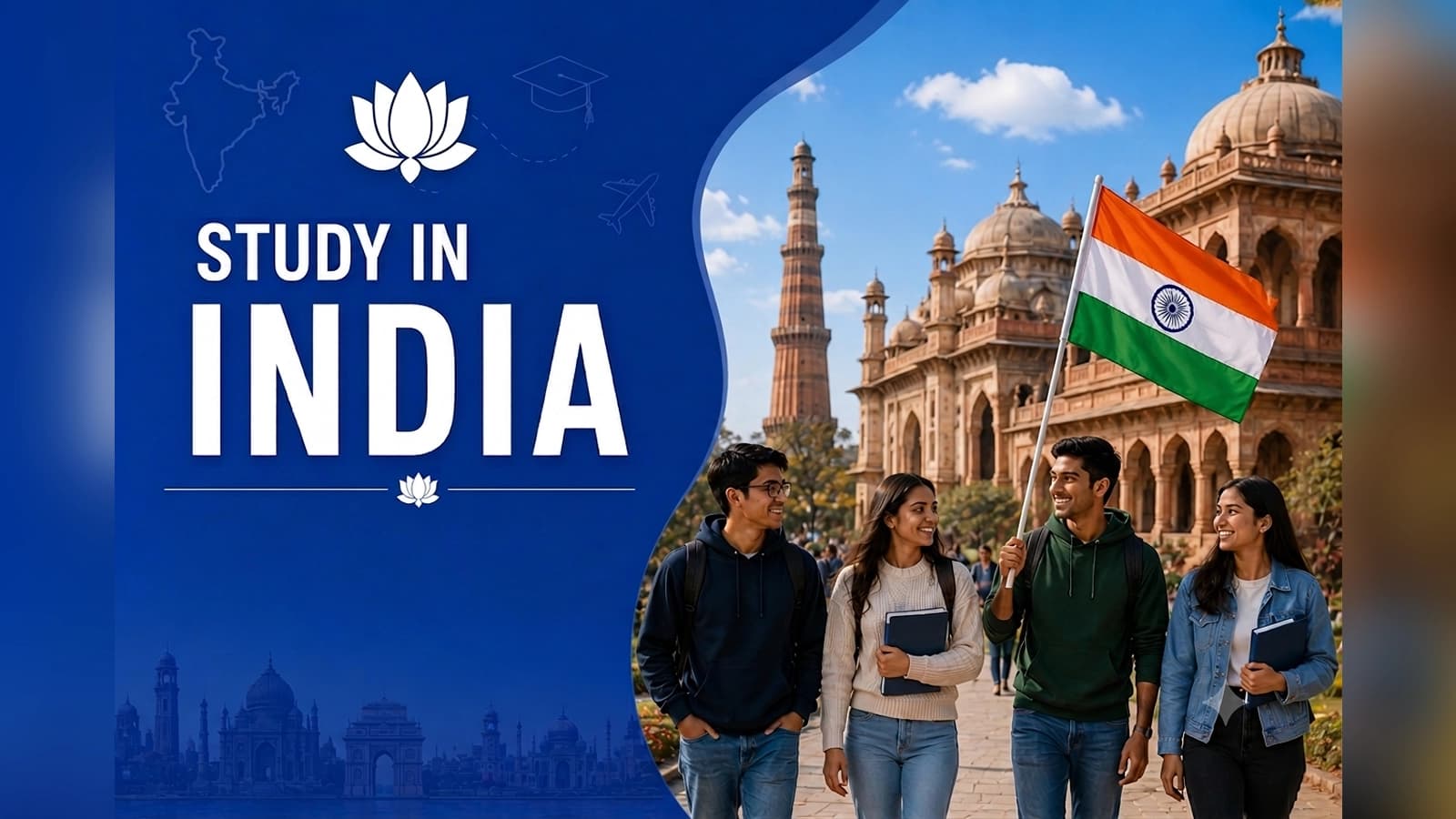
Representational Image
India offers students a wide range of higher-education options, including engineering, medicine, management, law, science, technology, arts and humanities. With institutions spread across the country, students can compare public and private universities, professional colleges, research institutions and specialised programmes before deciding where to study.
For students, choosing a university involves more than comparing rankings. Course quality, entrance examinations, fees, location, financial assistance and employment opportunities can all influence the decision. Students meanwhile, must consider university eligibility, admission procedures and visa requirements before applying to institutions.

The government's Study in India programme also provides an online platform through which eligible international students can explore participating institutions and courses. The official portal lists institutions, application guidance and immigration information.
India offers undergraduate, postgraduate, doctoral and professional qualifications across a wide range of disciplines. Students can choose from government-funded institutions, state universities, private universities and specialised institutes.
The country's higher-education options include engineering and technology, medicine, business administration, law, computer science, artificial intelligence, biotechnology, agriculture, media and communication.
For students comparing the cost of studying in India, public institutions may offer comparatively affordable options, although fees differ substantially between courses and institutions. Private universities and specialised professional programmes may have higher tuition costs.
India also offers students the opportunity to study closer to home, reducing the need for international travel and overseas living expenses for domestic students.
Top Universities in India for 2027
Students should compare institutions by subject and admission requirements rather than relying on a single overall ranking. The National Institutional Ranking Framework (NIRF) 2025, released by the Ministry of Education, provides rankings across categories including overall institutions, universities, engineering, management, medicine and law.
Some prominent institutions to explore include:
This is a selection of institutions, not a complete ranking across all disciplines. Students should check the latest category-specific rankings and the official admission pages for their chosen courses.
The right course depends on a student's academic background, interests and career goals. Popular options include:
The admission process depends on the institution, course and qualification level. Common routes include:
Not every university or course uses these examinations. Some institutions conduct their own tests, interviews or merit-based admissions.
Students should follow the official admission notification, check eligibility and deadlines, prepare the required documents and apply through the authorised portal. Admission offers should be verified directly with the institution.
The cost of studying in India varies according to the university, course, city and accommodation. Government institutions, private universities and professional colleges may have significantly different fee structures.
Students should budget for tuition, admission charges, hostel accommodation or rent, food, transport, books, equipment and personal expenses.
Before accepting an offer, students should calculate the total cost of the programme and check whether scholarships, fee concessions or education loans are available.
Students can explore central and state government scholarships, institution-funded awards and other financial-assistance schemes.
The National Scholarship Portal provides information about participating scholarship schemes, eligibility criteria and application procedures. Availability depends on the scheme, academic year, course, income criteria and other conditions.
Students should also check their university's scholarship and financial-aid pages. Some institutions provide merit-based awards, while others offer assistance based on financial need or specific eligibility categories.
Career opportunities depend on the qualification, field of study, skills, internships and employer requirements. Graduates may pursue work in technology, finance, healthcare, engineering, education, media, research, manufacturing and other sectors.
Students can improve their employability by developing practical skills, completing internships, building professional networks and gaining relevant work experience while meeting their institution's rules.
Those planning further study can consider postgraduate degrees, professional qualifications or research programmes. Students interested in entrepreneurship may also explore incubators and university-supported innovation programmes.
India offers a broad range of higher-education pathways, from research-focused institutions and professional degrees to undergraduate programmes in arts, commerce and science.
Before choosing a university, students should compare course quality, fees, accreditation, admission requirements, location, scholarships and career outcomes. Rankings can help with shortlisting, but the best institution is ultimately the one that matches a student's academic interests, budget and professional goals.

The Most Persistent Weakness in India’s Engineering Education System Is the Gap Between Knowing and Doing
Study in India 2027: Top Universities, Courses, Fees, Scholarships and Career Opportunities
Study in Singapore 2027: Top Universities, Fees, Scholarships, Student Visa and Jobs for Indian Students

French education institutions face December deadline to retain apprenticeship-tax funding eligibility
From “write a thesis” to “build something”: IIT Ropar’s new PhD route
The Most Persistent Weakness in India’s Engineering Education System Is the Gap Between Knowing and Doing
Study in Singapore 2027: Top Universities, Fees, Scholarships, Student Visa and Jobs for Indian Students

Study in Taiwan 2027: Top Universities, Fees, Scholarships, Student Visa and Jobs for Indian Students

Study in Hong Kong 2027: Top Universities, Fees, Scholarships, Visa and Career Opportunities for Indian Students

Study in South Korea 2027: Top Universities, Fees, Scholarships, Visa and Career Opportunities for Indian Students

The Most Persistent Weakness in India’s Engineering Education System Is the Gap Between Knowing and Doing
Study in India 2027: Top Universities, Courses, Fees, Scholarships and Career Opportunities
Study in Singapore 2027: Top Universities, Fees, Scholarships, Student Visa and Jobs for Indian Students
French education institutions face December deadline to retain apprenticeship-tax funding eligibility
From “write a thesis” to “build something”: IIT Ropar’s new PhD route
The Most Persistent Weakness in India’s Engineering Education System Is the Gap Between Knowing and Doing
Study in Singapore 2027: Top Universities, Fees, Scholarships, Student Visa and Jobs for Indian Students
Study in Taiwan 2027: Top Universities, Fees, Scholarships, Student Visa and Jobs for Indian Students
Study in Hong Kong 2027: Top Universities, Fees, Scholarships, Visa and Career Opportunities for Indian Students
Study in South Korea 2027: Top Universities, Fees, Scholarships, Visa and Career Opportunities for Indian Students
Copyright© educationpost.in 2026 All Rights Reserved.