


From Seoul National University and KAIST to government-funded scholarships, admission requirements, living expenses and post-study work options, here is everything Indian students need to know before choosing South Korea for higher education
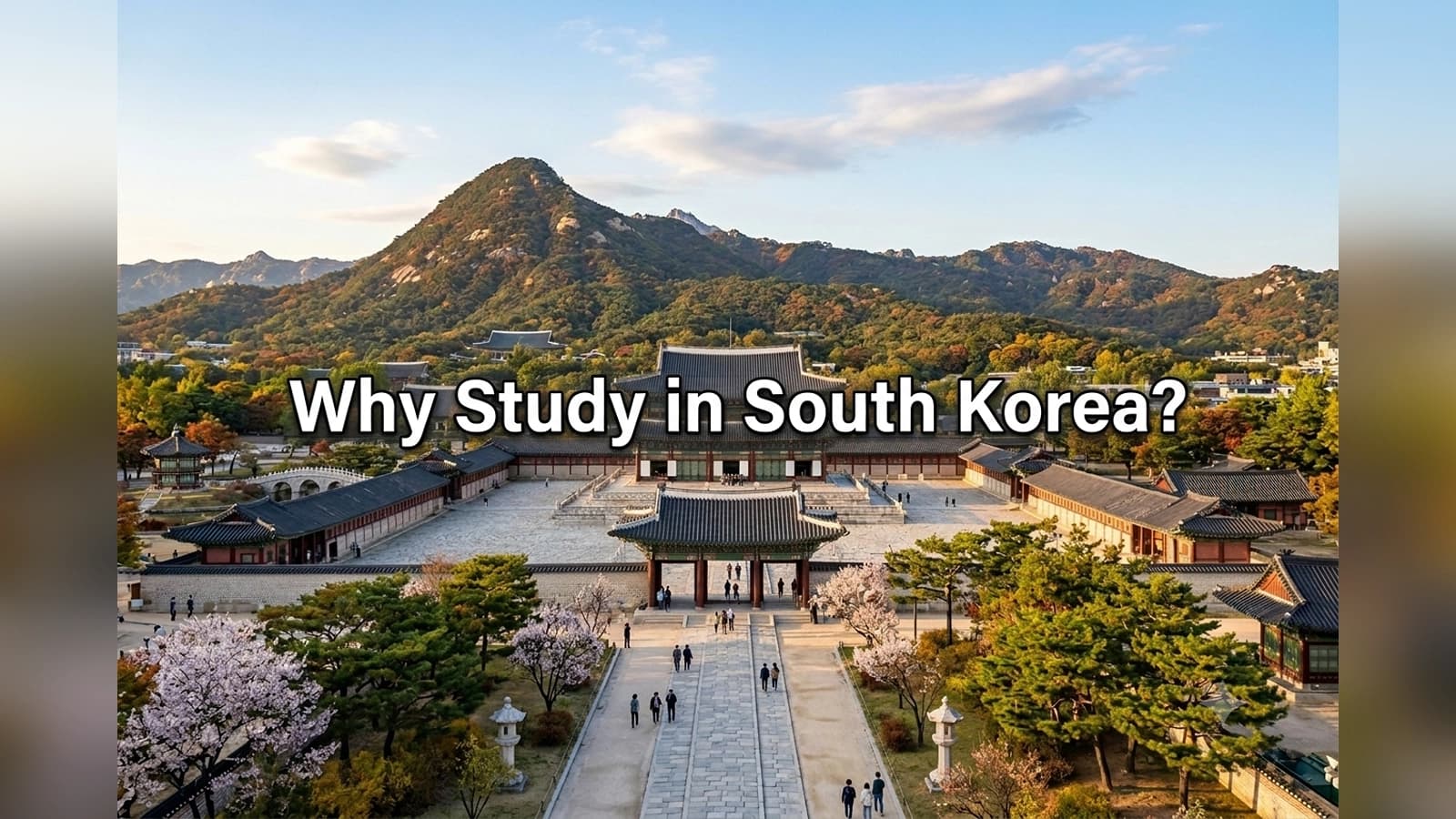
Representational Image
South Korea has emerged as an attractive destination for international students looking beyond traditional study-abroad countries such as the United States, the United Kingdom, Canada and Australia. Known for its technological industries, research-driven universities and global influence in entertainment, the country offers opportunities in engineering, artificial intelligence, business, biotechnology, media and Korean language studies.
For Indian students planning to study abroad in 2027, South Korea offers a combination of internationally recognised universities, English-taught programmes and scholarship opportunities. However, prospective students must consider tuition fees, language requirements, visa regulations and employment prospects before making a decision.

The Korean government operates an official international education portal, Study in Korea, where students can explore universities, courses, scholarships and admission procedures.
South Korea's appeal extends beyond the popularity of K-pop, Korean dramas and Korean culture. The country has a strong presence in electronics, automotive manufacturing, semiconductors, information technology and scientific research.
Students interested in artificial intelligence, robotics, computer science, engineering and biotechnology can explore universities with specialised research facilities. Business students may also find opportunities to study international trade, finance, management and global business.
Another attraction is the availability of government and university scholarships for eligible international students.
However, studying in South Korea requires careful planning. Although some programmes are taught entirely in English, Korean-language proficiency can improve students' ability to manage everyday life, participate in internships and compete for employment opportunities.
South Korea has several universities offering undergraduate, postgraduate and doctoral programmes. The right institution depends on the student's chosen subject, budget, language proficiency and career goals.
Here are some universities Indian students can explore:
| University | Location | Popular academic areas |
|---|---|---|
| Seoul National University (SNU) | Seoul | Engineering, sciences, business, humanities |
| Korea Advanced Institute of Science and Technology (KAIST) | Daejeon | Artificial intelligence, engineering, computer science |
| Yonsei University | Seoul | Business, medicine, engineering, international studies |
| Korea University | Seoul | Business, economics, engineering, social sciences |
| Pohang University of Science and Technology (POSTECH) | Pohang | Engineering, materials science, scientific research |
| Sungkyunkwan University (SKKU) | Seoul and Suwon | Engineering, technology, business |
| Hanyang University | Seoul and Ansan | Engineering, technology, business |
| Ulsan National Institute of Science and Technology (UNIST) | Ulsan | Science, engineering, energy, technology |
| Kyung Hee University | Seoul and Yongin | International studies, business, sciences |
| Pusan National University | Busan | Engineering, natural sciences, business |
These institutions have different academic strengths and admission requirements. Students should check the latest university rankings, programme accreditation, available courses and eligibility criteria before applying.
Indian students can consider South Korea for a range of undergraduate and postgraduate programmes.
Eligibility Requirements to Study in South Korea
Admission requirements differ between universities and courses. Generally, applicants must meet the following conditions:
There is no single minimum percentage or IELTS score applicable to every university in South Korea.
The application process generally involves six steps.
Step 1: Choose a university and course. Compare programmes, tuition fees, language requirements and admission deadlines.
Step 2: Check eligibility. Read the university's latest international admission guidelines and confirm the academic and language requirements.
Step 3: Prepare documents. Common requirements include a passport, academic transcripts, certificates, a statement of purpose, recommendation letters where applicable, language test scores and financial documents.
Step 4: Submit the application. Apply through the university's official admissions portal or the application method specified by the institution.
Step 5: Apply for scholarships. Check university funding opportunities and the Global Korea Scholarship application route, if eligible.
Step 6: Obtain admission and apply for a visa. After receiving the required admission documents, prepare the appropriate student visa application.
South Korea generally has two major university admission periods, associated with the spring semester in March and the autumn semester in September. Application deadlines differ between institutions, so students should begin preparations well in advance.
Cost of Studying in South Korea for Indian Students
The total cost depends on the university, programme, city and accommodation arrangements.
According to the Korean government's Study in Korea portal, the average annual undergraduate tuition fee is approximately KRW 6.82 million. The average is about KRW 4.27 million at national and public universities and KRW 7.63 million at private universities.
These are national averages, not guaranteed fees for a particular course. Professional programmes and individual institutions may charge substantially different amounts.
Scholarships can help reduce the financial burden of studying abroad.
Global Korea Scholarship
The Global Korea Scholarship, administered through South Korea's National Institute for International Education, is a major government scholarship programme for eligible international students.
Depending on the applicable scholarship scheme, benefits may include airfare, tuition support, Korean-language training and monthly allowances.
Eligibility conditions, available universities, selection quotas and application deadlines vary by scholarship category and academic year. Students should consult the latest official GKS announcement rather than assume that every applicant receives identical benefits.
University Scholarships
Several South Korean universities offer scholarships or tuition reductions based on academic performance, admission results, research arrangements or other institutional criteria.
Students should check whether scholarships cover full tuition, partial tuition or additional living expenses.
Indian students generally need the appropriate visa before travelling to South Korea for their studies.
The main categories include:
Applicants typically need a valid passport, visa application, photograph, university admission documents, proof of educational qualifications and evidence of financial ability. Additional documents may be required depending on the programme and the applicant's circumstances.
Students should consult the Embassy of the Republic of Korea in India and the relevant visa application centre for current procedures, fees and documentation requirements.
Can Indian Students Work While Studying in South Korea?
International students may be eligible for part-time employment, but permission is not automatic.
Students holding eligible D-2 or D-4 status generally need to meet the applicable conditions, including language or academic requirements where relevant, and obtain the required immigration authorisation before beginning work.
Students should confirm the permitted working hours and eligible employment categories with their university's international student office and Korean immigration authorities. Unauthorised employment can lead to immigration penalties.
Part-time work should not be treated as a guaranteed way to finance tuition or living expenses.
Career Opportunities After Studying in South Korea
South Korea has industries in technology, electronics, automotive manufacturing, research, biotechnology and international business. Graduates with relevant qualifications and skills may explore employment opportunities in these sectors.
However, graduation does not automatically provide permission to work in the country.
Eligible graduates may be able to change their immigration status to a D-10-1 job-seeking visa, subject to the applicable conditions. This status can support qualifying job-seeking activities and certain internships. Once employment is secured, graduates must meet the requirements for the appropriate employment status.
The Korean language can be an important advantage in many workplaces, although language expectations vary by employer and role.
Indian students should evaluate employment prospects, salary expectations, professional qualifications and visa eligibility before choosing a course solely for its perceived job opportunities.

Study in Japan 2027: Top Universities, Fees, Scholarships, Visa and Career Opportunities for Indian Students
Maharashtra: Nanded to Offer Free NEET, JEE Coaching to 200 Rural Students

Cyclone Arnab: Andaman Schools Shut on October 27; Odisha Closes Schools in Five Districts on October 28–29
CBSE Organises 4th National Summit on School-to-Work Transition in New Delhi

Study in Hong Kong 2027: Top Universities, Fees, Scholarships, Visa and Career Opportunities for Indian Students
Study in Hong Kong 2027: Top Universities, Fees, Scholarships, Visa and Career Opportunities for Indian Students
Study in South Korea 2027: Top Universities, Fees, Scholarships, Visa and Career Opportunities for Indian Students
UAE robotics league puts students with intellectual disabilities at the heart of 279 teams

Gujarat Class 12 student builds scribe network to support visually impaired students

Centre Amends Motor Vehicle Rules to Allow E100 Ethanol Fuel in Flex-Fuel Vehicles

Study in Japan 2027: Top Universities, Fees, Scholarships, Visa and Career Opportunities for Indian Students
Maharashtra: Nanded to Offer Free NEET, JEE Coaching to 200 Rural Students
Cyclone Arnab: Andaman Schools Shut on October 27; Odisha Closes Schools in Five Districts on October 28–29
CBSE Organises 4th National Summit on School-to-Work Transition in New Delhi
Study in Hong Kong 2027: Top Universities, Fees, Scholarships, Visa and Career Opportunities for Indian Students
Study in Hong Kong 2027: Top Universities, Fees, Scholarships, Visa and Career Opportunities for Indian Students
Study in South Korea 2027: Top Universities, Fees, Scholarships, Visa and Career Opportunities for Indian Students
UAE robotics league puts students with intellectual disabilities at the heart of 279 teams
Gujarat Class 12 student builds scribe network to support visually impaired students
Centre Amends Motor Vehicle Rules to Allow E100 Ethanol Fuel in Flex-Fuel Vehicles
Copyright© educationpost.in 2026 All Rights Reserved.