


The program allows scholars to pursue doctoral research through product development, patenting or startup creation, connecting academic work with industry needs and practical innovation opportunities.
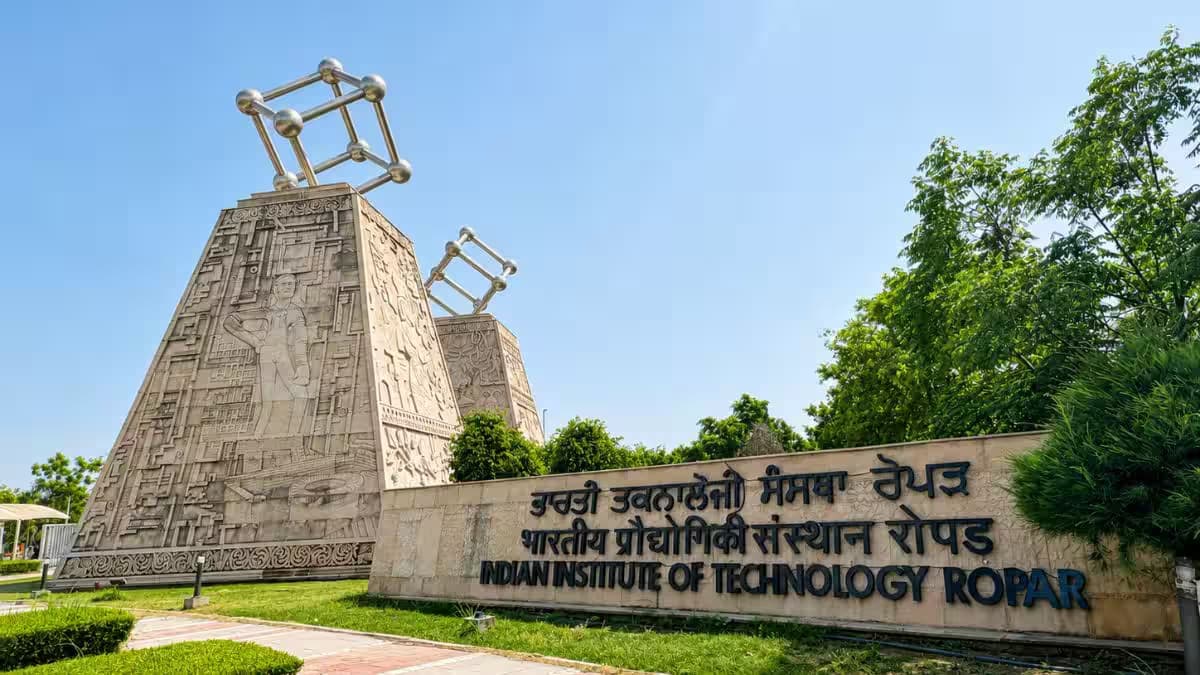
The Indian Institute of Technology (IIT) Ropar has introduced a Product/Startup-Driven PhD pathway that allows doctoral scholars to focus on developing products, creating startups or transferring technology instead of making a conventional thesis the principal outcome of their research.
The initiative, conceived by IIT Ropar Director Professor Rajeev Ahuja, aims to connect doctoral research with practical industry problems and encourage scholars to develop innovations that can be used or commercialised.

According to the institute’s program document, the PhD will be awarded on the basis of research outcomes linked to the creation, development and scaling of products or startups.
IIT Ropar’s innovation-driven PhD: What does the program offer?
Under the new pathway, scholars can pursue doctoral research through three routes: patenting an invention, establishing a startup or transferring their technology to an existing company.
In an interview with India Today, Professor Ahuja said a scholar pursuing the new model “does not need to write any PhD thesis.”
Explaining the program’s practical focus, Ahuja said, “You have freedom. You have only one target. You sell the product, earn 10 lakh rupees, show it to me. You get PhD.”
He also explained that a student could be given a target to develop a product and earn ₹10 lakh from it. If the student achieves the target, they could qualify for the PhD.
"If a student may be given a target to develop a product and earn 10 lakh from it. If the student achieves this, they can qualify for the PhD."
The ₹10 lakh target illustrates the program’s emphasis on practical outcomes. However, the available program details do not establish whether this amount is a mandatory requirement for every scholar.
Three routes to complete the PhD
The program allows scholars to take their research forward through different routes, depending on the nature of their innovation.
The first option is to patent an invention. Scholars can develop a new technology, file a patent application and work towards securing the patent.
The second route is to establish a startup. Researchers can create a company around their innovation, develop a product and sell it in the market.
The third option is technology transfer. Scholars can transfer their technology to an established company, such as Tata, Reliance or Honda, which can manufacture and sell the product. The inventor may receive royalty payments from the arrangement.
These pathways place the product, invention or commercial application at the centre of the doctoral research.
IIT Ropar’s startup incubation and investor support
IIT Ropar’s innovation ecosystem supports ideas developed by undergraduate students, faculty members and students working on faculty-led research.
According to Ahuja, researchers can use the institute’s facilities and support to develop an idea into a prototype.
“For example, a student or faculty member may have an idea to build a drone that can fly without being detected. They can use the institute's facilities and support to develop the idea and build a prototype.”
After a prototype is developed, the institute’s incubation system provides equipment, technical assistance, mentors and access to investors to help researchers take their innovations further.
Ahuja said incubation typically lasts two years. Startups are expected to graduate from the program after this period and move out of the incubation facility.
“Typically, incubation works for two years. A startup enters the incubation program and, after two years, has to graduate, meaning it has to move out.”
The institute organises investor meetings at least once every quarter, allowing startups to present their work and seek funding. IIT Ropar may take approximately 2% to 4% equity in startups it supports, Ahuja said.
The incubation system is intended to help researchers move from developing a prototype to establishing a business or finding a company that can commercialise their technology.
How does the IIT Ropar model compare with other institutions?
According to the information provided about the program, no other IIT is currently offering a similar pathway. BITS Pilani’s WHILSP program has been identified as a comparable initiative, although the available information does not establish that the two programs have identical requirements.
The initiative also comes as other countries explore practical alternatives to conventional doctoral assessment.
In February 2026, Nature reported on China’s first practical PhDs, including a civil-engineering scholar who defended a bridge-pylon product instead of a written thesis.
China has introduced a route under which selected doctoral candidates can graduate based on practical achievements, such as an innovative product, technique or project.
IIT Ropar’s program similarly places practical research outcomes at the centre of its proposed doctoral pathway, with options covering product development, startups and technology transfer.
The institute’s initiative aims to connect doctoral research more directly with industry and commercial applications. Its impact will depend on how the program’s research outcomes are assessed and implemented.
From “write a thesis” to “build something”: IIT Ropar’s new PhD route
Study in Taiwan 2027: Top Universities, Fees, Scholarships, Student Visa and Jobs for Indian Students

Study in Japan 2027: Top Universities, Fees, Scholarships, Visa and Career Opportunities for Indian Students
Maharashtra: Nanded to Offer Free NEET, JEE Coaching to 200 Rural Students

NEET PG 2026: NBEMS issues fresh guidelines on joining deadlines, fees and seat upgradation
Study in Taiwan 2027: Top Universities, Fees, Scholarships, Student Visa and Jobs for Indian Students

Study in Hong Kong 2027: Top Universities, Fees, Scholarships, Visa and Career Opportunities for Indian Students

Study in South Korea 2027: Top Universities, Fees, Scholarships, Visa and Career Opportunities for Indian Students
UAE robotics league puts students with intellectual disabilities at the heart of 279 teams

Gujarat Class 12 student builds scribe network to support visually impaired students

From “write a thesis” to “build something”: IIT Ropar’s new PhD route
Study in Taiwan 2027: Top Universities, Fees, Scholarships, Student Visa and Jobs for Indian Students
Study in Japan 2027: Top Universities, Fees, Scholarships, Visa and Career Opportunities for Indian Students
Maharashtra: Nanded to Offer Free NEET, JEE Coaching to 200 Rural Students
NEET PG 2026: NBEMS issues fresh guidelines on joining deadlines, fees and seat upgradation
Study in Taiwan 2027: Top Universities, Fees, Scholarships, Student Visa and Jobs for Indian Students
Study in Hong Kong 2027: Top Universities, Fees, Scholarships, Visa and Career Opportunities for Indian Students
Study in South Korea 2027: Top Universities, Fees, Scholarships, Visa and Career Opportunities for Indian Students
UAE robotics league puts students with intellectual disabilities at the heart of 279 teams
Gujarat Class 12 student builds scribe network to support visually impaired students
Copyright© educationpost.in 2026 All Rights Reserved.