


Regional discussions also explore multilingual courses, joint research, AI competency training for educators and cross-border academic exchanges to strengthen digital learning infrastructure across participating countries.
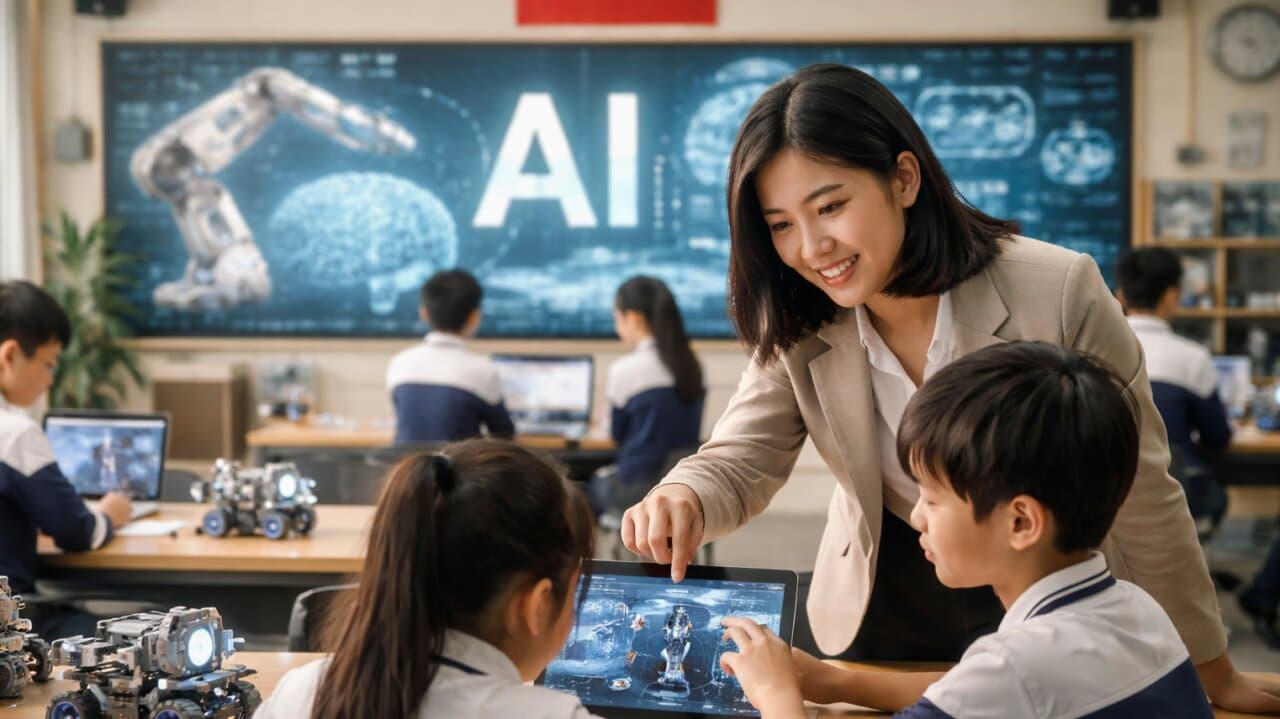
Artificial intelligence (AI) could increasingly influence how lessons are planned, delivered and assessed, but teachers must continue to guide the learning process, education leaders from the Association of Southeast Asian Nations (ASEAN) and China have emphasized.
The issue was a central focus of the ASEAN-China Dialogue on AI and Digital Education, held in Hanoi on Nov 2, 2026. Education leaders, researchers and policymakers discussed how emerging technologies could improve teaching and learning without reducing the importance of human involvement in education.

Hosted by the University of Education under Vietnam National University-Hanoi, the dialogue examined AI applications in classrooms, professional training and regional digital cooperation. Participants stressed that technology should complement the work of teachers and learners rather than replace their roles.
The discussions also focused on the need to make AI adoption inclusive, transparent and ethically responsible. Speakers highlighted that educational institutions must consider the broader implications of introducing AI tools into classrooms, particularly their impact on teaching practices and students' overall development.
The dialogue marked the opening of the Global MOOC and Online Education Conference 2026, which was organized around the theme "Reallocating Intelligence: Transforming Education for a Human-AI Future".
Co-hosted by Vietnam National University-Hanoi and a leading Chinese university, the conference brought together universities, research organizations and education experts. Participants exchanged experiences and examined possible models for digital learning, institutional partnerships and the practical use of AI in education.
ASEAN and China emphasize human role in AI-driven classrooms
Speakers at the Hanoi dialogue highlighted that the growing use of AI in education should not come at the expense of human judgment, teacher involvement or meaningful interaction between educators and students.
A representative of the UNESCO Institute for Information Technologies in Education explained that AI could support several responsibilities within educational institutions. These include analyzing data, preparing lesson plans, developing personalized learning experiences and reducing administrative workloads.
However, the representative cautioned that AI cannot take over the responsibilities of teachers in making pedagogical decisions or providing support to students.
Teachers remain responsible for understanding individual learning needs, guiding classroom discussions and helping students develop beyond academic knowledge. Participants emphasized that these human responsibilities must remain central even as educational institutions introduce more sophisticated technological tools.
The discussions also highlighted the importance of preparing students to use AI responsibly. Learners need critical thinking skills to evaluate information generated by AI systems, recognize their limitations and understand the potential risks associated with their use.
Alongside technical knowledge, students should develop the ability to question AI-generated responses and assess whether the information provided by these systems is reliable and appropriate.
The broader message was that AI literacy should not be limited to operating digital tools. Students must also understand how these technologies work, where they can be useful and when human judgment is necessary.
Regional partnerships to strengthen digital education
Beyond classroom applications, the dialogue examined how ASEAN countries and China could work together to develop stronger digital education systems.
The conference discussions covered three major areas: AI-driven innovation in future teaching and learning, the use of AI in professional and specialized education, and the development of regional digital transformation ecosystems.
Delegates explored opportunities for universities across the two regions to collaborate on open learning infrastructure, multilingual educational resources and frameworks for sharing academic knowledge.
The discussions also considered how cross-border academic partnerships could help institutions respond to technological changes while taking into account their respective economic, cultural and social conditions.
Participants emphasized that international cooperation could help universities adapt emerging technologies to local requirements rather than depend entirely on approaches developed elsewhere.
The dialogue also reflected wider efforts to expand regional partnerships in digital education. These include Vietnam's international cooperation initiatives aimed at developing education systems that are prepared for the growing use of AI, along with broader collaboration on emerging technologies.
Assoc Prof Dr Tran Thanh Nam, President of the University of Education under Vietnam National University-Hanoi, said the dialogue would help promote international academic exchanges, collaborative research and training partnerships.
He added that the university intends to contribute to the development of an open and inclusive digital education ecosystem involving Vietnam, China and other ASEAN partners.
The proposed ecosystem is expected to encourage universities and research institutions to exchange expertise, develop joint initiatives and explore opportunities to integrate AI into education systems.
AI applications extend beyond traditional classrooms
The dialogue also examined how AI could be incorporated into professional education and specialized academic disciplines, where technological advancements are changing the knowledge and skills expected from graduates.
Participants shared approaches to using AI in fields such as medicine, chemistry, biology, educational sciences and education management.
The discussions focused on ensuring that academic curricula and professional training programs remain relevant to changing workforce requirements. As digital technologies become increasingly integrated into different industries, educational institutions face the challenge of preparing students for workplaces where AI-based systems are likely to play a greater role.
Delegates considered how AI tools could help improve professional competence, support specialized learning and strengthen practical training. At the same time, they emphasized the need to maintain academic standards and ensure that students continue to develop essential practical skills.
The use of AI in professional education also requires institutions to reconsider how they design courses and assess student performance. Training programs need to reflect changing industry requirements while ensuring that learners can apply their knowledge independently.
Regional digital cooperation formed another important part of these discussions. Delegates examined possibilities for creating shared educational resources, multilingual smart courses and collaborative research partnerships.
These priorities are also connected with Vietnam's wider efforts to expand international cooperation in advanced technologies. Its partnerships include collaboration with Australia on AI and digital technology, as well as research cooperation with the European Union on developing national capabilities in quantum technology.
ASEAN-China dialogue proposes joint AI courses and teacher training
The discussions moved toward practical collaboration during the Executive Board meeting of the Global MOOC and Online Education Alliance, held on Nov 2.
Dr Nam proposed several initiatives intended to strengthen cooperation among participating institutions and support the integration of AI into regional education systems.
One proposal involved establishing a dedicated working group to focus on developing teachers' AI competencies. The initiative would aim to help educators acquire the knowledge and skills required to use AI tools effectively in teaching and learning.
Another proposal involved developing pilot multilingual courses in Vietnamese and English. These courses would cover AI in education, digital teaching and learning assessment, allowing educators and learners across different institutions to access shared learning materials.
The proposals also included scholar exchange programs and joint research projects focused on AI in education. Such collaborations could provide opportunities for academics and researchers to share findings, exchange teaching practices and examine the effectiveness of emerging educational technologies.
Participants also discussed incorporating multilingual education and teacher competency development into the Global Digital Higher Education Development Report 2027.
The proposed additions would bring greater attention to the role of language accessibility and educator preparedness in the development of digital higher education systems.
Together, the initiatives reflect the broader direction emerging from the ASEAN-China dialogue: expanding the use of AI in education while ensuring that teachers retain their central role in the learning process.
As universities explore AI-powered teaching methods, personalized learning and digital academic resources, regional cooperation and teacher training are likely to remain important components of the transition toward a human-AI education environment.

Ladakh Administration Directs Sonam Wangchuk-Founded School to Suspend Activities Pending High Court Decision

IIIT-Delhi Awards Degrees to 830 Students at 15th Convocation; Recognises Academic and Research Excellence
Universal AI University Awards Degrees to 369 Graduates at 15th Convocation Ceremony

UK’s football business university to merge with BIMM University

Bengaluru Water Crisis: Poor Families Spend ₹3,000 Monthly on Drinking Water, Survey Flags

Japan's Okayama University uses robotics competitions to build engineering and workplace skills

Indian Navy Rescues 20 Crew from Hijacked Iranian Vessel off Somalia

Learning Mandarin, earning degrees in China: How Indonesian youth are preparing for global careers
China allows clinical medicine master's and PhD students to graduate without thesis under new pathway

Delhi HC Declines Action Against ACP Over Alleged Threats to Lawyers

Ladakh Administration Directs Sonam Wangchuk-Founded School to Suspend Activities Pending High Court Decision
IIIT-Delhi Awards Degrees to 830 Students at 15th Convocation; Recognises Academic and Research Excellence
Universal AI University Awards Degrees to 369 Graduates at 15th Convocation Ceremony
UK’s football business university to merge with BIMM University
Bengaluru Water Crisis: Poor Families Spend ₹3,000 Monthly on Drinking Water, Survey Flags
Japan's Okayama University uses robotics competitions to build engineering and workplace skills
Indian Navy Rescues 20 Crew from Hijacked Iranian Vessel off Somalia
Learning Mandarin, earning degrees in China: How Indonesian youth are preparing for global careers
China allows clinical medicine master's and PhD students to graduate without thesis under new pathway
Delhi HC Declines Action Against ACP Over Alleged Threats to Lawyers
Copyright© educationpost.in 2026 All Rights Reserved.