


Germany's academic exchange service has selected university partners for two new centres in Africa, with one focusing on responsible artificial intelligence and the other on land governance and sustainable infrastructure development.
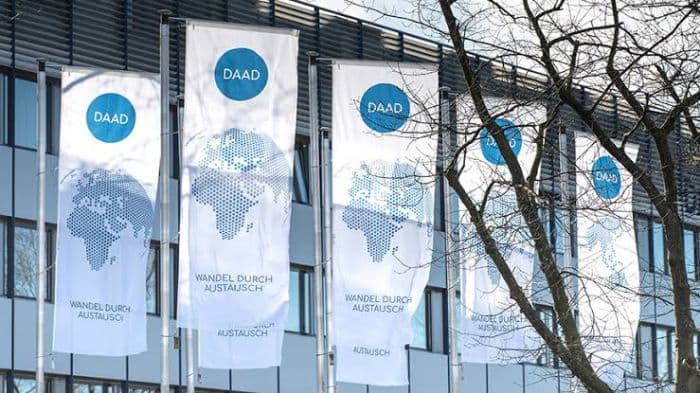
The German Academic Exchange Service (DAAD) has selected university partnerships in Kenya and Ghana to establish two new centres of excellence aimed at strengthening research, higher education and knowledge transfer in sub-Saharan Africa.
Announced on Oct 12, the initiatives will focus on applied and responsible artificial intelligence (AI) in Kenya and sustainable infrastructure development in Ghana. The projects have secured approximately €6.5 million in announced funding from Germany's Federal Foreign Office and Federal Ministry of Research, Technology and Space.

German and Kenyan universities to establish responsible AI centre
The first centre, called Applied and Responsible Artificial Intelligence for Society and Environment (ARAISE), will be led by the University of Tübingen in Germany, in partnership with three Kenyan institutions: Dedan Kimathi University of Technology, the Kenya Medical Research Institute and Maseno University.
The centre will bring together research, teaching and training in AI, with an emphasis on applications addressing environmental challenges, public health and social participation.
Planned research includes the use of AI in health research and developing solutions to improve water supply and climate adaptation. The participating universities also intend to establish joint research groups and develop master's-level teaching and training programmes focused on responsible AI use.
The project will receive around €2.3 million from Germany's Federal Foreign Office and nearly €1.9 million from the Federal Ministry of Research, Technology and Space through the end of 2031.
DAAD said the initiative would strengthen academic cooperation between Germany and Kenya while encouraging dialogue on the opportunities and risks associated with AI.
Ghana centre to focus on land governance and infrastructure
The second initiative, the Centre of Excellence for Customary Land Governance and Participatory Planning for Sustainable Infrastructure (LandGAPPS), will be developed by the Technical University of Munich (TUM) and Ghana's Kwame Nkrumah University of Science and Technology.
The centre will focus on traditional land rights, participatory spatial planning, geographic information systems, land administration and sustainable infrastructure development.
German and Ghanaian experts are expected to work together on practical approaches to building resilient infrastructure and sharing research findings with stakeholders in both countries.
Planned activities include joint curricula, doctoral research support, academic mobility programmes, digital teaching and the development of lasting research infrastructure between the two universities.
Germany's Federal Foreign Office will provide approximately €2.3 million for the centre.
DAAD programme aims to strengthen African higher education
The two centres are part of the DAAD's Centres of African Excellence programme, which supports academic training and research capacity at African universities, particularly through partnerships with German institutions.
The programme also seeks to connect universities with government, business and civil society, while encouraging the practical application of research findings.
DAAD President Joybrato Mukherjee said the two centres addressed issues important to Kenya, Ghana and Germany, adding that international cooperation was needed to develop shared solutions in AI and sustainable infrastructure.
The new partnerships will bring together universities and research institutions to develop specialist training, expand collaborative research and strengthen the transfer of scientific knowledge into practical applications.
AICSSYC 2026 Opens at SRMIST, Bringing Together AI Researchers and Young Professionals

Kerala High Court Quashes Criminal Case Against Teacher Accused of Injuring Student While Maintaining Discipline

AI’s Growing Mathematical Capabilities Raise Questions About the Future of Research
.jfif&w=256&q=75)
India-US Interim Trade Deal Talks Continue Amid Changing Global Trade Conditions

Modern Diets Are Becoming Less Diverse Despite the Growing Variety of Food Choices
Sahil Wakode death: Crime Branch records over 40 statements as parents allege caste discrimination at IIT Bombay
University of Melbourne, IISER Tirupati announce dual degree with two years of study in Australia

DAAD announces €6.5 million for AI research and sustainable infrastructure centres in Kenya and Ghana

UK universities withdraw admission offers as visa rules tighten for international students
.jpg&w=256&q=75)
FT Executive MBA Rankings 2026: ISB climbs to 38th, IIM Bangalore rises to 64th

AICSSYC 2026 Opens at SRMIST, Bringing Together AI Researchers and Young Professionals
Kerala High Court Quashes Criminal Case Against Teacher Accused of Injuring Student While Maintaining Discipline
AI’s Growing Mathematical Capabilities Raise Questions About the Future of Research
India-US Interim Trade Deal Talks Continue Amid Changing Global Trade Conditions
Modern Diets Are Becoming Less Diverse Despite the Growing Variety of Food Choices
Sahil Wakode death: Crime Branch records over 40 statements as parents allege caste discrimination at IIT Bombay
University of Melbourne, IISER Tirupati announce dual degree with two years of study in Australia
DAAD announces €6.5 million for AI research and sustainable infrastructure centres in Kenya and Ghana
UK universities withdraw admission offers as visa rules tighten for international students
FT Executive MBA Rankings 2026: ISB climbs to 38th, IIM Bangalore rises to 64th
Copyright© educationpost.in 2026 All Rights Reserved.