


Experts Warn Against Overdependence on Problem-Solving as China and the US Invest in AI-Driven Mathematical Discovery
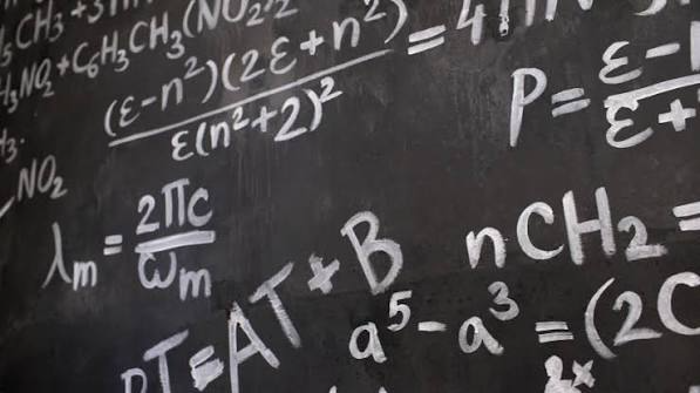
The growing ability of artificial intelligence (AI) to solve complex mathematical problems is prompting researchers to reconsider the goals and future direction of mathematical research. Experts argue that while AI can accelerate discoveries, mathematical progress involves more than finding solutions; it also requires understanding, verification and the development of new ideas.
Speaking at a lecture at the California Institute of Technology (Caltech) on October 9, Fields Medal-winning mathematician Terence Tao cautioned that an excessive focus on solving problems through AI could harm the long-term development of mathematics. In his presentation, titled Math 2.0, he argued that problem-solving should serve broader intellectual objectives rather than become the sole measure of research progress.

The debate is gaining momentum as countries invest in AI systems designed specifically for mathematical discovery. On October 11, China launched the Yau Laboratory Alliance for Mathematics and Artificial Intelligence at Tsinghua University. The initiative brings together eight institutions and aims to establish a network of more than 1,000 scientists working on specialised AI models for mathematics, formal proof verification and conjecture generation.
According to reports, mathematician Shing-Tung Yau acknowledged that China was lagging behind the United States in applying AI to frontier scientific research.
Researchers have also raised concerns about the impact of advanced AI systems on young mathematicians. Vamsi Pritham Pingali, a professor at the Indian Institute of Science in Bengaluru, said that an internal OpenAI model had reportedly solved entire research programmes, creating challenges for early-career researchers who have limited time to adapt to the changing landscape.
Experts have also questioned whether powerful AI models will be equally accessible to academic institutions, given the substantial computing resources and energy required to develop them.
In mathematics, producing an answer is not sufficient; researchers must demonstrate why it is correct. A mathematical proof establishes that a statement holds under specified conditions and provides a reliable foundation for further discoveries.
AI-generated proofs therefore require careful verification. Even a seemingly convincing argument may contain errors that undermine subsequent research. Experts have cautioned against both exaggerated expectations and excessive pessimism about AI, stressing that its results must be assessed rigorously.
One approach to improving reliability is the use of proof assistants, which allow mathematical arguments to be expressed in a formal language that computers can check. The need for such tools became evident during mathematician Thomas Hales’s work on the Kepler conjecture, which concerns the most efficient arrangement of spheres. The complexity of his proof and its extensive computer calculations made complete verification difficult for human referees.
The development of formal verification tools has since provided researchers with ways to check mathematical arguments more systematically.
One prominent tool is Lean, a programming language and interactive theorem prover developed by Leonardo de Moura at Microsoft Research in 2013. It enables mathematicians to formalise proofs and verify their logical correctness. Researchers have also developed shared digital libraries containing mathematical definitions, theorems and proofs that can be reused in future work.
As AI becomes more capable of generating mathematical results, the challenge will be to ensure that discoveries remain verifiable, understandable and accessible. The future of mathematics may therefore depend not only on how quickly AI can solve problems, but also on how effectively researchers can use its results to build reliable and lasting knowledge.

AICSSYC 2026 Opens at SRMIST, Bringing Together AI Researchers and Young Professionals
Kerala High Court Quashes Criminal Case Against Teacher Accused of Injuring Student While Maintaining Discipline
AI’s Growing Mathematical Capabilities Raise Questions About the Future of Research
.jfif&w=256&q=75)
India-US Interim Trade Deal Talks Continue Amid Changing Global Trade Conditions

Modern Diets Are Becoming Less Diverse Despite the Growing Variety of Food Choices
Sahil Wakode death: Crime Branch records over 40 statements as parents allege caste discrimination at IIT Bombay

University of Melbourne, IISER Tirupati announce dual degree with two years of study in Australia
DAAD announces €6.5 million for AI research and sustainable infrastructure centres in Kenya and Ghana

UK universities withdraw admission offers as visa rules tighten for international students
.jpg&w=256&q=75)
FT Executive MBA Rankings 2026: ISB climbs to 38th, IIM Bangalore rises to 64th

AICSSYC 2026 Opens at SRMIST, Bringing Together AI Researchers and Young Professionals
Kerala High Court Quashes Criminal Case Against Teacher Accused of Injuring Student While Maintaining Discipline
AI’s Growing Mathematical Capabilities Raise Questions About the Future of Research
India-US Interim Trade Deal Talks Continue Amid Changing Global Trade Conditions
Modern Diets Are Becoming Less Diverse Despite the Growing Variety of Food Choices
Sahil Wakode death: Crime Branch records over 40 statements as parents allege caste discrimination at IIT Bombay
University of Melbourne, IISER Tirupati announce dual degree with two years of study in Australia
DAAD announces €6.5 million for AI research and sustainable infrastructure centres in Kenya and Ghana
UK universities withdraw admission offers as visa rules tighten for international students
FT Executive MBA Rankings 2026: ISB climbs to 38th, IIM Bangalore rises to 64th
Copyright© educationpost.in 2026 All Rights Reserved.