


Students will earn honors degrees from both institutions across eight science majors, with a separate qualifying test for admission and potential savings on overseas education costs.
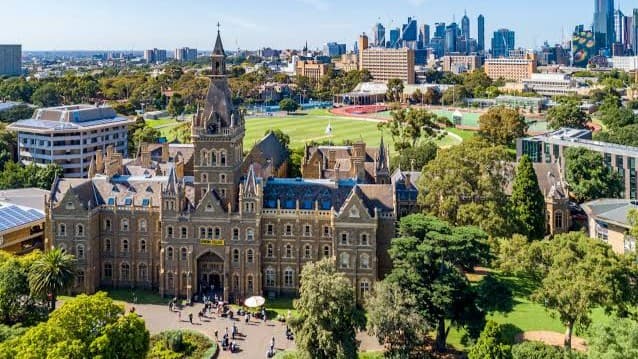
The University of Melbourne and the Indian Institute of Science Education and Research (IISER) Tirupati have launched a four-year Bachelor of Science Integrated (Honours) dual-degree program that will allow Indian students to complete their undergraduate studies across India and Australia, earning honors degrees from both institutions.
The program was launched at the Melbourne Global Centre in New Delhi. Under the 2+2 arrangement, students will spend their first two years at IISER Tirupati before moving to the University of Melbourne for the final two years.

The initiative is intended to provide students with an international science education while reducing the financial burden associated with spending all four years of an undergraduate degree overseas.
Students will be able to specialize in biotechnology, chemistry, ecosystem science, environmental science, food science, genetics, physics and plant science.
Graduates will also have the option of pursuing a master’s degree, potentially benefiting from advanced standing that could reduce the time required to complete postgraduate studies.
All students enrolled in the dual-degree program will automatically become part of the Science Global Scholars Program, which supports research collaboration and the movement of talent across institutions and countries.
University of Melbourne-IISER Tirupati dual degree: Lower cost, same academic standards
IISER Tirupati Director Professor Santanu Bhattacharya said the program would make international education more affordable without compromising academic quality. By dividing the undergraduate degree between India and Australia, students would avoid the full cost of studying in Melbourne for four consecutive years.
“They will spend two years in India and two years in Melbourne, so the high cost of education going all the way to Australia for four years will be significantly reduced. We will have instructors from both institutions. The syllabus we have mapped. Exactly what you get in Melbourne, we are going to offer. So there is no dilution,” he said.
The curriculum has been mapped between the two institutions, with instructors from both universities contributing to the program.
According to Bhattacharya, the arrangement is designed to ensure that students receive an education comparable to that offered to students studying at the University of Melbourne throughout their undergraduate years.
Starting their studies in India is also expected to give students time to adjust to university-level education before moving abroad. Bhattacharya said beginning the course at IISER Tirupati would help students become familiar with the academic system before transitioning to Australia.
“You spend two years here, you get acclimatised, you know the system, and then you go there,” he said.
The arrangement is expected to combine the advantages of studying at an Indian science and research institution with exposure to an international academic environment during the final two years of the degree.
IISER Tirupati dual-degree program: Admission process and first-year intake
Students seeking admission to the new program will not be selected through the existing IISER Aptitude Test (IAT) route. Instead, IISER Tirupati will introduce a separate qualifying examination designed specifically for the dual-degree course.
Bhattacharya said the admission process would differ from the IAT because the existing examination includes other elements that would not necessarily suit the requirements of the new program. The proposed test will also take into account social justice considerations and other relevant parameters.
“We will create a qualifying test. It will be completely different, because IISER’s IAT has various other elements. We have to follow social justice and various other parameters. This will be open-ended, and this would be a paid program,” Professor Bhattacharya said.
The first batch could include up to 50 students, although the final intake will depend on the number of applications received and the quality of candidates. The institutions intend to assess the response to the program before deciding whether to expand enrollment in subsequent years.
“Quality is very important. How many people apply, and all those factors, will determine the cohort size in the first year. Then we will fine-tune it the following year,” he said.
Professor Moira O’Bryan, Dean of Science at the University of Melbourne, said the institutions would initially focus on establishing the program before considering a larger intake.
She also noted that transnational education programs are exempt from international student caps, distinguishing this arrangement from other international enrollment models.
“I would hope that we would start small but not too small, and then we could get bigger. These are transnational education programmes, so they are exempt from the international caps,” she said.
The first cohort's size will therefore depend on student demand, applications and the institutions' assessment of academic quality. The universities plan to use their experience with the initial batch to refine the program in the following year.
Career opportunities, research and industry exposure
The dual-degree course is intended to prepare students for a range of academic and professional opportunities, depending on their chosen area of specialization. Bhattacharya described it as an advanced honors program aimed at high-quality students interested in science.
He said career prospects would vary according to the major students pursue, while also highlighting the role of industry engagement in connecting science education with professional opportunities.
“We now try to do many things linked with startups, private industry participation and internships,” he said.
The institutions' emphasis on research collaboration and industry participation is expected to help students explore opportunities beyond classroom learning. Startup engagement, internships and private-sector involvement could also expose participants to applied scientific work and potential career pathways.
In addition to preparing students for employment, the program will offer a route toward further academic study. Graduates may pursue a master's degree and could receive advanced standing, which may shorten the time needed to complete the postgraduate qualification. The precise benefit will depend on the relevant master's program and its academic requirements.
Why the University of Melbourne chose an institutional partnership
The University of Melbourne has opted to collaborate with an Indian institution rather than establish its own branch campus in India. Professor O’Bryan said the university believes that partnerships with local institutions offer a more effective way to extend its academic and research impact.
“We feel we can have more impact in that model. We think this is the best model for the University of Melbourne. I can’t speak for others, and I’m sure branch campuses work for other universities, but this is the model we chose,” she said.
The partnership with IISER Tirupati reflects the University of Melbourne's preference for working with an established Indian institution to deliver a joint academic program. Rather than operating a separate campus, the model allows students to begin their education in India and complete the remaining part of their degree in Australia.
For IISER Tirupati, the collaboration is part of a broader effort to build international academic relationships. Bhattacharya said the institute wanted to partner with a highly regarded institution and selected the University of Melbourne for that reason.
“We would like to go with an excellent institute, and so we have chosen Melbourne,” Professor Bhattacharya said.
The partnership brings together the two institutions through a program that combines undergraduate education in India with international study, while also creating opportunities for research cooperation and student mobility.
University leaders highlight global science collaboration
University of Melbourne Pro Vice-Chancellor (Global) Professor Frank Vetere said the program would help prepare emerging scientists to work across borders and address complex challenges that require international cooperation.
“Together, the University of Melbourne and IISER Tirupati are fostering a new generation of globally connected scientists equipped to contribute solutions to challenges that transcend national boundaries,” he said.
Professor O’Bryan described the initiative as an investment in science education and stronger academic relations between Australia and India. She said students would benefit from an international education built around academic excellence and research-led learning.
“Students will gain the benefits of an international education grounded in academic excellence and research-led learning,” she said.
The program is expected to provide students with experience across two academic environments while connecting them with research-oriented learning. Its structure also reflects the institutions' broader emphasis on international collaboration, scientific training and the development of graduates capable of contributing to challenges that extend beyond national boundaries.
University of Melbourne and IISER Tirupati to host science events across India
Beyond the dual-degree launch, the University of Melbourne and IISER Tirupati are preparing to jointly host a series of public events next month under the banner Frontiers of Science for Global Advances.
The events will be held across India and will bring together researchers, students, educators and members of the public. The program will include keynote addresses and expert panel discussions covering biotechnology, climate science, quantum technologies, ecosystems, agriculture and sustainability.
The series is intended to create opportunities for engagement with leading researchers and encourage discussion of scientific developments and challenges across multiple disciplines. The planned events will complement the institutions' academic partnership by bringing scientific research and expertise to a wider audience.
The dual-degree program and the upcoming public events form part of the institutions' efforts to strengthen academic cooperation between India and Australia, expand opportunities for student mobility and promote collaboration in science and research.

What Is UPI MDR? Why Merchant Payment Charges Were Deferred Until After Diwali: Explained
University of Melbourne, IISER Tirupati announce dual degree with two years of study in Australia

DU approves ₹5,889 crore hostel expansion plan for around 22,000 students across campuses
The British School New Delhi and UCL Hold Leadership Development Conference for School Leaders
.jpg&w=256&q=75)
FT Executive MBA Rankings 2026: ISB climbs to 38th, IIM Bangalore rises to 64th
University of Melbourne, IISER Tirupati announce dual degree with two years of study in Australia
FT Executive MBA Rankings 2026: ISB climbs to 38th, IIM Bangalore rises to 64th

IIIT Ranchi student death: Education Ministry panel to probe emergency care, hostel facilities and support systems

Germany proposes higher student aid but plans to cut housing allowance for students living with parents

NMC clarifies digital authentication of medical records: Key rules on liability, security and foreign experts

What Is UPI MDR? Why Merchant Payment Charges Were Deferred Until After Diwali: Explained
University of Melbourne, IISER Tirupati announce dual degree with two years of study in Australia
DU approves ₹5,889 crore hostel expansion plan for around 22,000 students across campuses
The British School New Delhi and UCL Hold Leadership Development Conference for School Leaders
FT Executive MBA Rankings 2026: ISB climbs to 38th, IIM Bangalore rises to 64th
University of Melbourne, IISER Tirupati announce dual degree with two years of study in Australia
FT Executive MBA Rankings 2026: ISB climbs to 38th, IIM Bangalore rises to 64th
IIIT Ranchi student death: Education Ministry panel to probe emergency care, hostel facilities and support systems
Germany proposes higher student aid but plans to cut housing allowance for students living with parents
NMC clarifies digital authentication of medical records: Key rules on liability, security and foreign experts
Copyright© educationpost.in 2026 All Rights Reserved.