


The initiative combines trained support personnel, digital bullying reports and improved incident tracking, while raising questions about how Indian schools can strengthen student welfare systems.
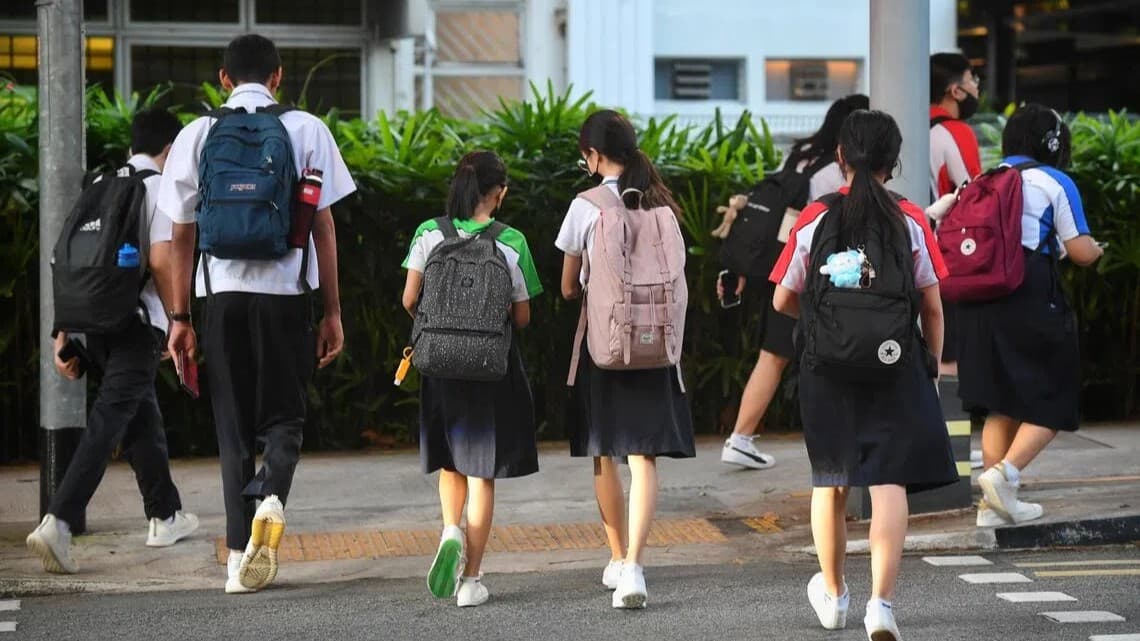
Schools in Singapore are bringing in external personnel to handle student discipline, investigate incidents and resolve conflicts, giving teachers additional support in managing student behavior and reducing their administrative workload.
The officers, who are recruited from outside the Ministry of Education (MOE), are being deployed across several primary and secondary schools. Their responsibilities include gathering information about incidents, settling disputes, preparing reports and communicating with parents.

Most vacancies carry the designation of discipline support officers. Other positions are advertised as discipline aides or discipline and investigation assistants.
Several schools have expressed a preference for candidates with backgrounds in uniformed services, including the Singapore Armed Forces, Singapore Police Force and Singapore Prison Service.
Most schools are seeking full-time officers who can work throughout the academic terms for a minimum of one year. Contracts may be extended for an additional year, depending on the schools' requirements.
The initiative is supported through funding from the MOE and follows recommendations made after the ministry's review of bullying in schools, announced in April 2026.
Responding to queries from The Straits Times, an MOE spokeswoman said schools have the flexibility to determine the qualifications and skills required for these positions according to their individual needs.
Schools may also recruit youth workers, pastoral care officers and parent liaison officers to help teachers engage with students and address behavioral concerns.
“This allows teachers to devote greater attention to more complex cases, students requiring more intensive support and broader student development initiatives,” she said.
At least 20 schools had advertised vacancies for external officers expected to begin working in the second half of 2026, according to checks by The Straits Times on the government's procurement portal, GeBIZ.
The institutions include St Andrew’s School (Secondary), Presbyterian High School, Bartley Secondary School, Sembawang Primary School and Yuhua Secondary School.
Singapore strengthens anti-bullying measures in schools
The recruitment of additional personnel is part of a broader effort to improve how schools respond to bullying and other forms of hurtful behavior.
Alongside additional manpower, the MOE is developing digital systems that will give students more ways to report incidents and seek assistance.
By 2027, schools are expected to have online reporting tools that provide students with an additional channel to raise concerns and report bullying.
The ministry is also working with selected schools to develop an improved offence management system. It will help institutions document incidents, monitor different forms of hurtful behavior and plan interventions based on individual cases.
The system is scheduled for a gradual rollout across all schools by 2028.
How discipline support officers will work with teachers
At St Andrew’s School (Secondary), the responsibilities of discipline support officers extend beyond responding to misconduct.
Prinya Lovajana, the school's head of discipline, said the officers are expected to establish positive relationships with students and use their judgment when dealing with difficult situations.
“Importantly, we want officers who understand that student discipline is not simply about enforcing rules, but also about guiding our boys to take responsibility for their actions, learn from their mistakes and make better choices,” he said.
Lovajana said the officers at St Andrew's help address routine disciplinary concerns, including student misconduct and conflicts between peers. They also hold meaningful conversations with students.
Their involvement provides another layer of support within the school and allows teachers to concentrate on their primary responsibilities.
“Our boys are at a developmental stage where they are learning to manage their emotions, navigate peer relationships and make responsible decisions. It is therefore important that we provide timely guidance and intervention when issues arise,” he said.
St Andrew's was the only school to respond to The Straits Times' questions about the recruitment of external personnel for student discipline.
Former police personnel move into school support roles
POLWEL Co-operative Society, which provides manpower solutions, currently supplies discipline support officers to more than 15 primary and secondary schools in Singapore.
All its officers have experience in uniformed services, with most having previously worked in the Singapore Police Force.
Their transition into educational settings involves preparation before deployment. POLWEL said retiring and retired officers receive training to help them adjust to the different responsibilities involved in working with students.
The organization also matches officers' skills and experience with the requirements of individual schools.
A POLWEL spokesperson said, “This transition and matching process helps these officers adapt and apply their experience and skills to a different operating environment and continue contributing meaningfully to the community.”
The MOE said it will continue assessing schools' requirements and modify the support available to them as their needs change. The objective is to ensure that schools have adequate resources to maintain safe and supportive learning environments.
What can India learn from Singapore's approach?
Singapore's approach offers an important point for discussion in India, where teachers are responsible not only for classroom instruction but also for managing student behavior, addressing peer conflicts and communicating with parents.
The model highlights the possibility of assigning trained support personnel to handle routine disciplinary responsibilities, allowing teachers to devote more time to teaching, student development and cases requiring specialized attention.
Indian schools could examine whether dedicated discipline support officers, counselors, pastoral care staff and trained student welfare professionals can strengthen existing school systems. Such roles would need clearly defined responsibilities and appropriate training in child development, conflict resolution and student well-being.
However, the approach should not reduce discipline to surveillance or punishment. Singapore's emphasis on building relationships, guiding students to take responsibility and helping them make better decisions offers a broader lesson.
For India, the central question is how schools can create safe learning environments while ensuring that teachers are not left to manage every disciplinary issue alongside their academic responsibilities.
Why Are Nearly 2,000 MBBS Seats Still Vacant After NEET Counselling 2026?
Ghaziabad School Introduces Global Lexile Framework to Assess Reading Skills of Students

SRMIST to Host National Conference on Regenerative Biology and Bioengineering from November 3

VJIM, CII Institute of Logistics sign MoU to boost supply chain career opportunities

Hong Kong plans weekly AI and coding lessons for children: Is India ready for the shift?
Why Are Nearly 2,000 MBBS Seats Still Vacant After NEET Counselling 2026?
Hong Kong plans weekly AI and coding lessons for children: Is India ready for the shift?
Who handles student discipline? Singapore schools look beyond teachers, lessons India can learn

Can Six Years of MBBS Abroad Still Leave Indian Students Unable to Practise in India?

What kind of future are schools preparing children for? Singapore educators explore question

Why Are Nearly 2,000 MBBS Seats Still Vacant After NEET Counselling 2026?
Ghaziabad School Introduces Global Lexile Framework to Assess Reading Skills of Students
SRMIST to Host National Conference on Regenerative Biology and Bioengineering from November 3
VJIM, CII Institute of Logistics sign MoU to boost supply chain career opportunities
Hong Kong plans weekly AI and coding lessons for children: Is India ready for the shift?
Why Are Nearly 2,000 MBBS Seats Still Vacant After NEET Counselling 2026?
Hong Kong plans weekly AI and coding lessons for children: Is India ready for the shift?
Who handles student discipline? Singapore schools look beyond teachers, lessons India can learn
Can Six Years of MBBS Abroad Still Leave Indian Students Unable to Practise in India?
What kind of future are schools preparing children for? Singapore educators explore question
Copyright© educationpost.in 2026 All Rights Reserved.