


Seth Anandram Jaipuria School has adopted the international reading assessment system for Classes 1–5, aiming to identify individual learning needs and improve reading comprehension.
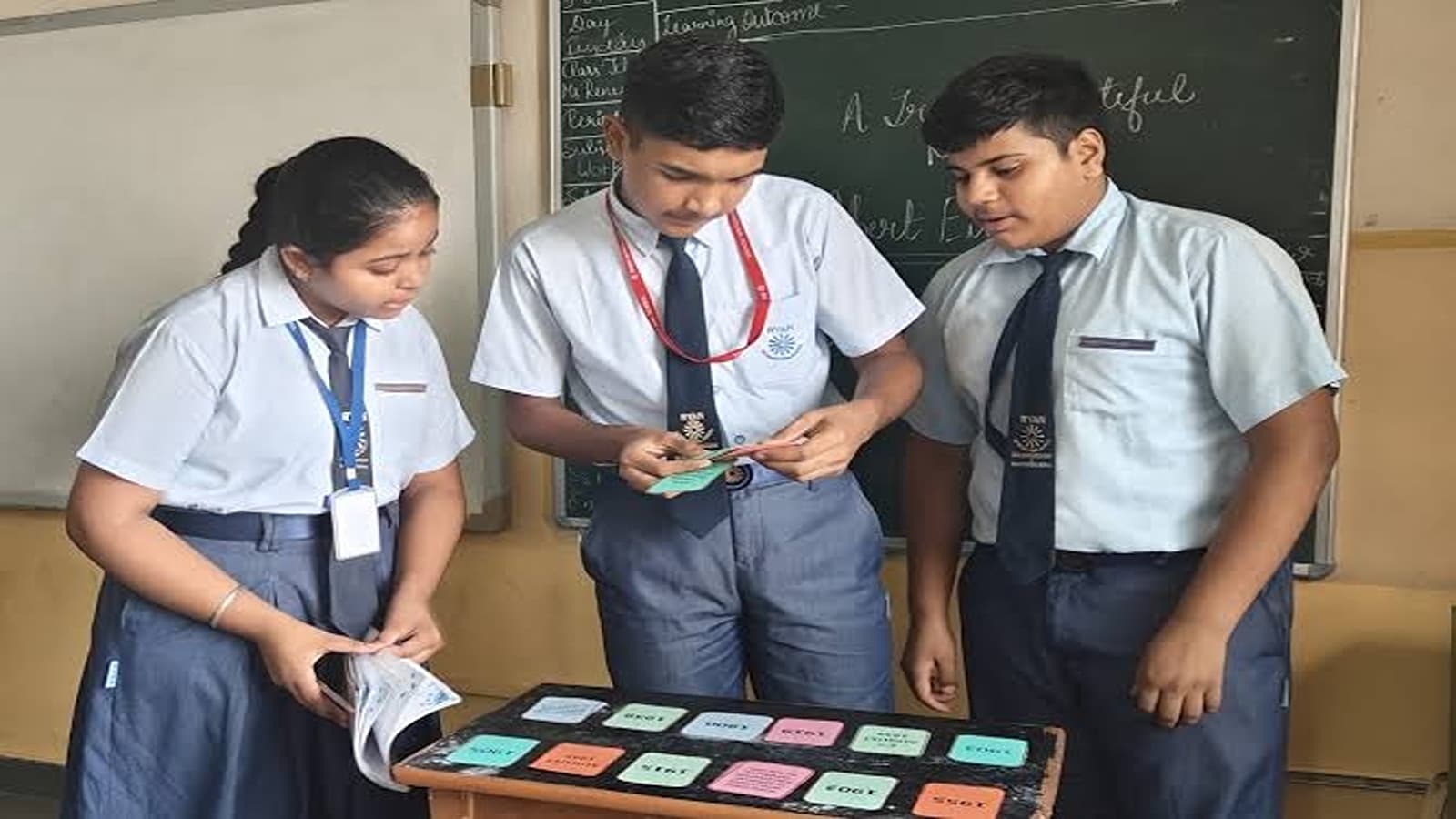
Seth Anandram Jaipuria School in Ghaziabad has introduced the globally recognised Lexile Framework for Reading to evaluate students' reading abilities and strengthen their literacy skills. The initiative currently covers children studying in Classes 1 to 5.
The assessment system is designed to understand individual differences in reading proficiency and help teachers provide learning support according to each child's requirements. It also enables educators to identify students who need additional attention to improve their reading and comprehension abilities.

According to Harish Sanduja, Director of Schools at Jaipuria School, the initiative was launched approximately two and a half years ago. Nearly 2,000 students have undergone assessments under the framework since its introduction.
Under the initiative, students undergo reading assessments twice annually. The evaluation begins with an assessment of reading speed, followed by a comprehension exercise in which students answer 10 questions based on a given passage.
Their performance is used to generate individual Lexile Scores, which help teachers understand students' reading proficiency and monitor their progress.
The assessment reports are maintained online and made accessible to teachers. This allows educators to identify children experiencing difficulties and provide them with targeted academic assistance.
Sanduja explained that the early years of schooling are particularly important for developing literacy. While the initial focus up to Class 3 is on helping children learn to read, the emphasis gradually shifts towards using reading skills to understand different subjects.
As part of the programme, the school has also organised its library resources according to students' Lexile levels. This allows children to select books that correspond to their individual reading abilities.
Consequently, students studying in the same class may be recommended different books depending on their comprehension levels. The approach is intended to help children read material that is neither excessively difficult nor too simple, while gradually improving their proficiency.
The Lexile Framework, developed by US-based educational research organisation MetaMetrics, provides a common measurement scale for reading ability and the complexity of written material. It helps educators match students with suitable reading resources and monitor improvements over time.
The school believes that reading and comprehension skills play an important role beyond language learning. Students need to understand written information to perform effectively in subjects such as Science, Mathematics, English and Social Studies.
By identifying individual learning gaps, the initiative aims to move away from a uniform teaching approach and provide more personalised academic support.
The programme is expected to help teachers make better-informed instructional decisions and ensure that students who face reading difficulties receive timely assistance.

Why Are Nearly 2,000 MBBS Seats Still Vacant After NEET Counselling 2026?
Ghaziabad School Introduces Global Lexile Framework to Assess Reading Skills of Students

SRMIST to Host National Conference on Regenerative Biology and Bioengineering from November 3
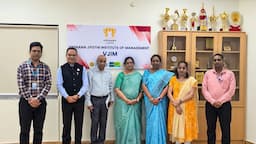
VJIM, CII Institute of Logistics sign MoU to boost supply chain career opportunities

Hong Kong plans weekly AI and coding lessons for children: Is India ready for the shift?
Why Are Nearly 2,000 MBBS Seats Still Vacant After NEET Counselling 2026?
Hong Kong plans weekly AI and coding lessons for children: Is India ready for the shift?

Who handles student discipline? Singapore schools look beyond teachers, lessons India can learn

Can Six Years of MBBS Abroad Still Leave Indian Students Unable to Practise in India?

What kind of future are schools preparing children for? Singapore educators explore question

Why Are Nearly 2,000 MBBS Seats Still Vacant After NEET Counselling 2026?
Ghaziabad School Introduces Global Lexile Framework to Assess Reading Skills of Students
SRMIST to Host National Conference on Regenerative Biology and Bioengineering from November 3
VJIM, CII Institute of Logistics sign MoU to boost supply chain career opportunities
Hong Kong plans weekly AI and coding lessons for children: Is India ready for the shift?
Why Are Nearly 2,000 MBBS Seats Still Vacant After NEET Counselling 2026?
Hong Kong plans weekly AI and coding lessons for children: Is India ready for the shift?
Who handles student discipline? Singapore schools look beyond teachers, lessons India can learn
Can Six Years of MBBS Abroad Still Leave Indian Students Unable to Practise in India?
What kind of future are schools preparing children for? Singapore educators explore question
Copyright© educationpost.in 2026 All Rights Reserved.