


The Ministry of Education initiative invites school, ITI, polytechnic and university students to develop innovative solutions to real-world challenges, with applications open through participating institutions.
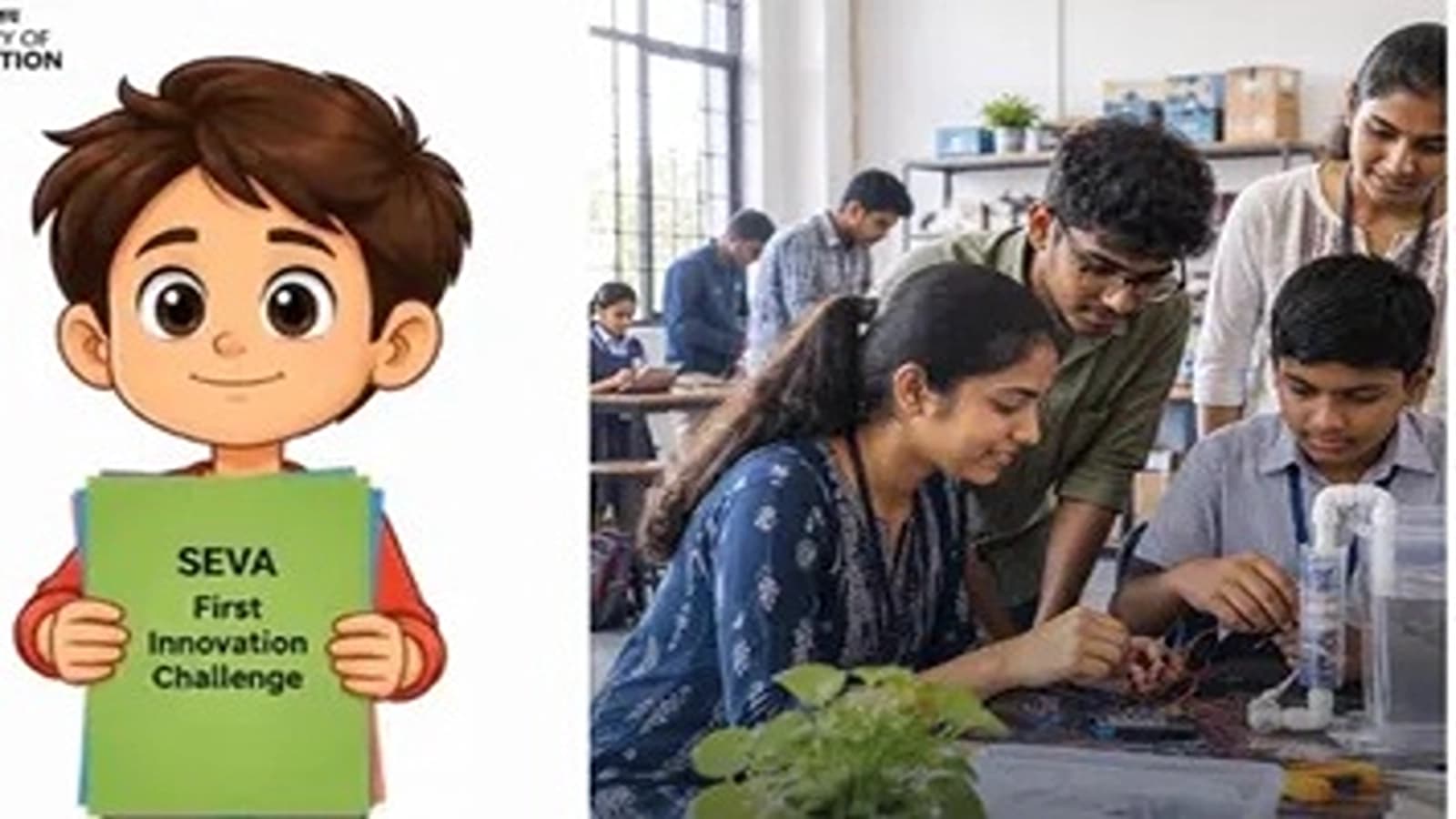
The registration and submission deadline for the Seva First Innovation Challenge (SFIC) 2026 has been extended to November 6, providing additional time for eligible educational institutions and students to submit their innovation ideas.
The initiative, launched to encourage young innovators to develop practical solutions to local and national problems, offers students an opportunity to showcase their ideas across areas such as sustainability, agriculture, healthcare, education and public safety.

According to the official challenge portal, the programme is open to students from schools, Industrial Training Institutes (ITIs), polytechnics, colleges and universities in eight participating states and Union Territories. The submission window runs from September 25 to November 6, 2026.
The challenge provides three participation levels based on students' educational backgrounds:
Junior Level: School students studying in Classes 6 to 12 can participate by identifying problems in their surroundings and proposing simple, practical solutions.
Technical Level: Students enrolled in ITIs and polytechnic institutions can submit ideas involving engineering, electronics, fabrication and process improvements.
Open Level: Undergraduate and postgraduate students, along with research scholars, can participate by presenting prototypes or pilot projects with potential for practical implementation.
An important condition is that participation is institution-based. Students cannot register independently. Educational institutions need to nominate a coordinator who will complete the registration process and submit student entries on their behalf.
Students can submit their ideas under any of the following five national themes:
Clean and Sustainable Bharat: Innovations related to water conservation, waste management, renewable energy, pollution control and environmental protection.
Prosperous Farmers, Prosperous Bharat: Solutions focusing on agriculture, rural development, farmers' livelihoods and small businesses.
Healthy and Inclusive Bharat: Ideas addressing healthcare, public well-being, assistive technology and social inclusion.
Educated and Skilled Bharat: Innovations in education, digital learning, skill development and sports.
Secure Bharat: Solutions related to manufacturing, transportation, infrastructure, safety and digital public infrastructure.
These themes are intended to encourage students to develop solutions that address practical challenges faced by communities and different sectors.
The competition allows participants to present their ideas through two different tracks:
Track A – Product or Technology: This category covers physical products, devices, prototypes, software, engineering solutions, materials and innovative processes that can be developed and implemented.
Track B – Business Model or Governance: This track focuses on new service delivery systems, business models, financing mechanisms, institutional innovations and improvements in governance or administrative processes.
Both tracks are open to all three participation levels.
Eligible educational institutions can complete the registration process through the official portal by following these steps:
Visit the official website: https://sevafirst.mic.gov.in/
Select the institution registration option.
Enter the institution's details, including its type, identification number (UDISE/AISHE), state and district.
Provide the details of the nominated institutional coordinator.
Verify the registration using the eight-digit code sent to the institution's official email address.
After account activation, the coordinator can submit student innovation entries under the appropriate participation level, theme and track.
Students should coordinate with their respective schools or colleges to ensure that their ideas are submitted within the revised deadline.
The official challenge portal lists the following cash awards for each of the three participation categories:
| Position | Prize money |
|---|---|
| First prize | ₹10 lakh |
| Second prize | ₹5 lakh |
| Third prize | ₹3 lakh |
Apart from financial rewards, selected innovators may receive expert mentorship, access to laboratories and fabrication facilities, incubation opportunities, pilot support and assistance in connecting their solutions with government bodies and industries.
The programme also aims to help promising ideas move beyond the conceptual stage towards practical implementation.
| Event | Date |
|---|---|
| Official launch | September 25, 2026 |
| Revised submission deadline | November 6, 2026 |
| State-level screening | From November 7, 2026 |
| Exhibition and finale | November–December 2026 |
The official portal describes the later programme schedule as indicative and subject to confirmation by the nodal institute.

Can Six Years of MBBS Abroad Still Leave Indian Students Unable to Practise in India?

What kind of future are schools preparing children for? Singapore educators explore question
1 in 5 Indian Children Live in Poverty; Poverty Rate Highest at 21.3% Among Adults Without Education: World Bank

Gujarat Makes Mental Health Support and Counsellors Mandatory in Schools to Prevent Student Suicides
Chennai, Tiruvallur Schools Closed Today, November 2, Due to Cyclone Murasu; Check Rain Alert and Holiday Details
Can Six Years of MBBS Abroad Still Leave Indian Students Unable to Practise in India?
What kind of future are schools preparing children for? Singapore educators explore question

Two universities, two countries, one academic bridge: China and Egypt launch joint faculty
Missed CLAT 2027 registration? Consortium extends application deadline for law aspirants
Who sets, secures and conducts exams? Centre considers separating responsibilities to prevent leaks

Can Six Years of MBBS Abroad Still Leave Indian Students Unable to Practise in India?
What kind of future are schools preparing children for? Singapore educators explore question
1 in 5 Indian Children Live in Poverty; Poverty Rate Highest at 21.3% Among Adults Without Education: World Bank
Gujarat Makes Mental Health Support and Counsellors Mandatory in Schools to Prevent Student Suicides
Chennai, Tiruvallur Schools Closed Today, November 2, Due to Cyclone Murasu; Check Rain Alert and Holiday Details
Can Six Years of MBBS Abroad Still Leave Indian Students Unable to Practise in India?
What kind of future are schools preparing children for? Singapore educators explore question
Two universities, two countries, one academic bridge: China and Egypt launch joint faculty
Missed CLAT 2027 registration? Consortium extends application deadline for law aspirants
Who sets, secures and conducts exams? Centre considers separating responsibilities to prevent leaks
Copyright© educationpost.in 2026 All Rights Reserved.