


Nandan Nilekani-led panel has received over 50,000 stakeholder suggestions and is examining encrypted question delivery, random selection and stronger accountability across agencies conducting national examinations.
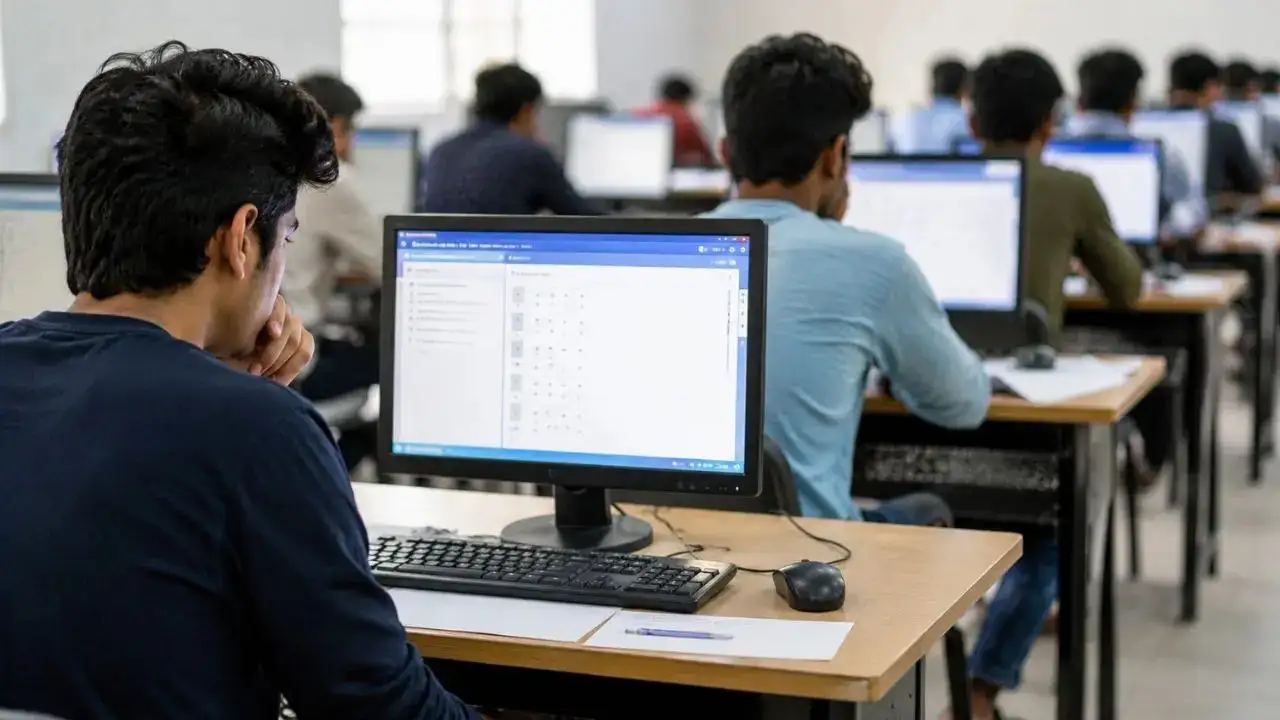
The Centre is considering changes to the way national-level examinations are prepared and conducted, including separating responsibilities such as question paper setting, examination center management and test administration to reduce the risk of paper leaks.
The proposal is being examined by a six-member High Powered Task Force (HPTF), headed by Infosys co-founder Nandan Nilekani, which has been given an extension until January 2027 to complete its recommendations on examination reforms.

Constituted in July after the NEET-UG paper leak controversy, the panel has received more than 50,000 suggestions from students, parents, teachers, academic institutions, subject experts, industry organizations and examination-conducting bodies.
The task force was originally expected to submit its report by October 2026. However, the government has extended its deadline as consultations with different stakeholders are continuing and the panel works toward finalizing its recommendations.
The Centre has also filed an affidavit in the Supreme Court outlining the progress made by the task force, sources said.
Among the major issues under consideration are stronger examination security measures, greater use of technology and changes to the process of preparing and delivering question papers. The proposals include developing a secure question vault, maintaining a large database of questions throughout the year and transmitting examination papers digitally to test centers shortly before an examination begins.
How will the proposed question vault mechanism work?
One of the key proposals being examined is a question vault system that would replace the conventional approach of preparing complete question papers separately for individual examinations.
Under the proposed arrangement, subject experts would contribute individual questions to a large database instead of preparing entire examination papers. The questions would undergo verification and review before being translated into different languages and stored in a secure digital repository.
Once an examination is scheduled, questions would be selected randomly from the database based on a predetermined blueprint. The blueprint would specify the syllabus coverage, types of questions and difficulty levels required for the test.
This approach is intended to ensure that the final question paper is not known in advance, even to individuals involved in preparing and reviewing the questions. Random selection from a large pool would also reduce the possibility of specific questions being leaked before an examination.
A senior government official had earlier explained that the proposed system could involve preparing a database containing one lakh questions for an examination such as the Staff Selection Commission (SSC) test.
If an examination requires 20-30 questions, the final paper could be generated by randomly selecting the required number of questions from the larger pool.
The SSC already follows a similar model for several recruitment examinations conducted through computer-based tests (CBTs). Its chairman, S Gopalakrishnan, has explained that the Commission does not print question papers for these examinations.
Instead, questions are selected from a database, compiled and encrypted shortly before the examination. The papers are then transmitted digitally to examination centers, where candidates can access them after logging in when the test begins.
The model is being examined as a possible approach to strengthening the security of national-level examinations and reducing the risks associated with advance access to question papers.
Centre considers separating examination-related responsibilities
Apart from the question vault mechanism, the task force is also examining whether different stages of examination management should be handled by separate service providers.
Under the proposal, a single agency would not be responsible for multiple functions, including preparing question papers, managing examination centers and administering tests.
Separating these responsibilities could reduce the concentration of control over the examination process and strengthen accountability at different stages. It is also intended to limit the possibility of irregularities arising from a single service provider managing several critical functions.
The proposal forms part of the broader examination security measures being considered by the panel, which is examining ways to make national-level tests more reliable and resistant to question paper leaks.
Who are the members of the Nilekani-led examination reform panel?
The government announced the formation of the task force in July, a day after Dharmendra Pradhan resigned as Union Education Minister following widespread protests over examination irregularities, including the NEET-UG paper leak controversy.
The six-member panel is headed by Nandan Nilekani, co-founder of Infosys. Its members include former Indian Space Research Organisation (ISRO) chairman S. Somanath, former Intelligence Bureau director Tapan Deka, IIT Madras director V. Kamakoti, former Education Secretary Anita Karwal and logistics expert Amrit Lal Meena.
The panel has been tasked with examining different aspects of national examination systems and recommending measures to improve their security, transparency and overall administration.
Its consultations have involved a wide range of stakeholders, with more than 50,000 suggestions received so far. The submissions include views from students and parents, along with inputs from teachers, educational institutions, experts, industry organizations and bodies responsible for conducting examinations.
The additional time until January 2027 is expected to allow the panel to complete its consultations and prepare its recommendations.
NEET to move to computer-based testing from 2027
Separately, the Centre has announced that the National Eligibility cum Entrance Test (NEET) will shift to a computer-based test format from 2027.
The transition will mark a change in the examination's existing format and comes as the government considers broader measures to strengthen the conduct of national-level examinations.
The proposed question vault, encrypted digital delivery and separation of examination-related responsibilities are among the measures being examined by the Nilekani-led panel.
Its recommendations are expected to provide a framework for addressing vulnerabilities in the examination process and preventing incidents such as question paper leaks.

Who sets, secures and conducts exams? Centre considers separating responsibilities to prevent leaks

Vivekanand Business School Takes 180 Management Students to Thailand for Global Industry Immersion Programme
NoTuition.in introduces 3D learning labs for all NCERT chapters from Classes 1 to 10

Junior doctor or independent practitioner? The Georgia MBBS question dividing regulators

Arab universities to discuss AI, digital learning and recognition of degrees at UNESCO conference in Doha
Who sets, secures and conducts exams? Centre considers separating responsibilities to prevent leaks
Junior doctor or independent practitioner? The Georgia MBBS question dividing regulators

More than classroom learning: AICTE's new schemes aim to bring practical innovation to engineering colleges

Can two heads guide a PhD better than one? UK study explores team supervision

11-year-old Egyptian girl beats 40 million students to win Dh500,000 in Dubai

Who sets, secures and conducts exams? Centre considers separating responsibilities to prevent leaks
Vivekanand Business School Takes 180 Management Students to Thailand for Global Industry Immersion Programme
NoTuition.in introduces 3D learning labs for all NCERT chapters from Classes 1 to 10
Junior doctor or independent practitioner? The Georgia MBBS question dividing regulators
Arab universities to discuss AI, digital learning and recognition of degrees at UNESCO conference in Doha
Who sets, secures and conducts exams? Centre considers separating responsibilities to prevent leaks
Junior doctor or independent practitioner? The Georgia MBBS question dividing regulators
More than classroom learning: AICTE's new schemes aim to bring practical innovation to engineering colleges
Can two heads guide a PhD better than one? UK study explores team supervision
11-year-old Egyptian girl beats 40 million students to win Dh500,000 in Dubai
Copyright© educationpost.in 2026 All Rights Reserved.