


Punjab’s Drug Crisis: Causes, Smuggling Networks and Political Concerns
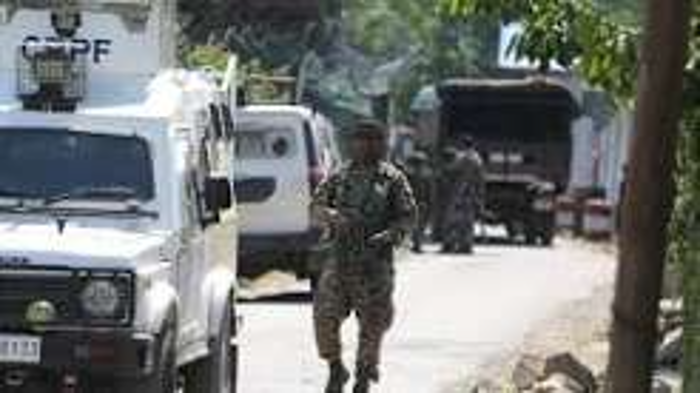
Punjab’s drug crisis has resurfaced as a major political and public health concern ahead of the state Assembly elections scheduled for 2027. The issue intensified after the police took custody of the body of Daljit Singh, who reportedly died of a suspected drug overdose, as his family planned to join a protest in Mansa. The protest was already underway following the killing of activist Parvinder Singh Jhota, who had allegedly confronted a medicine shop owner over the sale of prohibited drugs.
According to National Crime Records Bureau (NCRB) data for 2024, released in September 2026, Punjab recorded 6,060 drug-trafficking cases, the highest in the country. It also reported 106 deaths due to drug overdose, the second-highest figure after Tamil Nadu.

Drug use in Punjab predates Independence. Opium and poppy husk were historically consumed in small quantities, while locally brewed alcohol was widely accepted. Despite restrictions after Independence, opium continued to enter the state through neighbouring regions.
Punjab’s 553-kilometre border with Pakistan makes it vulnerable to cross-border smuggling. Heroin, locally known as chitta, is trafficked through this route, while opium and poppy husk also arrive from Rajasthan and Madhya Pradesh. The region’s proximity to the Golden Crescent, comprising Afghanistan, Iran and Pakistan, further complicates efforts to control the supply chain.
Stronger border enforcement has coincided with increased abuse of pharmaceutical drugs. In 2024, Punjab accounted for 2.94 crore of the 5.13 crore pharmaceutical drug units seized across India. Such substances reportedly enter the state from manufacturing hubs in Himachal Pradesh, Uttar Pradesh, Haryana and Rajasthan.
Drone-based smuggling has added another challenge. Border Security Force data cited in the report shows drone-related incidents increasing from three in 2021 to more than 200 in 2025. Smugglers use small drones to transport heroin and weapons, particularly along the Amritsar–Tarn Taran–Ferozepur–Gurdaspur belt.
The profitability of trafficking also sustains the illegal trade. Economic pressures, limited employment opportunities and the lure of quick money can encourage vulnerable individuals to participate. Allegations of links among traffickers, police personnel and politicians have further raised concerns about enforcement.
Women are increasingly involved in drug-related cases. Punjab Assembly data presented in March 2023 showed an 85% increase in arrests of women under the Narcotic Drugs and Psychotropic Substances (NDPS) Act in 2022 compared with 2015.
The crisis requires coordinated action against trafficking networks, pharmaceutical supply chains and corruption, alongside addiction treatment, rehabilitation and employment opportunities.
SRM College of Nursing organises lamp lighting ceremony for 35th BSc Nursing, 34th DGNM batches

Patrick Stewart Dies at 86: Star Trek's Captain Picard and X-Men's Professor X Remembered
Jamia ends two-decade freeze on student polls, hunger strike called off
UAE makes schoolchildren priority for free flu vaccines across emirates

Syria restricts women’s entry to defence, security university courses under new admission rules
Patrick Stewart Dies at 86: Star Trek's Captain Picard and X-Men's Professor X Remembered
UAE makes schoolchildren priority for free flu vaccines across emirates

NTU Singapore, VFT launch joint research lab to develop safer batteries for renewable energy storage
ULLAS 2026: Will B.Ed. Students' Academic Credits Depend on Adults Passing Literacy Tests?

Earth’s life story may not have begun with comets, new study finds

SRM College of Nursing organises lamp lighting ceremony for 35th BSc Nursing, 34th DGNM batches
Patrick Stewart Dies at 86: Star Trek's Captain Picard and X-Men's Professor X Remembered
Jamia ends two-decade freeze on student polls, hunger strike called off
UAE makes schoolchildren priority for free flu vaccines across emirates
Syria restricts women’s entry to defence, security university courses under new admission rules
Patrick Stewart Dies at 86: Star Trek's Captain Picard and X-Men's Professor X Remembered
UAE makes schoolchildren priority for free flu vaccines across emirates
NTU Singapore, VFT launch joint research lab to develop safer batteries for renewable energy storage
ULLAS 2026: Will B.Ed. Students' Academic Credits Depend on Adults Passing Literacy Tests?
Earth’s life story may not have begun with comets, new study finds
Copyright© educationpost.in 2026 All Rights Reserved.