


Chip Market Growth Holds Firm as Global Semiconductor Sales Near $1.6 Trillion
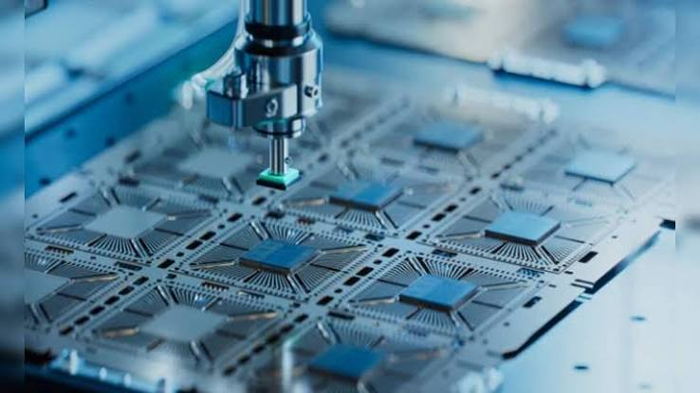
The global semiconductor market is projected to surpass $1.6 trillion in 2026, with growing investment in artificial intelligence (AI) infrastructure driving demand for chips, particularly memory products, a report said.
The latest projection is more than 1.5 times the forecast made earlier this year, highlighting the rapid expansion of the semiconductor industry amid rising spending on AI infrastructure.

The outlook comes even as parts of the AI industry have called for a slower pace of development over concerns about maintaining control over increasingly advanced technologies, Yonhap News Agency reported.
According to a report by the Korea Eximbank research centre, based on analysis from global market research firms including TrendForce, memory chips produced by Samsung Electronics and SK hynix are expected to account for more than half of the global semiconductor market as AI systems process increasingly large volumes of data.
The global semiconductor market was previously expected to cross the $1 trillion mark only in 2030. However, the forecast has been revised significantly as major US and Chinese hyperscalers have accelerated investments in large-scale data centres and AI infrastructure.
Memory chip prices have also risen sharply. As of the end of August, prices of dynamic random access memory (DRAM) and NAND flash memory stood at $25 and $30.5, respectively, representing increases of about 4.4 times and nine times from a year earlier.
While memory chip prices are expected to stabilise from next year, the overall semiconductor market is projected to maintain its growth momentum on steady demand and could reach around $2 trillion by 2030.
The report noted that major technology companies are entering into long-term supply agreements with memory manufacturers such as Samsung Electronics and SK hynix, which could provide greater stability to the semiconductor industry.
Industry sources said continued investment by major technology companies in AI infrastructure and the expansion of AI-based services are likely to sustain demand for memory chips in the near term.
The semiconductor boom is also contributing to employment in South Korea's chip industry. Employment stood at 174,000 in the first quarter of this year, up 15 per cent from 152,000 in the same quarter of 2018, when the Korean Statistical Information Service began compiling the relevant data.
Meanwhile, the average monthly salary of workers in the semiconductor industry reached 4.32 million won, or around $3,100, during the first half of this year, according to the Korea Enterprises Federation.
The average monthly wage increased 3.1 per cent from a year earlier, with the rise largely attributed to higher bonuses paid by semiconductor companies.

SBI probes data leak after personal details in 3,897 customer records surface on dark web

Chennai Government Schools Face Drug Abuse Concerns as Teachers Call for Stronger Action

FUEL to Celebrate 20th Foundation Day and 2nd Convocation in Pune on October 24

Former Russian Test Cosmonaut Nikolai Tikhonov Discusses Space Exploration at Chennai Science Festival

Promised in 30 days, pending after 42: J&K medical interns resume strike
SBI probes data leak after personal details in 3,897 customer records surface on dark web

Sharjah schools set boundaries for AI use in homework and exams

Former MIT scientist wins $6 million defamation verdict in misconduct dispute

McMahon highlights Trump’s push to return education powers to states

Could smarter energy solutions make data centres more sustainable?

SBI probes data leak after personal details in 3,897 customer records surface on dark web
Chennai Government Schools Face Drug Abuse Concerns as Teachers Call for Stronger Action
FUEL to Celebrate 20th Foundation Day and 2nd Convocation in Pune on October 24
Former Russian Test Cosmonaut Nikolai Tikhonov Discusses Space Exploration at Chennai Science Festival
Promised in 30 days, pending after 42: J&K medical interns resume strike
SBI probes data leak after personal details in 3,897 customer records surface on dark web
Sharjah schools set boundaries for AI use in homework and exams
Former MIT scientist wins $6 million defamation verdict in misconduct dispute
McMahon highlights Trump’s push to return education powers to states
Could smarter energy solutions make data centres more sustainable?
Copyright© educationpost.in 2026 All Rights Reserved.