


Students at KCG College of Technology explored the mental resilience, physical conditioning and scientific knowledge required for human spaceflight during a Russia-supported science festival.
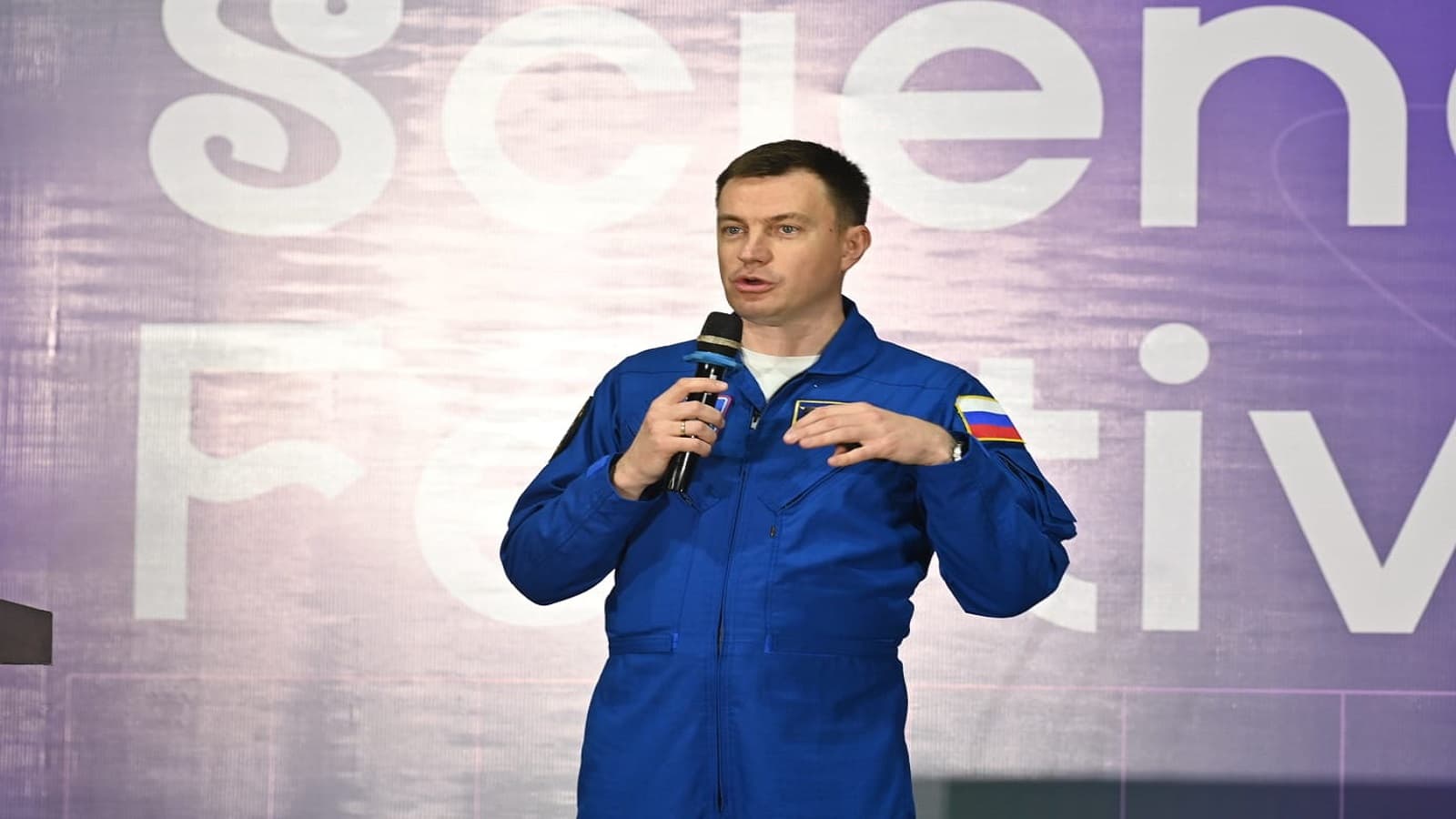
Space exploration requires more than scientific expertise and advanced technology. It also demands mental resilience, physical endurance and the ability to make critical decisions under pressure. These challenges were discussed by former Russian test cosmonaut Nikolai Tikhonov during The Science Festival India 2026, hosted by KCG College of Technology in Chennai.
The festival was organised by the Autonomous Non-Profit Organisation Energy of the Future, with support from Rosatom State Atomic Energy Corporation. The programme brought together Russian representatives, scientific experts, educators and students to discuss space exploration, nuclear technology, scientific research and international academic collaboration.

The inaugural programme was attended by Aleksandr Fomin, Vice Consul and Deputy Chief of Mission at the Consulate General of the Russian Federation in Chennai; Daria Korzheva, Project Manager at Energy of the Future and organiser of Science Festival India 2026; Dr. Annie Jacob, Director of KCG College of Technology; Dr. G. Prabhakaran, Principal of the institution; and Dr. K. V. Narayanan, Director–Operations at KCG College of Technology.
In a session titled Space Is Calling, Tikhonov discussed the demands of preparing for space missions, the challenges of living in confined environments and the potential applications of nuclear technology in space exploration.
He explained how isolation, restricted living conditions and microgravity can place significant demands on astronauts and cosmonauts. Preparation for such environments requires extensive training to develop emotional stability, quick reflexes, sound judgement and the ability to respond effectively to unexpected situations.
Videos featuring parachute exercises and weightlessness training illustrated how spaceflight candidates prepare to perform complex tasks under pressure. The presentation also highlighted the rigorous medical, physical and psychological assessments involved in cosmonaut selection.
According to the presentation cited during the session, the selection process includes more than 180 examinations. The figure was presented as part of the programme and has not been independently verified against an official Russian selection protocol.
The session highlighted the importance of discipline, perseverance and the ability to manage physical discomfort and psychological stress in demanding operational environments. For students, it offered insights into the extensive preparation and personal commitment associated with human spaceflight.
Dr. Anand Jacob Verghese, Chairman of Hindustan Group of Institutions, emphasised the role of international cooperation in strengthening scientific learning and innovation.
“Scientific progress thrives on collaboration, curiosity and the exchange of knowledge across borders,” he said, according to the organisers. He added that interactions with international experts help students understand real-world scientific challenges and prepare for careers in research, innovation and technology.
Dr. Annie Jacob, Director of KCG College of Technology, highlighted the value of academic and cultural partnerships in extending learning beyond the classroom.
She said the institution's association with the Russian Centre of Science and Culture provides students with opportunities to interact with international experts, understand global scientific developments and explore emerging areas of science and technology.
Such initiatives, she noted, encourage students to approach new ideas with curiosity and confidence.
The festival also featured a career guidance session titled Nuclear Education Pathway, which introduced students to academic programmes and potential career opportunities in the nuclear sector.
The session included Shri R. S. Sundar, former Executive Director (Operations) at the Nuclear Power Corporation of India Limited (NPCIL); Ivan Ushakov, Senior Lecturer at Tomsk Polytechnic University in Russia; and Srivignesh Poonaram, a student at the Obninsk Institute for Nuclear Power Engineering and an ambassador for nuclear education.
The discussion highlighted educational routes into the nuclear industry and the importance of specialised skills for careers in science, engineering and related fields.
Ushakov also delivered a lecture on nuclear medicine, explaining how nuclear science and technology are applied in healthcare.
The programme extended beyond space and nuclear technology with a lecture titled Exploring Ocean Frontiers by Sivasankaran Bijoy Nandan, Professor in the Department of Marine Biology, Microbiology and Biochemistry at the School of Marine Sciences, Cochin University of Science and Technology.
The session introduced students to marine research and the scientific study of ocean environments, adding an interdisciplinary dimension to the festival.
The festival concluded with debates examining the applications of atomic technologies in space and everyday life. Nikolai Tikhonov, Ivan Ushakov and Srivignesh Poonaram served as judges.
Students from KCG College of Technology and Hindustan Institute of Technology & Science participated in the discussions, presenting different perspectives on scientific applications and engaging with the speakers on questions concerning technology and society.
The programme sought to encourage scientific curiosity, critical thinking and informed discussion among students while highlighting the role of international exchanges in science education.
Through lectures, career guidance and student debates, Science Festival India 2026 provided a platform for exploring the connections between scientific research, technological development and future career opportunities.
FUEL to Celebrate 20th Foundation Day and 2nd Convocation in Pune on October 24
Former Russian Test Cosmonaut Nikolai Tikhonov Discusses Space Exploration at Chennai Science Festival
Promised in 30 days, pending after 42: J&K medical interns resume strike
UAE parents urged to check if children truly learn from AI homework
Chennai School Holiday Today: Schools Closed in 5 Tamil Nadu Districts Due to Heavy Rain
Sharjah schools set boundaries for AI use in homework and exams

Former MIT scientist wins $6 million defamation verdict in misconduct dispute

McMahon highlights Trump’s push to return education powers to states

Could smarter energy solutions make data centres more sustainable?

Cambridge and AstraZeneca extend joint PhD programme for three years

FUEL to Celebrate 20th Foundation Day and 2nd Convocation in Pune on October 24
Former Russian Test Cosmonaut Nikolai Tikhonov Discusses Space Exploration at Chennai Science Festival
Promised in 30 days, pending after 42: J&K medical interns resume strike
UAE parents urged to check if children truly learn from AI homework
Chennai School Holiday Today: Schools Closed in 5 Tamil Nadu Districts Due to Heavy Rain
Sharjah schools set boundaries for AI use in homework and exams
Former MIT scientist wins $6 million defamation verdict in misconduct dispute
McMahon highlights Trump’s push to return education powers to states
Could smarter energy solutions make data centres more sustainable?
Cambridge and AstraZeneca extend joint PhD programme for three years
Copyright© educationpost.in 2026 All Rights Reserved.