


SC Refers Javed Case to Larger Bench, Highlights Reproductive Autonomy and Women’s Political Representation
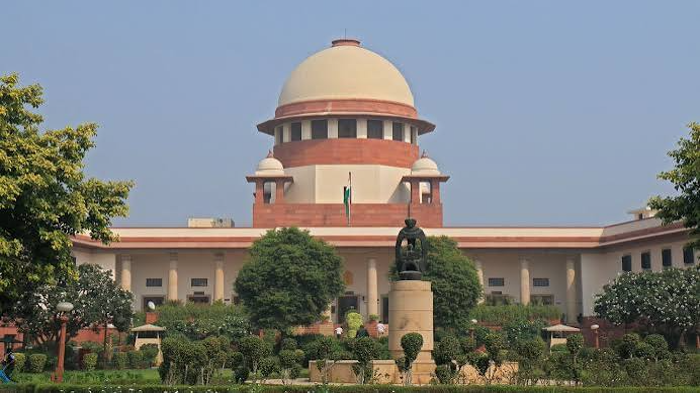
The Supreme Court on Wednesday (November 4) referred its 2003 judgment in Javed v. State of Haryana, which upheld the disqualification of people with more than two children from contesting panchayat elections, to a larger bench for reconsideration.
A bench of Justices P S Narasimha and Alok Aradhe observed that laws penalising individuals for having more than two children may have lost their relevance due to changing demographic conditions. It noted that India's total fertility rate (TFR) had declined from 3.0 in 2003 to 1.9, below the replacement level of 2.1.

The matter arose from a petition filed by Mangala Bhimrao Ingle, who was elected sarpanch of Kakoda gram panchayat in Maharashtra in 2022. Her election was challenged because she had three children. Under Section 14(1)(j-1) of the Maharashtra Village Panchayats Act, 1959, individuals having more than two children are disqualified from holding such positions.
Her disqualification was upheld by the Additional Collector, Additional Commissioner and Bombay High Court.
The Supreme Court questioned whether a restriction introduced to promote population control remained constitutionally justified in the present demographic context.
In its 2003 Javed judgment, the Supreme Court had upheld Haryana's two-child norm, observing that the restriction was a reasonable condition for contesting local body elections. It had also held that the right to contest elections was a statutory right rather than a fundamental right.
However, the present bench raised concerns about the impact of such laws on reproductive autonomy and democratic participation. It observed that the choice of whether, when and how many children to have falls within an individual's personal autonomy protected under Article 21 of the Constitution.
The court also highlighted the disproportionate impact of the policy on women, referring to a 2009 study by the Ministry of Panchayati Raj. The study documented instances of forced abortions, desertion of pregnant wives and denial of paternity to avoid electoral disqualification.
The bench further questioned why the restriction applied to grassroots representatives but not candidates contesting parliamentary or state assembly elections.
It clarified that the validity of the Maharashtra provision was not directly under challenge in the present proceedings. However, it emphasised that laws justified in the past could become arbitrary and unreasonable as social and demographic conditions change.

Anthropic’s Mythos AI Model: How Artificial Intelligence Is Transforming Cybersecurity

Democratic Control of Congress Raises Hopes of Iran Deal and Lower Crude Prices

Market Rally Follows Three Years of Weak Performance Amid Global Uncertainty and High Valuations
Supreme Court Reconsiders 2003 Two-Child Norm Ruling, Questions Its Relevance Amid Changing Demographics

SC Says Police Cannot Delay Constitutional Safeguards Through Searches and Questioning

‘It’s actually very cut-throat’: 13-year-old wins New Zealand spelling bee title

Schoolchildren join desperate effort to save stranded whales on New Zealand coast

New Zealand school hostel shut down after damning inspection raises concerns over student welfare

Can AI blackboards change how mathematics is taught in India? China's new technology offers glimpse

Tamil Nadu renews NEET abolition demand, seeks Class 12 marks for medical admissions

Anthropic’s Mythos AI Model: How Artificial Intelligence Is Transforming Cybersecurity
Democratic Control of Congress Raises Hopes of Iran Deal and Lower Crude Prices
Market Rally Follows Three Years of Weak Performance Amid Global Uncertainty and High Valuations
Supreme Court Reconsiders 2003 Two-Child Norm Ruling, Questions Its Relevance Amid Changing Demographics
SC Says Police Cannot Delay Constitutional Safeguards Through Searches and Questioning
‘It’s actually very cut-throat’: 13-year-old wins New Zealand spelling bee title
Schoolchildren join desperate effort to save stranded whales on New Zealand coast
New Zealand school hostel shut down after damning inspection raises concerns over student welfare
Can AI blackboards change how mathematics is taught in India? China's new technology offers glimpse
Tamil Nadu renews NEET abolition demand, seeks Class 12 marks for medical admissions
Copyright© educationpost.in 2026 All Rights Reserved.