


Supreme Court: Prior Approval Not Needed to Probe Bribery Allegations Unrelated to Official Duties
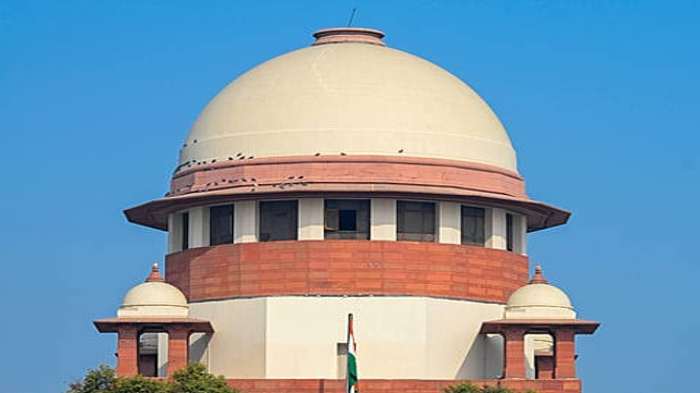
The Supreme Court has ruled that public servants accused of demanding bribes cannot claim protection under Section 17A of the Prevention of Corruption Act, 1988, when the alleged offence is unrelated to decisions or recommendations made in the discharge of their official duties.
A bench of Justices S V N Bhatti and N V Anjaria dismissed an appeal filed by a Rajasthan police constable challenging the framing of bribery charges against him. The case involved an alleged demand for a bribe of Rs 1.5 lakh. The court held that demanding a bribe is a criminal act that does not automatically fall within the protection provided to public servants for their official decisions.

The case arose from a complaint by Devendra Kumar, a constable posted at Abu City Police Station, who alleged that another constable, Tejaram, had demanded the money on behalf of the Superintendent of Police. Tejaram denied the allegations and claimed that the complaint was retaliation for his own accusations against Kumar. Tejaram was arrested in September 2021, and the competent authority granted sanction in December 2023. The trial court framed charges in 2024.
Section 17A requires prior approval before an investigation into alleged corruption linked to a public servant's official decisions. The Supreme Court clarified that this safeguard does not apply universally to every alleged offence committed by a public servant.
The bench also distinguished Section 17A from Section 19, which requires prior sanction from the competent authority before a court takes cognisance of specified corruption offences. In this case, the court held that the sanction had been granted before the trial court took cognisance, and the delay did not invalidate the proceedings.
The court further stated that the pending larger-bench reference concerning the constitutional validity of Section 17A did not affect the appeal because the provision was not applicable to the facts of the case.
The ruling clarifies the limits of procedural protection available to public servants while preserving safeguards applicable to corruption investigations and prosecutions.

Critical Security Flaws Prompt Emergency Action
Four Members Warn of Broadening Price Pressures
Section 17A of Prevention of Corruption Act Does Not Cover Every Act of Public Servants
Hamas Rejects Disarmament, US and Israel Consider Iran Strikes

Compromised Cryptographic Keys Trigger Global Cybersecurity Concerns

Egypt insists international schools include Arabic, history in final scores

China’s Chery unveils AI companion robot designed to ease loneliness

New Zealand reforms could leave more students without school qualifications

Alfred Nobel’s will created one of the world’s most recognised prizes. Here’s how

Pepperdine University earns Google recognition and Digital Education Council membership for AI initiatives

Critical Security Flaws Prompt Emergency Action
Four Members Warn of Broadening Price Pressures
Section 17A of Prevention of Corruption Act Does Not Cover Every Act of Public Servants
Hamas Rejects Disarmament, US and Israel Consider Iran Strikes
Compromised Cryptographic Keys Trigger Global Cybersecurity Concerns
Egypt insists international schools include Arabic, history in final scores
China’s Chery unveils AI companion robot designed to ease loneliness
New Zealand reforms could leave more students without school qualifications
Alfred Nobel’s will created one of the world’s most recognised prizes. Here’s how
Pepperdine University earns Google recognition and Digital Education Council membership for AI initiatives
Copyright© educationpost.in 2026 All Rights Reserved.