


The Swedish inventor left most of his fortune to fund annual awards for achievements in science, literature and peace. His decision, set out in a will signed in Paris in 1895, faced opposition before the first Nobel Prizes were awarded in 1901.
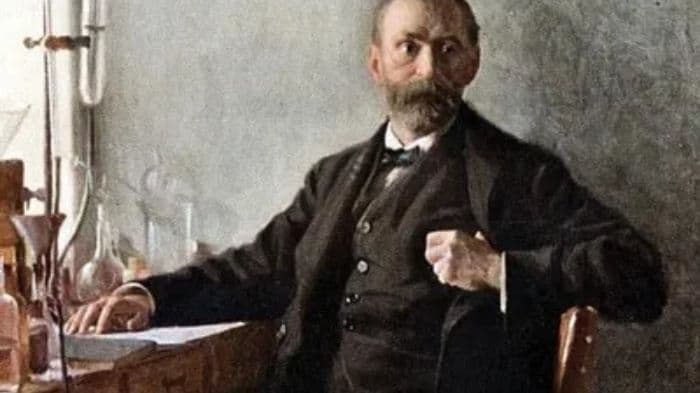
Alfred Nobel’s will, signed in 1895, laid the foundation for one of the world’s most recognised international awards. By directing most of his fortune towards prizes for achievements in science, literature and peace, the Swedish inventor set in motion a legacy that continues today.
On the 193rd anniversary of Nobel’s birth, the Nobel Prize organisation revisited the story behind the document. In a video shared on Oct 21 on X, historian Gustav Källstrand discusses Nobel and the will that led to the establishment of the prizes. The organisation also directed viewers to its official account of Nobel’s life and legacy.

The document that set the Nobel Prize in motion
Nobel signed his third and final will at the Swedish-Norwegian Club in Paris on November 27, 1895. He directed that the bulk of his remaining estate be invested, with the returns distributed annually as prizes to people whose work had conferred the greatest benefit on humanity.
The will divided the proposed awards into five categories: physics, chemistry, physiology or medicine, literature and peace. It also specified which institutions would select the recipients, establishing a framework for awards that would recognise achievements across scientific, cultural and international fields.
Nobel’s decision was significant because he wanted the prizes to recognise merit rather than nationality. His will explicitly stated that national affiliation should not determine who received an award.
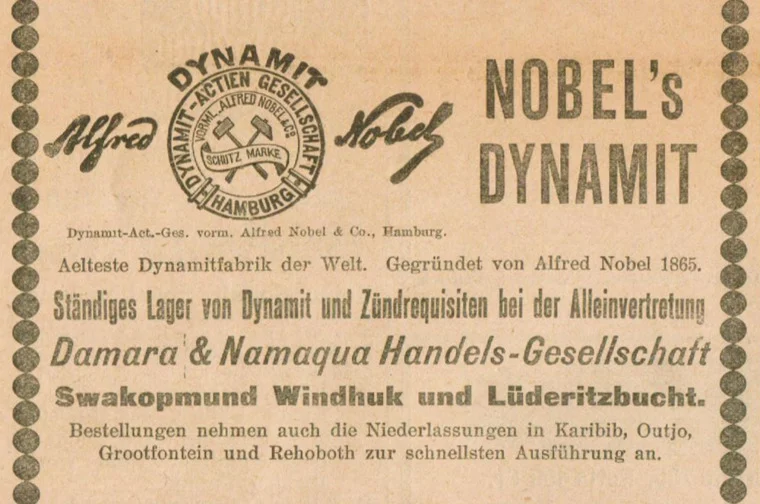
According to the Nobel Prize organisation, Nobel left approximately 31 million Swedish kronor to fund the prizes. His fortune had been built through his work as an inventor, chemist and entrepreneur, including his invention of dynamite.
Why the Nobel Prizes took five years to begin
Nobel died in San Remo, Italy, on December 10, 1896, less than a year after signing his will. His decision to dedicate most of his wealth to the awards was not immediately accepted.
Some of his relatives challenged the will, while practical and legal questions arose over how his international estate would be transferred and administered. The institutions named to award the prizes also had to be brought into the process.
Nobel had appointed Ragnar Sohlman and Rudolf Lilljequist as executors. They worked to resolve the disputes, manage the estate and establish the organisation needed to carry out his wishes.
The Nobel Foundation was established in 1900 after years of negotiations. The first Nobel Prizes were awarded on December 10, 1901, marking the beginning of the annual awards.
Five original categories, followed by economics
The five categories in Nobel’s will remain central to the awards: physics, chemistry, physiology or medicine, literature and peace.
The economics award came later. In 1968, Sweden’s central bank established the Sveriges Riksbank Prize in Economic Sciences in Memory of Alfred Nobel, with the first award presented in 1969. It is associated with the Nobel Prizes but was not one of the five categories specified in Nobel’s original will.
The distinction reflects the importance of the original document: the awards in its five categories were created through Nobel’s instructions, while the economics prize was established through a separate initiative.
A legacy shaped by a final decision
Alfred Nobel was born in Stockholm on October 21, 1833. He held 355 patents and built an international business, but his legacy is also closely tied to his decision about how his wealth should be used after his death.
The Nobel Prize organisation’s anniversary post brings attention back to the document behind the awards, rather than only to the laureates who receive them. The will established the founding principle that the prizes should recognise achievements offering the greatest benefit to humanity.
More than a century after the first awards, Nobel’s final instructions continue to shape the selection and presentation of the prizes each year.

Gujarat School Entry Rules 2026: Outsiders Need Written Permission to Enter School Campuses
Himachal Pradesh to Introduce Moral Science from Class 1, CM Sukhu Directs Education Department

Viasat Space for Good India Challenge 2026: Six Finalists Announced, ₹11.5 Lakh Prize Pool
Alfred Nobel’s will created one of the world’s most recognised prizes. Here’s how

Pepperdine University earns Google recognition and Digital Education Council membership for AI initiatives
Alfred Nobel’s will created one of the world’s most recognised prizes. Here’s how
Pepperdine University earns Google recognition and Digital Education Council membership for AI initiatives
Dhirubhai Ambani International School breaks into global top 10 with record IB score

Meta faces $25 billion penalty in New Mexico privacy ruling
How penguin droppings could be changing Antarctica’s snowy landscape, study finds

Gujarat School Entry Rules 2026: Outsiders Need Written Permission to Enter School Campuses
Himachal Pradesh to Introduce Moral Science from Class 1, CM Sukhu Directs Education Department
Viasat Space for Good India Challenge 2026: Six Finalists Announced, ₹11.5 Lakh Prize Pool
Alfred Nobel’s will created one of the world’s most recognised prizes. Here’s how
Pepperdine University earns Google recognition and Digital Education Council membership for AI initiatives
Alfred Nobel’s will created one of the world’s most recognised prizes. Here’s how
Pepperdine University earns Google recognition and Digital Education Council membership for AI initiatives
Dhirubhai Ambani International School breaks into global top 10 with record IB score
Meta faces $25 billion penalty in New Mexico privacy ruling
How penguin droppings could be changing Antarctica’s snowy landscape, study finds
Copyright© educationpost.in 2026 All Rights Reserved.