


ASI Begins Excavation at Uttarakhand Site Linked to Mahabharata
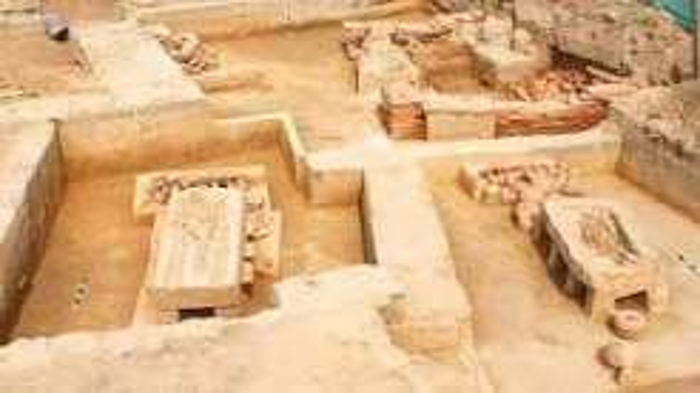
The Archaeological Survey of India (ASI) has begun a fresh excavation at a 90-acre mound in Kashipur, Uttarakhand, to investigate its historical significance and possible links to the Mahabharata. The site is also associated with the Chinese traveller Xuanzang, who visited the region during the 6th century.
According to local legends, the area served as the residence and training ground of Dronacharya, the teacher of the Pandavas and Kauravas. The nearby Drona Sagar Lake is traditionally believed to have been built by the Pandavas as guru dakshina, or an offering to their teacher.

The site, identified with the ancient settlement of Govisana, has undergone excavations in several phases since 1939. Previous investigations uncovered temple structures, brick formations and artefacts belonging to different historical periods. The latest excavation, which began this week, is expected to continue until March.
According to ASI officials, the current excavation aims to scientifically examine previously discovered objects and establish a clearer cultural sequence of the site. Earlier excavations revealed a temple complex constructed in multiple phases, beginning during the Gupta period and undergoing modifications around the 6th and 7th centuries CE.
Pottery recovered from the mound indicates human occupation from the Painted Grey Ware period to the early medieval period. Painted Grey Ware is associated with early Iron Age settlements in northern India and has been studied by archaeologists investigating the historical context of the Mahabharata.
Archaeologist B B Lal had earlier discovered Painted Grey Ware at Hastinapur, near Meerut, contributing to research on the chronology of ancient settlements mentioned in Indian epics.
Recent excavations at Kashipur have also revealed brick structures and a circular formation. However, the site's association with the Mahabharata remains a subject of archaeological investigation rather than established historical fact.
After completing the excavation season, the ASI will assess whether further exploration is necessary. The site may eventually be developed for archaeological research and tourism.

Critical Security Flaws Prompt Emergency Action
Four Members Warn of Broadening Price Pressures
Section 17A of Prevention of Corruption Act Does Not Cover Every Act of Public Servants
Hamas Rejects Disarmament, US and Israel Consider Iran Strikes

Compromised Cryptographic Keys Trigger Global Cybersecurity Concerns
Egypt insists international schools include Arabic, history in final scores

China’s Chery unveils AI companion robot designed to ease loneliness

New Zealand reforms could leave more students without school qualifications

Alfred Nobel’s will created one of the world’s most recognised prizes. Here’s how

Pepperdine University earns Google recognition and Digital Education Council membership for AI initiatives

Critical Security Flaws Prompt Emergency Action
Four Members Warn of Broadening Price Pressures
Section 17A of Prevention of Corruption Act Does Not Cover Every Act of Public Servants
Hamas Rejects Disarmament, US and Israel Consider Iran Strikes
Compromised Cryptographic Keys Trigger Global Cybersecurity Concerns
Egypt insists international schools include Arabic, history in final scores
China’s Chery unveils AI companion robot designed to ease loneliness
New Zealand reforms could leave more students without school qualifications
Alfred Nobel’s will created one of the world’s most recognised prizes. Here’s how
Pepperdine University earns Google recognition and Digital Education Council membership for AI initiatives
Copyright© educationpost.in 2026 All Rights Reserved.