


Government modelling projects falling pass rates under the new system with the poorest schools facing the steepest declines.
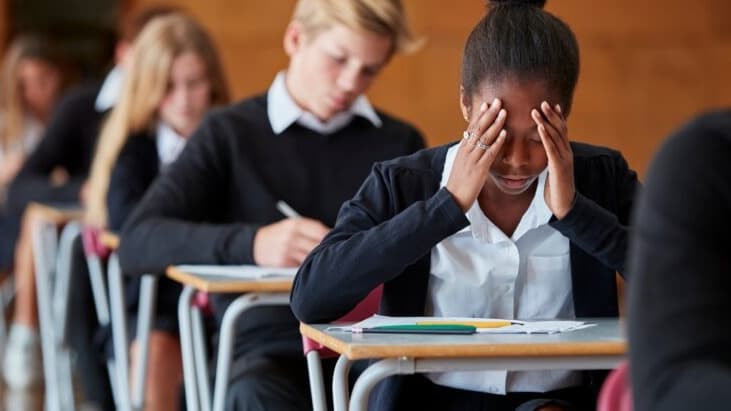
New Zealand’s proposed secondary school qualifications reforms could leave significantly more students without formal qualifications, with the Government’s own modelling pointing to steep declines in attainment, particularly among young people facing socio-economic barriers.
The projections, disclosed to the Post Primary Teachers’ Association Te Wehengarua (PPTA) under the Official Information Act after an 18-month wait, reveal that Ministry of Education officials warned Minister Erica Stanford of a “potential significant drop in attainment” under the system designed to replace the National Certificate of Educational Achievement (NCEA).

Officials cautioned that more students could leave school without any formal qualification, at least in the initial years of the new system. They also highlighted the consequences for students’ futures, noting that achieving NCEA at any level is associated with better post-school outcomes than leaving education without a qualification.
“This means the proposed changes could also lead to worse post-school outcomes for some students,” officials advised the minister.
The modelling has intensified concerns among teachers that the reforms could widen existing educational inequalities rather than close the achievement gap.
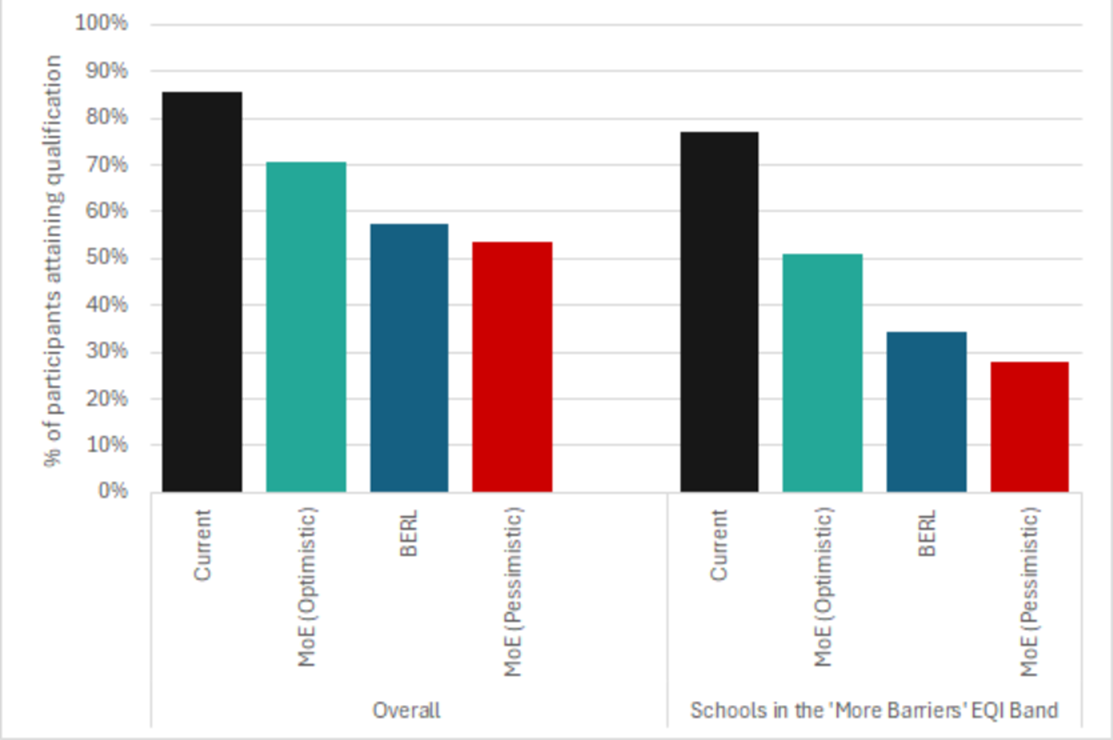
According to the Ministry’s estimates, Year 12 attainment rates could fall by an additional 15% under an “optimistic” scenario and by 27% under a “pessimistic” one. The projected impact is even greater for students facing higher levels of disadvantage, with attainment at the poorest schools potentially declining by between 27% and 52%.
The Ministry’s advice acknowledged that attainment could decrease significantly under the proposed changes, with students facing greater barriers, as measured by the Equity Index (EQI), likely to experience the sharpest setbacks.
Chris Abercrombie, president of PPTA Te Wehengarua, questioned how the reforms aligned with the Government’s stated commitment to narrowing educational inequalities.
“How can the Minister say time and time again that the thing she cares most about in education is closing the equity gap when her reforms are going to have the worst impact on the lives of young people who are facing the most socio-economic barriers to achievement at school?” he said.
Abercrombie said the newly released projections supported similar analysis commissioned by PPTA from BERL, which the minister had previously dismissed as “disgusting” and “scaremongering”.
He also expressed concern that the Government had proceeded with the reforms despite receiving warnings from ministry officials in May last year about the potential consequences for young people’s future opportunities.
“We cannot believe that the Minister proceeded with the changes, despite being informed by officials in May last year that the life choices of tens of thousands of young people were going to be significantly worse as a result,” he said.
Teachers question safeguards
The Ministry’s advice acknowledged that the risks could remain high even if measures were introduced to soften the impact of the transition. It warned that the likelihood of lower attainment among at least the first few student cohorts could still be considerable.
Among the recommended safeguards were adequate funding and resources for schools, sufficient time to implement the changes and the development of effective vocational pathways that would give students alternative routes to qualifications and employment.
However, Abercrombie argued that teachers had little confidence these measures would be delivered effectively. He pointed to what he described as the Government’s failure to adequately resource previous reforms and raised similar concerns about the implementation of the new curriculum.
He said teachers had yet to receive clear information about how vocational pathways would be developed, who would deliver them or whether students outside major cities would have meaningful access to them.
“Given this experience, we have no confidence that the huge risks associated with the new qualifications will be mitigated in any way, shape or form,” he said.
For PPTA, the concern extends beyond examination results to the long-term consequences for young people whose access to further education, training and employment could be affected by whether they leave school with recognised qualifications.
Abercrombie urged the minister to reconsider the reforms while there was still time to address the risks, calling on the Government to listen to teachers, students and their families.
“The Minister needs to front up to these young people, who are going to be the ones who pay the price of these reforms for the rest of their lives, and their whānau, and explain why their lives don’t matter,” he said.

Tamil Nadu School Holiday Today: Schools Closed in 3 Districts; Chennai Update

Jhansi School Headmaster Arrested Over Alleged ₹2 Lakh Mid-Day Meal Fund Fraud

Lincoln Tech Expands LeadSquared Partnership to Deploy AI Agents in Student Admissions

FinX, IIBF Join Hands to Expand BFSI Job Opportunities for Banking and Finance Candidates
SSC CHSL 2026 Applications Drop 49%: 15.71 Lakh Candidates Apply for 2,536 Posts

Australian schools record thousands of student sexual misconduct reports as child safety concerns grow
Egypt insists international schools include Arabic, history in final scores

China’s Chery unveils AI companion robot designed to ease loneliness

New Zealand reforms could leave more students without school qualifications

Alfred Nobel’s will created one of the world’s most recognised prizes. Here’s how

Tamil Nadu School Holiday Today: Schools Closed in 3 Districts; Chennai Update
Jhansi School Headmaster Arrested Over Alleged ₹2 Lakh Mid-Day Meal Fund Fraud
Lincoln Tech Expands LeadSquared Partnership to Deploy AI Agents in Student Admissions
FinX, IIBF Join Hands to Expand BFSI Job Opportunities for Banking and Finance Candidates
SSC CHSL 2026 Applications Drop 49%: 15.71 Lakh Candidates Apply for 2,536 Posts
Australian schools record thousands of student sexual misconduct reports as child safety concerns grow
Egypt insists international schools include Arabic, history in final scores
China’s Chery unveils AI companion robot designed to ease loneliness
New Zealand reforms could leave more students without school qualifications
Alfred Nobel’s will created one of the world’s most recognised prizes. Here’s how
Copyright© educationpost.in 2026 All Rights Reserved.