


India Advances Development Goals Through Renewable Energy and Green Policies
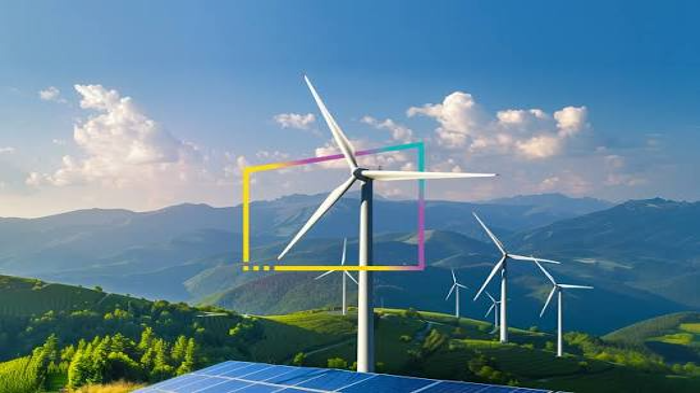
India is increasingly integrating climate action with its broader development strategy, with renewable energy, energy efficiency and green industrial policies becoming part of economic planning, according to a new report.
The report by Vietnam Times said India’s approach to climate policy reflects a broader transformation in its development model, with initiatives aimed at strengthening energy security, expanding manufacturing, attracting investment and creating employment alongside efforts to reduce emissions.

The publication said India’s experience demonstrates how climate policies can support multiple economic objectives, including energy security, industrial growth, technological development and job creation.
India’s climate strategy dates back to the 2008 National Action Plan on Climate Change (NAPCC), which introduced eight National Missions covering areas such as renewable energy, energy efficiency, sustainable habitat, water conservation, sustainable agriculture, protection of the Himalayan ecosystem, the Green India Mission and strategic knowledge on climate change.
The report highlighted the National Solar Mission as one of the most visible pillars of India's clean energy transition. It also pointed to the Perform, Achieve and Trade (PAT) scheme, which has sought to improve energy efficiency across energy-intensive industrial sectors.
Programmes such as the UJALA LED initiative and the National Green Hydrogen Mission have also been positioned as measures aimed at improving energy efficiency, supporting industrial competitiveness and reducing emissions.
The report said the expansion of solar, wind and hybrid energy projects has been supported by measures including incentives for domestic solar manufacturing under the Production Linked Incentive (PLI) scheme and policies aimed at scaling up green hydrogen.
According to government estimates cited in the report, the National Green Hydrogen Mission could help reduce dependence on imported fossil fuels while attracting private investment and generating employment across the clean energy value chain.
The report also highlighted the Faster Adoption and Manufacturing of Electric Vehicles (FAME) programme and complementary state-level policies, which have supported the adoption of electric buses, two-wheelers and passenger vehicles.
India’s climate strategy is also gaining greater international visibility, the report noted, with global climate summits providing opportunities to extend the country's experience with climate missions into international partnerships, particularly with developing countries seeking affordable clean-energy and climate-resilience solutions.

UAE parents urged to check if children truly learn from AI homework

Chennai School Holiday Today: Schools Closed in 5 Tamil Nadu Districts Due to Heavy Rain

Sharjah schools set boundaries for AI use in homework and exams

Palghar Ashram School Accident: Two Students Die, Three Injured After Navratri Fair Visit

Engineering Research Should Focus on Actual Problem Solving
Sharjah schools set boundaries for AI use in homework and exams

Former MIT scientist wins $6 million defamation verdict in misconduct dispute

McMahon highlights Trump’s push to return education powers to states

Could smarter energy solutions make data centres more sustainable?

Cambridge and AstraZeneca extend joint PhD programme for three years

UAE parents urged to check if children truly learn from AI homework
Chennai School Holiday Today: Schools Closed in 5 Tamil Nadu Districts Due to Heavy Rain
Sharjah schools set boundaries for AI use in homework and exams
Palghar Ashram School Accident: Two Students Die, Three Injured After Navratri Fair Visit
Engineering Research Should Focus on Actual Problem Solving
Sharjah schools set boundaries for AI use in homework and exams
Former MIT scientist wins $6 million defamation verdict in misconduct dispute
McMahon highlights Trump’s push to return education powers to states
Could smarter energy solutions make data centres more sustainable?
Cambridge and AstraZeneca extend joint PhD programme for three years
Copyright© educationpost.in 2026 All Rights Reserved.