


Finance Minister’s Meeting With Traders Leads to Withdrawal of UPI Protest
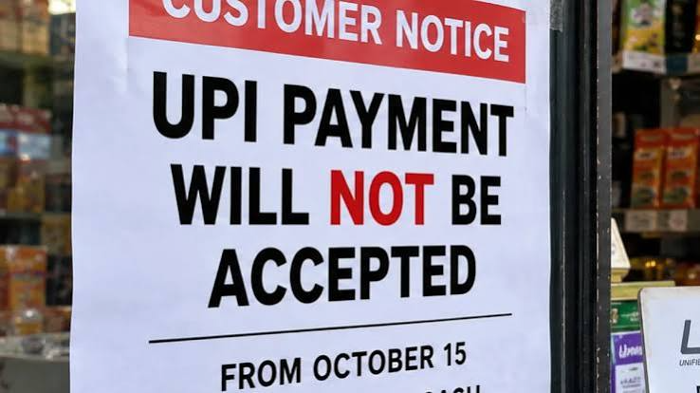
Leading traders’ organisations have withdrawn their proposed call to observe October 2 as “No UPI Day” following a meeting with Finance Minister Nirmala Sitharaman in the national capital on Wednesday.
A delegation of around 20 representatives from trade bodies across several states met Sitharaman to raise concerns over the proposed 0.4 per cent fee on eligible merchant UPI transactions above Rs 2,000.

The traders argued that the proposed charge could increase the cost burden on small and medium-sized businesses and affect the adoption of digital payments among merchants.
The delegation was led by Chandni Chowk MP and Confederation of All India Traders (CAIT) secretary general Praveen Khandelwal. The representatives sought clarity on the proposed charge and urged the government to consider the concerns of the trading community before its implementation.
Earlier, the All India Consumer Products Federation and the All India Mobile Retailers Association had announced plans to observe October 2 as “No UPI Day” in protest against the proposed fee.
The organisations subsequently decided to withdraw the protest call following their discussions with the Finance Minister.
Speaking to reporters after the meeting, Khandelwal said the decision followed constructive discussions and assurances that the concerns raised by traders would receive due consideration. He added that the trading community was encouraged by the dialogue and would continue engaging with the government on the issue.
Despite the withdrawal of the protest, the proposed 0.4 per cent fee on eligible merchant UPI transactions above Rs 2,000 is scheduled to take effect from October 15.
Trader organisations said they remain hopeful that their concerns will be addressed before the proposed charge is implemented.
Meanwhile, the National Payments Corporation of India (NPCI) earlier this month rejected reports suggesting that GST on UPI Merchant Discount Rate (MDR) would increase costs for small merchants and make digital payments more expensive.
“This is incorrect,” NPCI said, clarifying that MDR applies only to person-to-merchant (P2M) transactions above Rs 2,000, while transactions up to Rs 2,000 continue to have zero MDR and therefore no GST impact on MDR.
Government data indicates that transactions up to Rs 2,000 account for more than 96 per cent of UPI merchant transaction volume. As a result, the majority of UPI merchant payments would continue to remain outside the MDR and GST-on-MDR framework.

UAE parents urged to check if children truly learn from AI homework

Chennai School Holiday Today: Schools Closed in 5 Tamil Nadu Districts Due to Heavy Rain

Sharjah schools set boundaries for AI use in homework and exams
Palghar Ashram School Accident: Two Students Die, Three Injured After Navratri Fair Visit

Engineering Research Should Focus on Actual Problem Solving
Sharjah schools set boundaries for AI use in homework and exams

Former MIT scientist wins $6 million defamation verdict in misconduct dispute

McMahon highlights Trump’s push to return education powers to states

Could smarter energy solutions make data centres more sustainable?

Cambridge and AstraZeneca extend joint PhD programme for three years

UAE parents urged to check if children truly learn from AI homework
Chennai School Holiday Today: Schools Closed in 5 Tamil Nadu Districts Due to Heavy Rain
Sharjah schools set boundaries for AI use in homework and exams
Palghar Ashram School Accident: Two Students Die, Three Injured After Navratri Fair Visit
Engineering Research Should Focus on Actual Problem Solving
Sharjah schools set boundaries for AI use in homework and exams
Former MIT scientist wins $6 million defamation verdict in misconduct dispute
McMahon highlights Trump’s push to return education powers to states
Could smarter energy solutions make data centres more sustainable?
Cambridge and AstraZeneca extend joint PhD programme for three years
Copyright© educationpost.in 2026 All Rights Reserved.