CBSE evaluation controversies over the years: From inflated marks to digital glitches
Moderation policies, Covid-era assessment formulas, subjective checking complaints, re-evaluation disputes, and technical failures in online marking have repeatedly raised concerns over transparency and consistency in board results.
Pragya Kumari16 May 2026 12:56
CBSE’s marking and evaluation system has faced recurring criticism, legal scrutiny, and student dissatisfaction over the years, long before the Board introduced the On-Screen Marking (OSM) system in 2026.
Concerns have ranged from moderation policies and subjective checking to technical glitches, inconsistent assessment standards, totaling errors, and transparency issues in re-evaluation processes.
One of the earliest large-scale controversies emerged around the moderation policy followed by CBSE for several years. Under this system, marks were artificially increased in certain subjects to offset difficult question papers, regional variations, and evaluation inconsistencies.
The practice led to unusually high board scores, with students frequently securing 95% to 99%. While many students benefited from the system, universities and education experts criticized the resulting “marks inflation,” arguing that it distorted merit and created unrealistic cutoffs for college admissions.
In 2017, CBSE formally decided to curb its moderation policy after pressure from higher education institutions and concerns about inflated scores.
The move triggered widespread dissatisfaction among students and parents, many of whom argued that candidates from earlier years had unfairly benefited from generous moderation while later batches faced stricter marking standards.
Several legal petitions were also filed seeking continuation of moderation benefits for that year’s students.
The Covid-19 pandemic created another major turning point in CBSE’s evaluation history. In 2020, after nationwide disruptions to board examinations, CBSE adopted alternative assessment methods for subjects whose exams could not be conducted.
The Board relied on internal assessments, practical marks, and earlier exam performance to calculate final scores. Many students questioned the fairness of the formula, especially those who had expected to improve their performance in remaining board papers.
The dissatisfaction became even more pronounced in 2021 when CBSE cancelled Class 12 board examinations entirely due to the second wave of Covid-19. The Board introduced a tabulation policy based on Class 10 marks, Class 11 performance, internal assessments, and school-level evaluations.
Students across the country complained about inconsistent marking patterns among schools, alleging that some institutions awarded excessively high marks while others followed stricter standards.
The absence of a uniform national examination led to concerns about credibility, fairness, and comparability of results.
During this period, students complained, claiming they had received unexpectedly low scores despite strong academic records. Several students also demanded optional offline examinations to improve their marks, leading CBSE to later conduct special improvement exams for dissatisfied candidates.
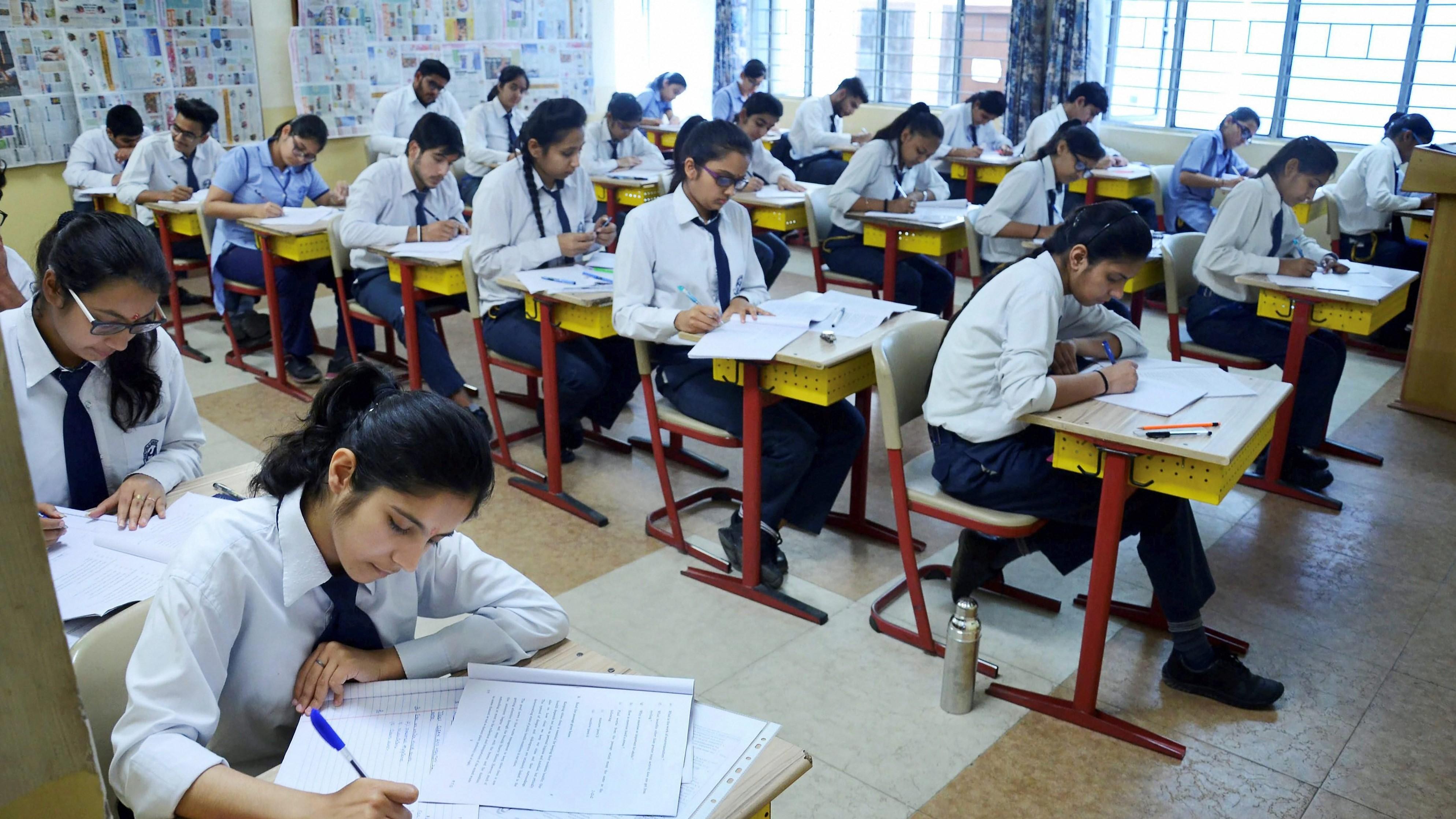
Even outside pandemic years, CBSE has regularly faced criticism over errors in evaluation and result processing. Every year, thousands of students apply for verification of marks, photocopies of answer sheets, and re-evaluation after alleging mistakes in checking.
Common complaints have included unchecked answers, incorrect totaling, answers evaluated without considering the official marking scheme, and discrepancies between awarded marks and expected scores.
Subjects involving descriptive or analytical writing have often generated the highest dissatisfaction. Students in subjects such as English, Political Science, History, Sociology, Psychology, and Business Studies have repeatedly claimed that evaluation standards vary widely between examiners.
Many students argued that answers matching NCERT concepts and keywords still received unexpectedly low marks because of subjective interpretation by evaluators.
Science and mathematics papers have generated a different category of complaints. Students appearing for Physics, Chemistry, and Mathematics examinations have frequently alleged excessively strict marking, especially in numerical and step-based questions.
Some students claimed that partial marks were not awarded consistently despite following correct methods. Complaints regarding lengthy Physics papers and difficult Mathematics papers have also become common in several board exam cycles.
Another recurring issue has been confusion regarding CBSE’s marking schemes and answer keys. While the Board prepares detailed marking guidelines for evaluators, students and teachers have often argued that these schemes are not always uniformly implemented across regions and schools.
Coaching institutes and subject experts frequently release independent answer keys after examinations, sometimes contradicting official evaluation patterns and creating further confusion among students.
CBSE has also faced criticism regarding delays and lack of transparency in the re-evaluation process. Earlier, students were not directly allowed to access photocopies of evaluated answer sheets before applying for verification.
This led to repeated demands from parents and courts for greater transparency. Over time, CBSE modified its procedure and allowed students to first obtain scanned copies of answer books before requesting re-evaluation.
Court interventions have played a major role in shaping CBSE’s current evaluation framework. Various High Courts and the Supreme Court have heard petitions concerning result errors, moderation policies, grace marks, compartment rules, and rechecking procedures.
In several cases, courts directed the Board to revise marks after identifying evaluation mistakes or procedural lapses.
The Board has also witnessed controversies surrounding grace marks. In some years, CBSE reportedly awarded grace marks after difficult papers, particularly in Mathematics and Physics, prompting debates over fairness and standardization.
Students from different batches often compared marking standards and accused the Board of inconsistency across years.
Teacher-related issues have also contributed to dissatisfaction with evaluation quality. Evaluators have occasionally complained about heavy workloads, tight timelines, insufficient training, and pressure to complete checking quickly.
Teachers involved in board evaluation have in past years reported difficulties handling large volumes of answer sheets within limited time periods, raising concerns about the accuracy and consistency of marking.
The introduction of the On-Screen Marking system in 2026 marked CBSE’s latest attempt to modernize evaluation through digital technology.
Under the system, physical answer sheets were scanned and uploaded to a secure platform where evaluators checked scripts remotely. CBSE promoted the OSM framework as a transparent, efficient, and error-free system capable of reducing manual mistakes in totaling and mark uploads.
However, the rollout immediately drew criticism from teachers and evaluators. Reports emerged of blurred scanned answer sheets, server crashes, unsaved corrections, slow loading speeds, and evaluated answer books disappearing from the system.
Some teachers stated they were able to check only a few answer scripts per day because of repeated technical disruptions and eye strain caused by prolonged screen-based evaluation.
The controversy intensified after CBSE announced the 2026 Class 12 results, which recorded a pass percentage of 85.20%, lower than the previous two years. Students and parents questioned whether technical problems during digital evaluation may have affected marking accuracy.
In response, CBSE issued a detailed circular defending the OSM system and emphasizing its transparency and objectivity. The Board stated that the system “eliminates totaling, posting, and uploading errors” and “ensures every answer is evaluated as per the marking scheme.”
At the same time, CBSE acknowledged student dissatisfaction and expanded the post-result grievance process by allowing access to scanned answer sheets before verification and re-evaluation.
The Board also instructed students to carefully verify whether their answer books had been properly scanned and whether all pages, graphs, and supplementary sheets were visible, indirectly reflecting concerns surrounding the digital evaluation process.
Over the years, CBSE has consistently maintained that its assessment framework is designed to ensure fairness, consistency, and transparency.
The Board has repeatedly defended its use of moderation policies, standardized marking schemes, evaluator training sessions, and re-evaluation mechanisms.
However, dissatisfaction regarding board marking practices continues to remain one of the most debated issues among students, parents, teachers, and educational institutions across India.