


Iran says it is preparing a new maritime traffic mechanism for the Strait of Hormuz that will include service fees and preferential treatment for vessels cooperating with Tehran, raising fresh concerns over global energy and shipping routes.
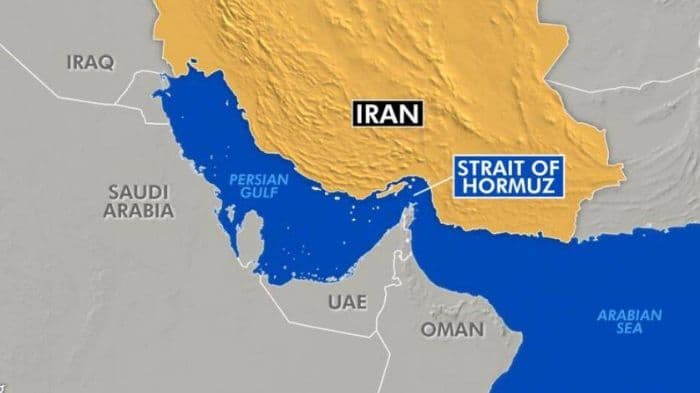
Iran has announced plans to introduce a new traffic management system in the Strait of Hormuz under which ships using the strategic waterway may have to pay fees for specialised maritime services.
Ebrahim Azizi, head of the Iranian parliament’s national security committee, said Tehran had prepared a designated route mechanism for vessel movement through the Strait of Hormuz and that details would be unveiled soon.

According to Azizi, only commercial vessels and countries “cooperating with Iran” would benefit from the arrangement, while operators linked to hostile or adversarial initiatives may face restrictions.
The Strait of Hormuz is one of the world’s most critical maritime chokepoints, with nearly one-fifth of global oil and liquefied natural gas shipments passing through the narrow waterway connecting the Persian Gulf to the Arabian Sea.
Iran’s latest announcement comes amid continuing tensions in West Asia following months of conflict involving Iran, Israel and the United States. Maritime traffic through the strait has been repeatedly disrupted during the crisis, affecting global oil prices and shipping routes.
Reports over recent months have indicated that Iran’s Islamic Revolutionary Guard Corps (IRGC) has already been informally vetting vessels, escorting selected ships through Iranian waters and in some cases collecting payments for safe passage.
Shipping intelligence reports cited by international media suggested some vessels were required to submit cargo details, crew lists and ownership records before being allowed transit through routes closer to Iranian territorial waters.
Iran has defended the measures as necessary for maritime security and regional stability. Iranian officials have argued that Tehran, as a coastal state bordering the strait, has the right to regulate traffic under its security framework.
However, the proposed fee mechanism has triggered criticism from several countries and maritime analysts, who argue that international shipping lanes should remain open under established maritime law and free navigation principles.
US President Donald Trump had earlier criticised Tehran over reports that commercial vessels were being charged for safe passage through the strait. Washington has also warned shipping companies against making payments that could violate US sanctions.
The issue was reportedly discussed during Trump’s recent summit with Chinese President Xi Jinping in Beijing, where both sides agreed that the Strait of Hormuz should remain open to global shipping.
China, one of Iran’s largest oil buyers, has emerged as a key factor in the evolving maritime arrangement. Multiple reports indicated that Chinese-linked vessels and ships from countries considered “friendly” by Tehran may receive preferential treatment or easier passage access.
India has also previously expressed opposition to any formal toll or transit fee system in the Strait of Hormuz, citing concerns over international maritime norms and energy security.
Any prolonged disruption or restriction in the strait could significantly affect global crude oil prices, shipping insurance costs and energy-import dependent economies across Asia and Europe.
.jpg&w=256&q=75)
Karnataka introduces 7.5% sub-quota for rural government school students in professional course admissions

NEET PG Counselling 2026 Round 1 registration begins Oct 12, check schedule and key dates

Odisha Governor Inaugurates Boeing STEM Lab, Aeromodelling Centre in Bargarh
PM Modi praises NEP impact, Tamil Nadu CM Vijay seeks ₹5,110 crore in dues

Learning, earning, research, innovation and building must all come together
Karnataka introduces 7.5% sub-quota for rural government school students in professional course admissions
NEET PG Counselling 2026 Round 1 registration begins Oct 12, check schedule and key dates
PM Modi praises NEP impact, Tamil Nadu CM Vijay seeks ₹5,110 crore in dues
JNU dismissal row: Bimol Akoijam challenges university's claims, JNUTA flags procedural lapses
US probes nine universities over J-1 visas, halts PERM processing for eight firms

Karnataka introduces 7.5% sub-quota for rural government school students in professional course admissions
NEET PG Counselling 2026 Round 1 registration begins Oct 12, check schedule and key dates
Odisha Governor Inaugurates Boeing STEM Lab, Aeromodelling Centre in Bargarh
PM Modi praises NEP impact, Tamil Nadu CM Vijay seeks ₹5,110 crore in dues
Learning, earning, research, innovation and building must all come together
Karnataka introduces 7.5% sub-quota for rural government school students in professional course admissions
NEET PG Counselling 2026 Round 1 registration begins Oct 12, check schedule and key dates
PM Modi praises NEP impact, Tamil Nadu CM Vijay seeks ₹5,110 crore in dues
JNU dismissal row: Bimol Akoijam challenges university's claims, JNUTA flags procedural lapses
US probes nine universities over J-1 visas, halts PERM processing for eight firms
Copyright© educationpost.in 2026 All Rights Reserved.