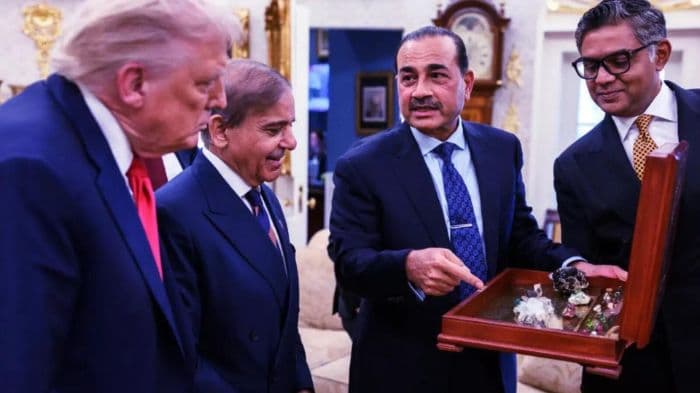
Islamabad has sent its first shipment of rare earth and critical mineral samples to the United States as both countries move forward on a landmark export agreement, according to media reports.
The shipment comes as part of a Memorandum of Understanding (MoU) signed between US Strategic Metals (USSM) and Pakistan in September, which envisions investments in mineral processing and development facilities in Pakistan.

Sources told Pakistani media outlet Dawn and other outlets that the initial consignment — which was coordinated with Pakistan’s Frontier Works Organisation (FWO) — includes antimony, copper concentrate, and rare earth elements such as neodymium and praseodymium.
USSM described the delivery as a “milestone” in bilateral cooperation, and expressed intent to build a full mineral value chain inside Pakistan—from exploration to refining.
The agreement is valued at approximately USD 500 million, and is seen as Pakistan’s entry into the strategic, high-demand global market for critical minerals, which are vital for defense, renewable energy technologies, electronics, and advanced manufacturing.
Pakistan is believed to hold untapped mineral reserves estimated in the trillions of dollars, positioning it among resource-rich countries if exploration expands.
However, the move has sparked controversy and political scrutiny in Pakistan. The Pakistan Tehreek-e-Insaf (PTI) has demanded transparency, alleging that the deal and its terms amount to “secret deals” struck without public oversight or parliamentary approval.
Some opposition voices have warned that such arrangements might compromise national sovereignty or undervalue Pakistan’s natural resources.
Military sources have pushed back on some of the more alarming claims — such as proposals giving US access to Pasni Port—describing them as commercial ideas not official policy.
For the United States, the deal could help diversify and strengthen supply chains of rare earths and critical minerals, reducing reliance on dominant producers.
As global competition intensifies over these strategic resources, partnerships like this may reshape both geopolitical and trade dynamics in the years ahead.