


Nepal’s foreign minister says nearly 300 Indians are among those unaccounted for, while India has separately reported contact lost with about 130-133 nationals as rescue operations expand.
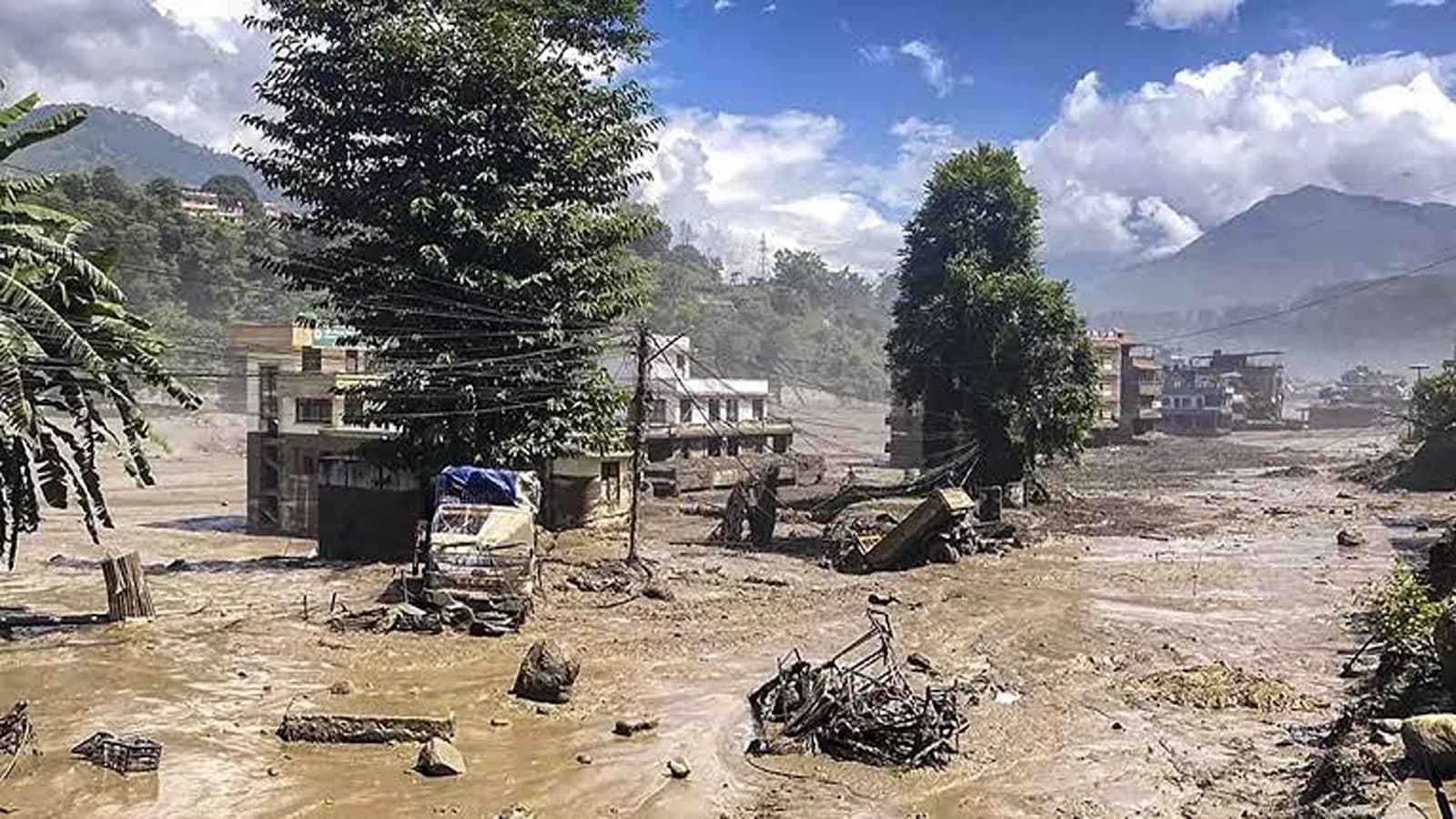
A catastrophic flash flood along Nepal’s border with Tibet has left hundreds dead and hundreds more missing, with Indian tourists and pilgrims among those still unaccounted for as rescue teams search devastated communities and damaged transport routes.
Nepal Foreign Minister Shisir Khanal said Thursday that nearly 300 Indian nationals were among thousands of people reported missing following Wednesday’s disaster in the country’s Himalayan region. Khanal said the government was still assessing the full scale of the destruction and working with foreign embassies to establish contact with missing nationals.

However, figures from India are lower. Minister of State for External Affairs Kirti Vardhan Singh said Thursday that approximately 130 to 133 Indian nationals were among those with whom contact had been lost. The discrepancy reflects the rapidly changing and still-unverified nature of the missing-person figures in the affected areas.
Nepal’s National Disaster Risk Reduction and Management Authority reported that the death toll had reached 171, while around 800 people remained missing. At least 73 people were injured, according to the latest figures cited by Indian media. Rescue teams had also evacuated 123 people from the Timure area of Rasuwa, including 29 foreign nationals.
Flood devastates Nepal-Tibet border region
The disaster began Wednesday morning in the mountainous region near the Nepal-China border. A large collapse involving ice, rock and debris sent a powerful surge through the Lhende Khola river system before the floodwaters reached the Bhotekoshi River and moved downstream.
Satellite analysis and expert assessments reviewed by Reuters indicate that a section of a Himalayan glacier collapsed into the valley, triggering the destructive flow. Earlier reports had considered an earthquake as a possible trigger, but subsequent analysis has increasingly pointed to a glacial collapse and debris flow as the immediate cause. Scientists are continuing to investigate the precise sequence of events.
The flood swept through settlements and damaged or destroyed roads, bridges, homes, power infrastructure and border facilities. Reuters reported that about 40 kilometers of roads and at least 19 bridges were washed away in the affected region.
The devastation has been particularly severe in Rasuwa and Nuwakot districts, while the flood also affected parts of Dhading and other areas connected to the Bhotekoshi and Trishuli river systems.
Indian tourists and Kailash Mansarovar pilgrims among missing
The affected region is an important route for tourists and pilgrims traveling toward Tibet, including people undertaking the Kailash Mansarovar pilgrimage.
Nepalese officials said hundreds of tourists were among those reported missing. Nepal Tourism Board figures cited by international media put the number of missing tourists at 579, including more than 400 foreign nationals. The list includes travelers from India, the United States, Australia, Britain, Canada, Malaysia, Japan and several other countries.
India is among the countries with the largest number of missing nationals. Reuters reported that Nepal’s broader tourist list included 177 Indians, while India’s government separately estimated that contact had been lost with approximately 130 to 133 Indians.
Many of the Indian nationals were believed to be traveling as part of pilgrimage groups, including those headed toward Kailash Mansarovar.
India steps up rescue coordination
The Indian Embassy in Kathmandu has been coordinating with Nepalese authorities and assisting families seeking information about Indian nationals affected by the disaster.
The embassy issued emergency contact numbers for Indian citizens in Nepal and their relatives seeking information:
Indian Embassy in Kathmandu:
+977-9851316807
+977-9709107500
India has also begun sending humanitarian assistance and coordinating rescue efforts with Nepal, according to Minister of State for External Affairs Kirti Vardhan Singh. He said Indian relief teams were involved in efforts to locate missing nationals and support the response.
Nepal’s disaster-management authorities have also maintained emergency channels, including the National Emergency Operation Centre toll-free number 1234.
Rescue efforts face difficult conditions
The search has been complicated by destroyed roads and bridges, damaged communications infrastructure, difficult Himalayan terrain and continuing concerns about unstable slopes and river conditions.
Nepal has deployed thousands of personnel for search-and-rescue operations, with helicopters being used to reach isolated communities and deliver emergency supplies. More than 100 people have been airlifted or rescued from affected areas, although large sections of the disaster zone remain difficult to access.
The scale of the disaster extends beyond Nepal. In Tibet’s Gyirong county, Chinese authorities reported hundreds of additional people missing following the same flood event. Reuters reported 558 people missing in Tibet, including foreign nationals. Combined figures from Nepal and Tibet put the number of missing people at close to 1,500.
Nepal foreign minister appeals for support
Khanal described the disaster as one of the country’s worst recent catastrophes and said the government was focused on rescue and immediate relief.
He also said Nepal remained committed to the safety of foreign nationals and was communicating with foreign embassies as authorities tried to determine who remained missing.
“Thousands of families have lost homes and are missing as of now,” Khanal said, adding that authorities were still working to determine the full extent of the disaster.
Khanal also thanked India for its assistance and appealed for continued international support for Nepal’s recovery. He said tourism would remain important to the country’s economic recovery, while noting that large parts of Nepal were not affected by the disaster.
Why the Indian missing-person figure is changing
The reported number of missing Indians has changed substantially as authorities receive information from different locations and begin reconciling tourist, pilgrim, immigration and local records.
On Wednesday, reports had placed the number of missing Indian nationals at 133, while Nepal’s foreign minister on Thursday referred to nearly 300 Indians among thousands of people reported missing. India’s foreign ministry subsequently said approximately 130 to 133 Indians had lost contact, while Reuters later cited a broader Nepalese tourist list containing 177 Indians.
These figures should therefore be treated as preliminary and subject to verification, rather than as a confirmed number of Indian deaths or missing persons.
The larger Himalayan risk
The disaster has also renewed attention on the growing risks posed by unstable glaciers, landslides and extreme weather in the Himalayan region.
Experts have warned that rising temperatures and accelerated glacier melt can increase the instability of high-altitude terrain, although scientists are still determining the precise role of climate change in this particular event. Reuters reported that Nepal has experienced substantial glacier loss in recent decades, increasing concerns about hazards associated with rapidly changing mountain environments.
For now, the immediate priority remains locating missing people, treating the injured and restoring access to communities cut off by the destruction.
With communications disrupted in parts of the affected region and rescue teams still reaching isolated locations, officials have warned that casualty and missing-person figures could change further.
This is a developing story. Figures and details may be updated as Nepalese and Indian authorities verify information from the affected areas.

Hunter of Underwater Threats: Why INS Mangrol Is Important for the Indian Navy

Delhi Protests Renew Debate Over Constitutional Right to Peaceful Assembly

Household Inflation Rises to 5.54% in September as Price Pressures Spread
Delhi High Court Allows Urgent Hearing on Protest Site Guidelines

India Rejects China’s Objection to Standardised Names of Places in Ladakh

Karnataka student elections return after 37 years: Why political restrictions and university polls remain contentious

Global education is shifting from simply going abroad to creating more flexible routes to opportunity

Delhi Police files FIR against Congress MP Bimol Akoijam over JNU sexual harassment allegations
Utkal University tightens security after late-night explosions ahead of student polls

IET India Scholarship Award 2026: DTU’s Kush Garg wins top honor for AI device for neurodivergent children

Hunter of Underwater Threats: Why INS Mangrol Is Important for the Indian Navy
Delhi Protests Renew Debate Over Constitutional Right to Peaceful Assembly
Household Inflation Rises to 5.54% in September as Price Pressures Spread
Delhi High Court Allows Urgent Hearing on Protest Site Guidelines
India Rejects China’s Objection to Standardised Names of Places in Ladakh
Karnataka student elections return after 37 years: Why political restrictions and university polls remain contentious
Global education is shifting from simply going abroad to creating more flexible routes to opportunity
Delhi Police files FIR against Congress MP Bimol Akoijam over JNU sexual harassment allegations
Utkal University tightens security after late-night explosions ahead of student polls
IET India Scholarship Award 2026: DTU’s Kush Garg wins top honor for AI device for neurodivergent children
Copyright© educationpost.in 2026 All Rights Reserved.