


Government-backed ride-hailing platform sharpens anti-surge pitch, promises 100% earnings for drivers and seamless digital payments for riders.
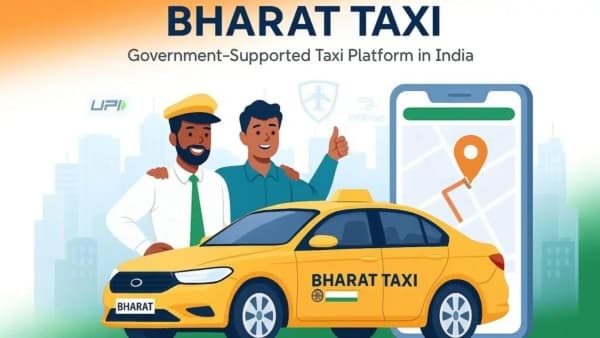
In a significant move aimed at strengthening its digital backbone, government-backed ride-hailing platform Bharat Taxi has onboarded Paytm as its official payments partner, enabling quick UPI transactions for riders while unlocking a suite of financial and onboarding benefits for drivers.
The partnership, formalised through a Memorandum of Understanding (MoU), will allow Bharat Taxi users to pay for rides via Paytm’s UPI infrastructure directly within the app, as well as through QR codes, Soundbox and card machines. Beyond payments, the collaboration is expected to streamline driver onboarding and expand access to services such as insurance.

Bharat Taxi has positioned itself as a cooperative alternative to dominant aggregators like Uber and Ola, pitching itself as a platform that prioritises driver welfare. Drivers — referred to as “Sarathis” — are allowed to retain 100% of their ride earnings, with the platform charging no commission. Instead, drivers reportedly pay a nominal daily access fee of around ₹30.
The Paytm integration is being projected as a critical enabler of this ecosystem. Alongside facilitating seamless digital payments, the partnership will provide drivers access to insurance coverage and other essential services, strengthening the platform’s pro-driver narrative.
For riders, Bharat Taxi continues to lean heavily on its promise of no surge pricing and comparatively lower fares — a direct challenge to fluctuating fare models followed by established players.
As part of the collaboration, Paytm will also host a Bharat Taxi mini app on its platform, expanding the service’s digital visibility and reach.
Bharat Taxi is a government-backed cooperative ride-hailing service that was officially launched in select cities earlier this year. Though it had been operating in beta since late 2025, the platform was formally rolled out in New Delhi on February 5, 2026, by Union Home and Cooperation Minister Amit Shah.
At the launch, Shah described the initiative as one that “empowers drivers as owners of profits and bestows them with respect and dignity,” underscoring its cooperative framework.
Unlike traditional ride-hailing models, Bharat Taxi functions on a cooperative structure designed to reduce dependency on corporate intermediaries. The platform offers multiple ride categories, including AC and non-AC cabs, XL vehicles, auto-rickshaws and bike taxis, mirroring the service mix of rivals.
Bharat Taxi has also forged a partnership with the Airports Authority of India to offer surge-free airport taxi services with fixed fares, a move aimed at capturing frequent airport commuters.
Safety remains central to its pitch. The platform features a dedicated helpline and, in collaboration with Delhi Police, has established 35 special booths to handle passenger grievances. Officials say all drivers undergo thorough verification processes to ensure passenger security.
With digital payments now embedded through Paytm and its cooperative promise amplified, Bharat Taxi appears to be doubling down on its twin strategy — technology-led convenience for riders and profit protection for drivers — as it seeks to carve out space in India’s fiercely competitive ride-hailing market.

US universities send students to COP31 as official climate conference observers

EU partners with 10 Indonesian universities to expand academic cooperation

Iranian researchers face growing barriers to international academic collaboration

French academics launch campaign against low pay and insecure university jobs

UK teacher escapes ban after giving vulnerable pupil sexually explicit books

Odisha expands postgraduate medical education with 318 additional seats

CSIR-UGC NET December 2026 registration deadline extended, apply by Nov 9

XAT 2027 introduces new exam rules, adds 17 B-schools to associate network

Delhi-NCR schools up to Class 5 to shift to hybrid mode amid rising pollution

CA Foundation result 2026 out, Kansika and Mahek Gupta jointly secure AIR 1

US universities send students to COP31 as official climate conference observers
EU partners with 10 Indonesian universities to expand academic cooperation
Iranian researchers face growing barriers to international academic collaboration
French academics launch campaign against low pay and insecure university jobs
UK teacher escapes ban after giving vulnerable pupil sexually explicit books
Odisha expands postgraduate medical education with 318 additional seats
CSIR-UGC NET December 2026 registration deadline extended, apply by Nov 9
XAT 2027 introduces new exam rules, adds 17 B-schools to associate network
Delhi-NCR schools up to Class 5 to shift to hybrid mode amid rising pollution
CA Foundation result 2026 out, Kansika and Mahek Gupta jointly secure AIR 1
Copyright© educationpost.in 2026 All Rights Reserved.