


Artificial intelligence is transforming how engineering students learn, compete, build careers, and view their future, forcing India’s technical education system to adapt faster than ever before, writes Pragya Kumari.
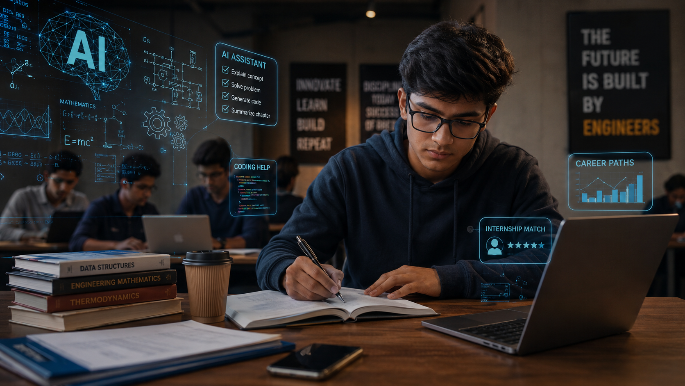
“Science is about knowing; engineering is about doing.” -Henry Petroski (an American engineer)
The story of Indian engineering studies has always been a familiar one till date. It began from preparing for the entrance examination, entering the BTech program, sitting in theoretical classes, taking semester examinations, and getting placed at the end of their graduation years.

Engineering studies encouraged memorization, perfection, and bookish information. Being an engineer meant having high marks, mathematical skills, and job placement offers.
However, things have changed. Today’s students do not rely only on lecturers or books. When there is a mistake in a coding language, it is fixed using ChatGPT before consulting any faculty member.
Artificial Intelligence has invaded engineering classrooms, hostels, internships, and preparations for placements throughout India.
Unlike previous advancements, AI is going to impact the very skills for which engineers spent years learning. This is precisely why engineering students view AI as both an opportunity and a threat.
When Curriculum Meets AI
India’s entire engineering system is modeled on the needs of an industrial economy that values repetition and conformity.
Even now, several colleges are still holding onto inflexible syllabi, antiquated laboratories, and theory-based exams. Despite having more than 3,500 engineering colleges churning out over 1.5 million engineers every year, there is an acute problem of employability.
In fact, the 2024 Mercer-Mettl survey revealed that roughly 42.6% of the graduates were ready for technical positions. The recruiters have been citing poor practical knowledge, lack of communication skills, and lack of industry experience.
What AI has made abundantly clear is that the traditional model of engineering education is archaic. Students attended lectures, copied notes, solved assignments, and referred to textbooks.
This process has now been shattered completely by AI technology. As per a TeamLease EdTech survey in 2025, about 74% of engineering students from urban India use AI-based platforms for their academic purposes. For many, AI has turned into a personal mentor available 24/7.
It becomes all the more critical in Tier-2 and Tier-3 colleges where shortages of qualified faculty members along with traditional pedagogies continue to prevail. They now have access to AI-driven knowledge and support, which was earlier reserved for prestigious institutes alone.
However, it throws up a serious challenge. If assignments can be solved in minutes using AI-based software, is learning happening here?
The Collapse of Memorization-Based Learning
Traditional engineering education used to favor those students who had mastered formulae and conventional derivation techniques. The equation has now changed because of AI.
With a chatbot capable of generating codes or writing lab experiments within minutes, memory holds little importance. The new generation understands that their future might not depend upon technical skills but creativity, analysis, and problem-solving capabilities.
This shift is already visible in the technology industry. AI-assisted coding tools are improving productivity and automating routine tasks handled by entry-level engineers.
According to a NASSCOM report of 2025, the AI industry in India was predicted to create at least two and a half million jobs by 2027 while also disrupting many other jobs.
To engineering students, this is both an opportunity and a challenge since artificial intelligence promises jobs and threatens many careers.
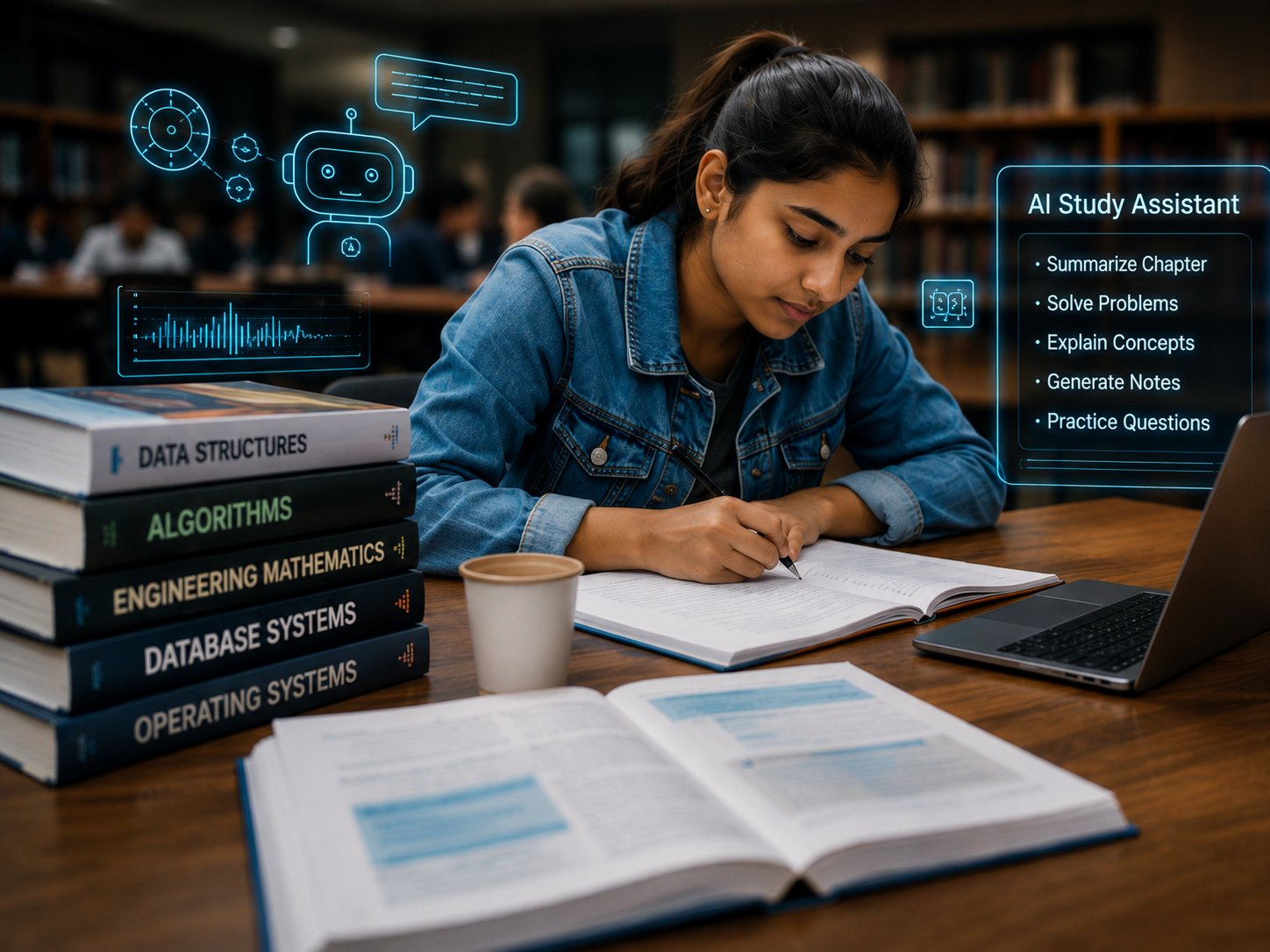
The Anxiety of Competing With Machines
Engineering students have experienced academic pressure all along, but the advent of AI has brought about another kind of fear. Earlier generations had concerns about their performance and prospects. The current generation worries about their survival.
Campus discussions increasingly revolve around questions like, Will coding jobs disappear? Will companies hire fewer freshers? Which engineering branches are future-proof?
The fear is strongest among students preparing for IT jobs because India’s technology sector has long absorbed large numbers of engineering graduates into entry-level coding and support roles. Many of these repetitive tasks are now being automated.
Students are highly aware of this shift. Terms like “AI-proof careers” and “future-proof skills” dominate placement discussions and online forums. The pressure to remain employable has intensified.
As a result, engineering students are beginning career preparation much earlier than before.
The Rise of the Constant Upskilling Culture
Traditional engineering education once revolved mainly around classroom academics. Today, students believe academics alone are not enough.
Modern engineering students are expected to manage coding practice, online certifications, internships, hackathons, AI workshops, LinkedIn networking, and personal projects alongside regular coursework.
In a survey conducted by Internshala in 2025, over 68% of engineering students reported spending additional hours every day learning skills beyond their college curriculum.
Coursera, NPTEL, Udemy, and YouTube platforms have become secondary learning systems. It is not uncommon for students today to depend more on creators on the Internet than lectures on campus.
This reflects a growing reality: students no longer trust colleges alone to prepare them for industry. While universities slowly revise syllabi, AI tools evolve every few months. Students know they must continuously learn to stay relevant.
However, this culture also creates exhaustion. Students constantly feel pressure to remain productive, visible, and employable. Coding contests, internships, certifications, and networking activities often continue alongside demanding academic schedules.
The modern engineering student is no longer just studying engineering. They are managing an employability strategy.
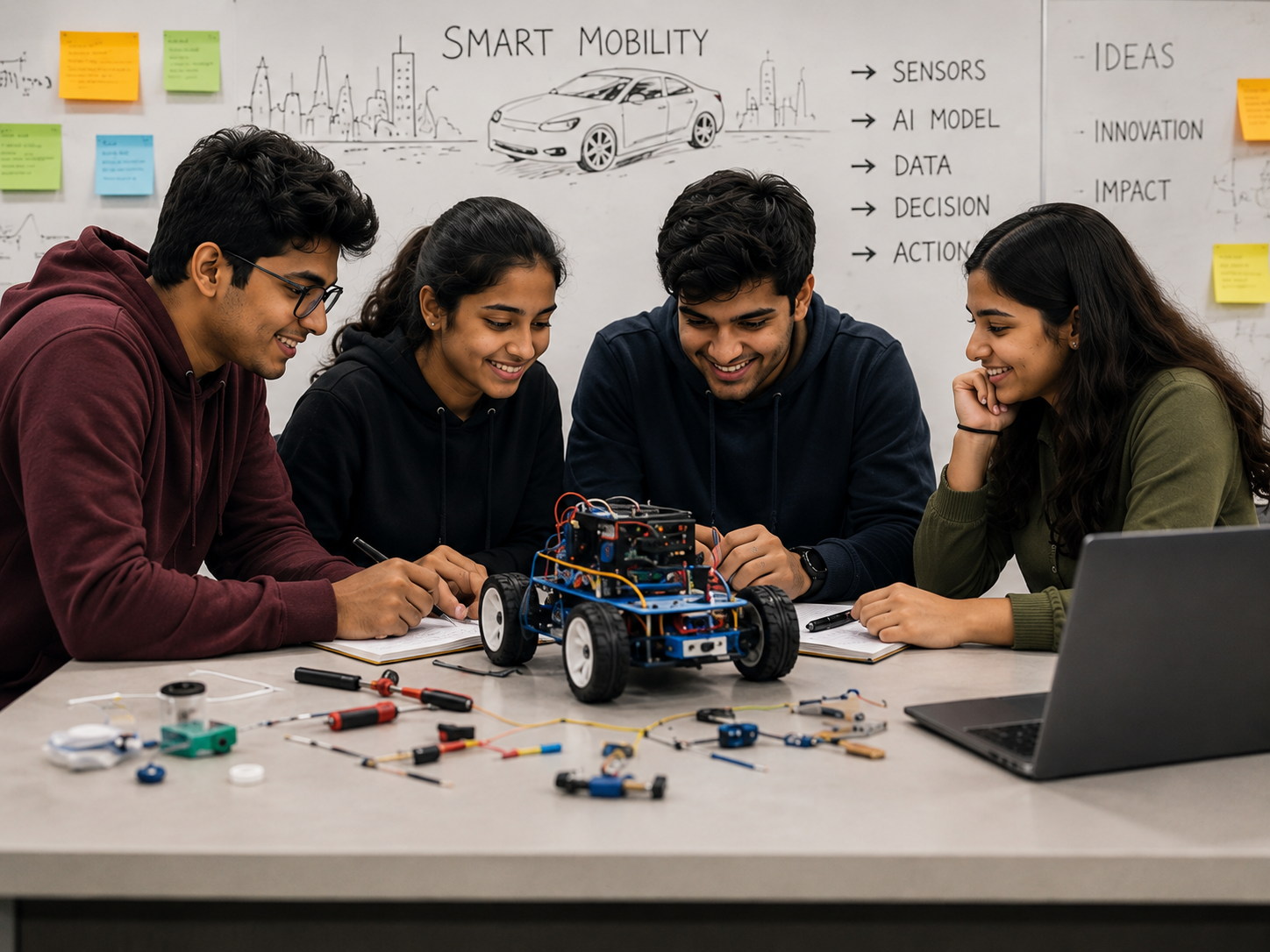
Engineering Branches Are Losing Their Boundaries
Artificial intelligence is also changing the structure of engineering disciplines.
Traditionally, branches operated separately. Mechanical engineers worked in manufacturing, civil engineers focused on infrastructure, and computer scientists dominated software. Today, those boundaries are weakening.
Mechanical students are learning robotics and automation. Civil engineers are using AI-based design tools and predictive modeling systems.
Electrical engineers are entering semiconductor and intelligent systems sectors. Even students from non-computer science branches are learning programming because digital skills are becoming essential everywhere.
This shift is influencing student preferences. AI, computer science, and data science branches continue to dominate admissions, while traditional branches often struggle to attract top-ranking students.
Career decisions are increasingly driven by salary potential, automation risk, and future demand rather than academic interest alone.
AI and the Academic Integrity Crisis
AI has also created a major challenge for engineering colleges: academic authenticity.
Professors increasingly struggle to identify whether assignments, coding exercises, and reports are written by students or generated through AI tools. Generative AI can now complete tasks within minutes that previously required hours of effort.
This exposes the weakness of traditional assessment systems that depend heavily on repetitive written work. If AI can easily complete an assignment, the educational value of that assignment itself becomes questionable.
Some institutions are responding with project-based learning, viva examinations, and application-oriented assessments.
But adaptation remains uneven. Many colleges still operate with outdated systems while students function in an AI-driven learning environment outside classrooms.
The Opportunity Side of the AI Revolution
Despite fears, AI also offers enormous opportunities for Indian engineering students.
India has one of the world’s largest youth populations and technical education systems. AI tools can democratize learning by giving students from smaller towns access to high-quality educational resources.
A student with internet access can now learn machine learning, contribute to open-source projects, build applications, and even launch startups directly from college campuses. In many ways, AI is reducing the gap between elite institutions and smaller colleges.
India’s startup ecosystem is strengthening this trend. AI-driven innovation is creating opportunities in healthcare, agriculture, logistics, finance, and education.
Engineering students are no longer limited to traditional placement routes. Many now aspire to become founders, freelancers, or remote developers. Hostel rooms are increasingly turning into startup workspaces.
Beyond Degrees
Artificial intelligence is not simply changing engineering education. It is changing the mindset of engineering students.
Earlier generations prepared for stable careers in predictable systems. Today’s students are preparing for industries that evolve continuously. Adaptability has become more valuable than static expertise.
The engineering degree alone no longer guarantees security. Students who combine technical knowledge with creativity, communication skills, and problem-solving ability may succeed in this changing environment.
Across engineering campuses in India, one reality is becoming clear: the future will not belong to students who fear AI or depend blindly on it. It will belong to those who learn how to think, adapt, and innovate alongside it.

Housing costs, education and austerity fuel protests across Europe
Hundreds of websites go offline as critical PHP flaws trigger global cyber alert

Anti-Putin cyberattack disrupts nationwide school assessments in Russia

SRH University begins 2026–27 winter semester with Indian students across German campuses

Ghana and Germany discuss closer cooperation in technical education

Delhi Police may seek further custody of CJP leaders Saurav Das, Ashutosh Ranka

SBI probes data leak after personal details in 3,897 customer records surface on dark web

Sharjah schools set boundaries for AI use in homework and exams

Former MIT scientist wins $6 million defamation verdict in misconduct dispute

McMahon highlights Trump’s push to return education powers to states

Housing costs, education and austerity fuel protests across Europe
Hundreds of websites go offline as critical PHP flaws trigger global cyber alert
Anti-Putin cyberattack disrupts nationwide school assessments in Russia
SRH University begins 2026–27 winter semester with Indian students across German campuses
Ghana and Germany discuss closer cooperation in technical education
Delhi Police may seek further custody of CJP leaders Saurav Das, Ashutosh Ranka
SBI probes data leak after personal details in 3,897 customer records surface on dark web
Sharjah schools set boundaries for AI use in homework and exams
Former MIT scientist wins $6 million defamation verdict in misconduct dispute
McMahon highlights Trump’s push to return education powers to states
Copyright© educationpost.in 2026 All Rights Reserved.