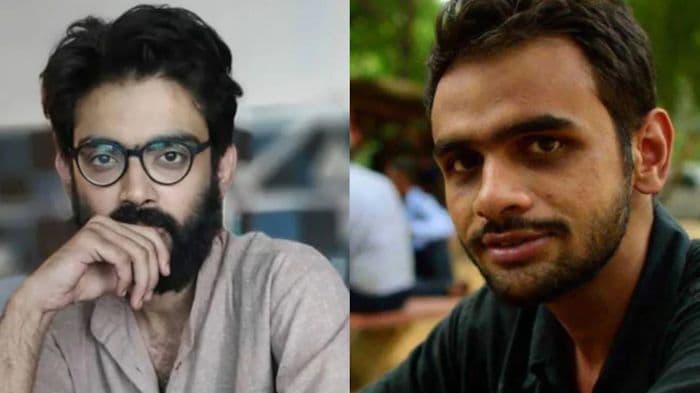
The Supreme Court on May 18 expressed reservations over an earlier judgment that denied bail to former JNU student leader Umar Khalid and activist Sharjeel Imam in the 2020 Delhi riots conspiracy case under the Unlawful Activities (Prevention) Act (UAPA).
The court observed that the principle of “bail is the rule, jail is the exception” continues to apply even in cases under stringent anti-terror laws.

The observations came from a bench of Justices B V Nagarathna and Ujjal Bhuyan while granting bail to an accused in a separate narco-terror case linked to alleged cross-border drug trafficking and terror financing in Jammu and Kashmir.
During the hearing, the bench referred to the landmark 2021 judgment in Union of India vs K A Najeeb, which held that constitutional courts could grant bail in UAPA cases if prolonged incarceration violated fundamental rights under Article 21.
Justice Bhuyan noted that a smaller bench could not disregard or dilute the ratio laid down by a larger bench judgment. The court said it found it “difficult to accept” certain views taken in the earlier Gulfisha Fatima vs State ruling that had been relied upon while denying bail to Khalid and Imam earlier this year.
In January 2026, a two-judge bench of the Supreme Court had denied bail to Umar Khalid and Sharjeel Imam while granting conditional bail to five other co-accused in the Delhi riots larger conspiracy case. The court had then held that the allegations against Khalid and Imam were more “central” and linked to the alleged broader conspiracy behind the 2020 northeast Delhi riots.
The January verdict distinguished their roles from those of co-accused including Gulfisha Fatima, Meeran Haider and others, who were described as having comparatively “limited” or “ancillary” involvement.
Khalid and Imam have remained in jail for several years in connection with the Delhi riots conspiracy case filed under UAPA provisions.
The prosecution has accused them of participating in a larger conspiracy linked to the violence that broke out in northeast Delhi in February 2020 during protests against the Citizenship Amendment Act (CAA). Both have denied the allegations.
The latest Supreme Court remarks are significant because they appear to question the legal reasoning used in the earlier bail denial order. The bench reiterated that Section 43D(5) of the UAPA, which imposes strict bail conditions, cannot justify indefinite incarceration and must operate within constitutional guarantees of liberty and due process.
The court’s reliance on the K A Najeeb judgment is particularly important in UAPA jurisprudence. In that ruling, the Supreme Court had held that constitutional courts could intervene to protect personal liberty when trials were unlikely to conclude within a reasonable time despite statutory restrictions on bail.
However, the Supreme Court has not yet passed any fresh order granting bail to either Umar Khalid or Sharjeel Imam.
The Delhi riots conspiracy case remains one of the most closely watched legal proceedings related to the 2020 violence, with several activists, students and former protest organisers booked under anti-terror provisions over the past few years.






.png&w=256&q=75)