The long-running Bhojshala-Kamal Maula Mosque dispute in Madhya Pradesh’s Dhar district has entered a new phase after the Madhya Pradesh High Court ruled that the Bhojshala complex is a temple dedicated to Goddess Vagdevi (Saraswati) and allowed unrestricted worship rights to Hindus at the site.
The judgment has effectively ended the arrangement under which Hindus and Muslims were allowed limited access to the monument on different days.

Soon after the verdict, the Archaeological Survey of India (ASI) issued an order granting Hindus unrestricted access to the complex for worship and learning practices associated with Goddess Saraswati. The ASI also withdrew the 2003 order that had permitted Muslims to offer Friday namaz at the site.
The ruling has revived national attention on one of central India’s most contested religious and archaeological sites, often compared politically and legally to the Ayodhya dispute because of competing historical and religious claims.
What is Bhojshala?
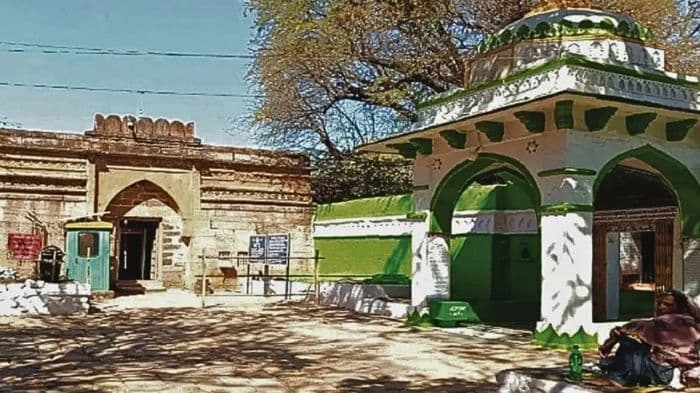
Bhojshala is a protected archaeological monument located in Dhar, Madhya Pradesh. The structure is believed by many Hindus to have originally been a temple dedicated to Goddess Saraswati, also known as Vagdevi, and a centre of Sanskrit learning established during the rule of the Paramara king Bhoja in the 11th century.
The site later came to be associated with the Kamal Maula Mosque after Islamic structures and tombs were added to the complex between the 14th and 15th centuries. Over time, both Hindu and Muslim communities laid claim to the site, turning it into a recurring flashpoint in Madhya Pradesh politics and communal relations.
Historians and archaeologists have long debated the origins and evolution of the structure. Several inscriptions, pillars and architectural elements at the site have been cited by Hindu groups as evidence of a pre-existing temple and educational institution. Literary references linked to Raja Bhoja and Sanskrit scholarship have also been used in legal arguments over the years.
What was the earlier arrangement?
For more than two decades, worship at Bhojshala was regulated under an ASI order issued on April 7, 2003. Under that arrangement, Hindus were allowed to worship on Tuesdays, while Muslims were permitted to offer namaz on Fridays for a limited period. The site otherwise remained open as a centrally protected monument under the ASI.
The arrangement frequently led to tensions, especially when Hindu festivals such as Vasant Panchami coincided with Friday prayers. Heavy police deployment was often required around the monument during such occasions.
The dispute intensified again in 2024 when the Madhya Pradesh High Court ordered an ASI survey of the complex to determine its historical and religious character. The survey involved excavation, architectural examination and analysis of inscriptions and structural remains. The ASI later submitted a detailed report running into multiple volumes before the High Court.
What did the High Court say?
In its judgment delivered by a division bench of Justice Vijay Kumar Shukla and Justice Alok Awasthi, the Madhya Pradesh High Court on May 16 held that historical literature, archaeological evidence and inscriptions established that Bhojshala was a temple dedicated to Goddess Saraswati and a centre of Sanskrit learning.
The court struck down the ASI’s 2003 circular permitting namaz at the complex and recognised the Hindu community’s right to worship there without restrictions. It also directed that the administration and management of the monument remain with the ASI and the central government.
At the same time, the court attempted to address concerns of the Muslim community by stating that the state government could consider allotting alternative land within Dhar district for the construction of a mosque if an application was made.
The judgment drew widespread attention because it relied heavily on archaeological findings and historical records, similar to the evidentiary approach seen in the Ayodhya verdict delivered by the Supreme Court in 2019.
What happened after the verdict?
Following the judgment, large numbers of Hindu devotees gathered at Bhojshala to offer prayers. Security in Dhar district was tightened to prevent any communal disturbance.
The ASI subsequently issued fresh directions granting unrestricted access to Hindus for worship and educational activities associated with the site’s historical identity as a Saraswati temple.
Meanwhile, Muslim organisations have indicated that they will challenge the High Court verdict in the Supreme Court. The All India Muslim Personal Law Board (AIMPLB) said it would support the Kamal Maula Mosque Committee in pursuing legal remedies against the ruling.
Why the case is significant
The Bhojshala case is significant not only because of its religious implications but also because it raises broader legal and constitutional questions regarding historical religious sites, archaeological evidence and state management of disputed monuments.
The dispute has also become politically sensitive because it comes amid growing debates over several contested religious sites across India, including Gyanvapi in Varanasi and the Shahi Idgah dispute in Mathura.
At present, however, the Bhojshala matter is unlikely to end with the High Court ruling alone, as the case is expected to move to the Supreme Court in the coming weeks.





.png&w=256&q=75)