


Planning to study in Indonesia? Here is everything Indian students need to know about the country's top universities, popular courses, admission process, tuition fees, scholarships, student visa requirements, cost of living and career opportunities after graduation.
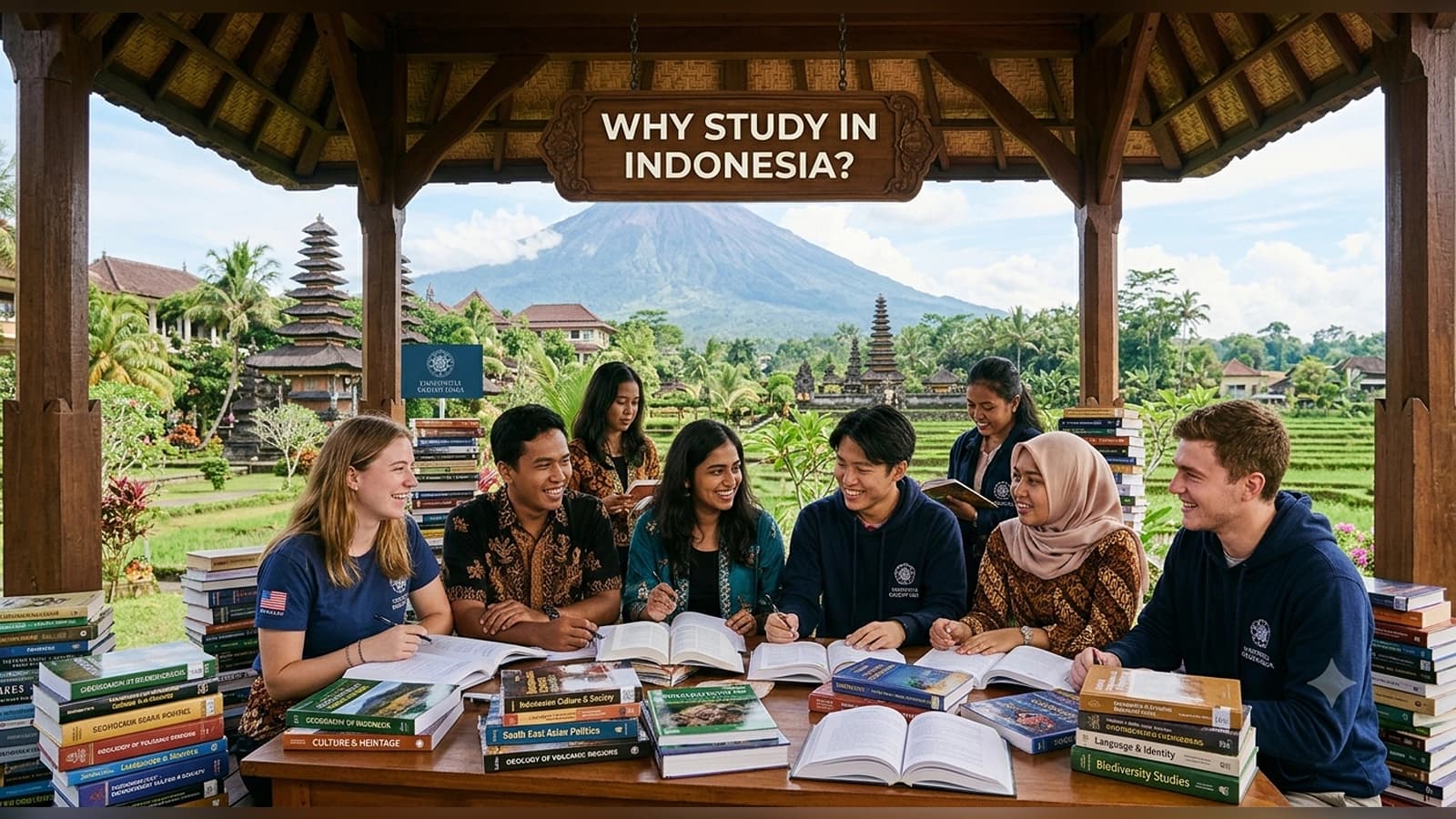
Representational Image
Indonesia is emerging as an alternative destination for students looking to pursue higher education in Southeast Asia. With public and private universities offering programmes in engineering, business, agriculture, medicine, technology and social sciences, the country provides Indian students with opportunities to explore international education beyond traditional destinations such as the United States, United Kingdom, Canada and Australia.
The Indonesian government also offers scholarships to international students, including eligible applicants from developing countries. However, prospective students must carefully evaluate university accreditation, language requirements, total education costs and degree recognition before making a decision.

According to Indonesia's official Global Talent Service portal, international students can explore universities, academic programmes and scholarship opportunities through a centralised platform.
Indonesia offers several advantages for Indian students considering studying abroad.
Students should also consider that Bahasa Indonesia is widely used in everyday life and many academic programmes. English-taught options exist, but availability depends on the university, degree and subject.
Students researching the best universities in Indonesia should compare academic quality, accreditation, course availability, tuition fees and the language of instruction.
| University | Location | Areas to explore |
|---|---|---|
| Universitas Indonesia | Depok, near Jakarta | Medicine, engineering, economics, computer science and social sciences |
| Universitas Gadjah Mada | Yogyakarta | Engineering, agriculture, business, social sciences and health sciences |
| Institut Teknologi Bandung | Bandung | Engineering, technology, science and business |
| Universitas Airlangga | Surabaya | Medicine, public health, pharmacy, economics and management |
| IPB University | Bogor | Agriculture, food technology, veterinary science and environmental studies |
| Institut Teknologi Sepuluh Nopember | Surabaya | Engineering, maritime studies, information technology and applied sciences |
These universities are starting points for research, not a universal ranking. Their suitability depends on the programme selected, admission criteria and the student's career objectives.
Indian students can explore a range of academic disciplines in Indonesia.
Before applying, students should verify whether their preferred course is available to international applicants and whether it is taught in English or Bahasa Indonesia.
The admission process varies by institution, but international applicants can generally follow these steps:
Students should apply several months before their intended intake because admission, document verification and immigration processing can take time.
The total cost of studying in Indonesia depends on the university, course, city, accommodation and lifestyle.
According to the international student guide published by Indonesia Global Talent Service, an illustrative monthly living budget ranges from approximately IDR 1.7 million to IDR 5.3 million. This estimate covers accommodation, food, transport, utilities and personal expenses. Actual costs may be higher depending on location and lifestyle.
Tuition fees must be calculated separately. Indian students should budget for tuition, accommodation, food, health insurance, travel, visa and immigration charges, document preparation and emergency expenses.
Before converting expenses into Indian rupees, check the prevailing exchange rate. Students should also confirm whether tuition is charged annually or per semester and whether additional registration or infrastructure fees apply.
Scholarships can help reduce the financial burden of studying abroad.
One important option is the Kemitraan Negara Berkembang (KNB) Scholarship, offered by the Indonesian government to eligible students from developing countries.
The official KNB Scholarship portal provides information about participating universities, degree levels, eligibility and application procedures.
The scholarship has supported bachelor's, master's and doctoral studies. Depending on the applicable scholarship terms, benefits may include tuition fees, living allowances, arrival and return travel, health insurance and academic or research support.
However, students must check the current guidelines carefully. Eligibility conditions, English-language requirements, participating universities and application deadlines can vary by degree level and selection year.
Students should also investigate university-specific scholarships and tuition-waiver schemes. A scholarship offer should be checked for exclusions, including accommodation, visa charges and personal expenses.
Indian students admitted to an Indonesian degree programme generally need the appropriate student immigration authorisation.
The E30B student visa category is used for international students pursuing undergraduate, postgraduate and doctoral studies. Requirements and permitted stay periods depend on the applicable immigration rules and individual application.
According to Universitas Indonesia's student visa guidance, applicants may need a valid passport, proof of financial capacity, university-related documents and insurance.
The usual process involves securing admission, obtaining the required university and study-permit documentation, applying for the appropriate visa and completing post-arrival immigration formalities.
Students should consult Indonesia's official e-Visa portal and their university's international office before travelling. Visa fees, documentation and processing times can change.
Career opportunities after graduation depend on the student's qualification, language skills, professional experience and employer demand.
Graduates may explore opportunities in technology, manufacturing, international business, agriculture, tourism, logistics and regional trade. Knowledge of Bahasa Indonesia, combined with English and relevant technical skills, may improve their competitiveness for certain positions.
However, graduating from an Indonesian university does not automatically provide a right to remain or work in the country. Students must qualify for the appropriate immigration status and employment authorisation under Indonesian law.
There is no guarantee of employment or a general post-study work entitlement simply because a student has completed a degree. Prospective applicants should investigate the relevant work and residence requirements before making long-term career plans.
Indian graduates may also explore opportunities in India or other countries, depending on employer requirements and the recognition of their qualifications.
Indian students should verify degree recognition before paying university fees.
The University Grants Commission's foreign qualification equivalence portal provides information on India's framework for assessing foreign qualifications under the UGC's 2025 regulations.
Recognition is particularly important for students planning to pursue further education, apply for certain jobs or enter regulated professions in India.
Professional qualifications in areas such as medicine, pharmacy, nursing, law and architecture are subject to the requirements of the relevant Indian statutory regulators. A foreign degree should not be assumed to qualify its holder automatically for professional registration in India.
Students considering medicine should check the applicable National Medical Commission rules and eligibility conditions before enrolling. Similar checks are necessary for other regulated professions.

Centre Amends Motor Vehicle Rules to Allow E100 Ethanol Fuel in Flex-Fuel Vehicles

West Bengal CM Suvendu Adhikari Announces School Syllabus Changes, Tablet-Based Learning Plan

Study in Malaysia for Indian Students 2026: Universities, Fees, Scholarships, Visa and Career Opportunities
Delhi BS6 Entry Ban From November 1 Could Affect Over 10 Lakh NCR Vehicles
Study in Indonesia for Indian Students 2026: Top Universities, Fees, Scholarships, Visa and Career Opportunities
Centre Amends Motor Vehicle Rules to Allow E100 Ethanol Fuel in Flex-Fuel Vehicles
Study in Malaysia for Indian Students 2026: Universities, Fees, Scholarships, Visa and Career Opportunities
Delhi BS6 Entry Ban From November 1 Could Affect Over 10 Lakh NCR Vehicles
Study in Indonesia for Indian Students 2026: Top Universities, Fees, Scholarships, Visa and Career Opportunities

Study in China 2027: Top Universities, Fees, Scholarships, Visas and Career Options for Indian Students

Centre Amends Motor Vehicle Rules to Allow E100 Ethanol Fuel in Flex-Fuel Vehicles
West Bengal CM Suvendu Adhikari Announces School Syllabus Changes, Tablet-Based Learning Plan
Study in Malaysia for Indian Students 2026: Universities, Fees, Scholarships, Visa and Career Opportunities
Delhi BS6 Entry Ban From November 1 Could Affect Over 10 Lakh NCR Vehicles
Study in Indonesia for Indian Students 2026: Top Universities, Fees, Scholarships, Visa and Career Opportunities
Centre Amends Motor Vehicle Rules to Allow E100 Ethanol Fuel in Flex-Fuel Vehicles
Study in Malaysia for Indian Students 2026: Universities, Fees, Scholarships, Visa and Career Opportunities
Delhi BS6 Entry Ban From November 1 Could Affect Over 10 Lakh NCR Vehicles
Study in Indonesia for Indian Students 2026: Top Universities, Fees, Scholarships, Visa and Career Opportunities
Study in China 2027: Top Universities, Fees, Scholarships, Visas and Career Options for Indian Students
Copyright© educationpost.in 2026 All Rights Reserved.