


Commission assesses theological training programmes and new networks, with plans to strengthen youth participation, women’s leadership and ecumenical cooperation.
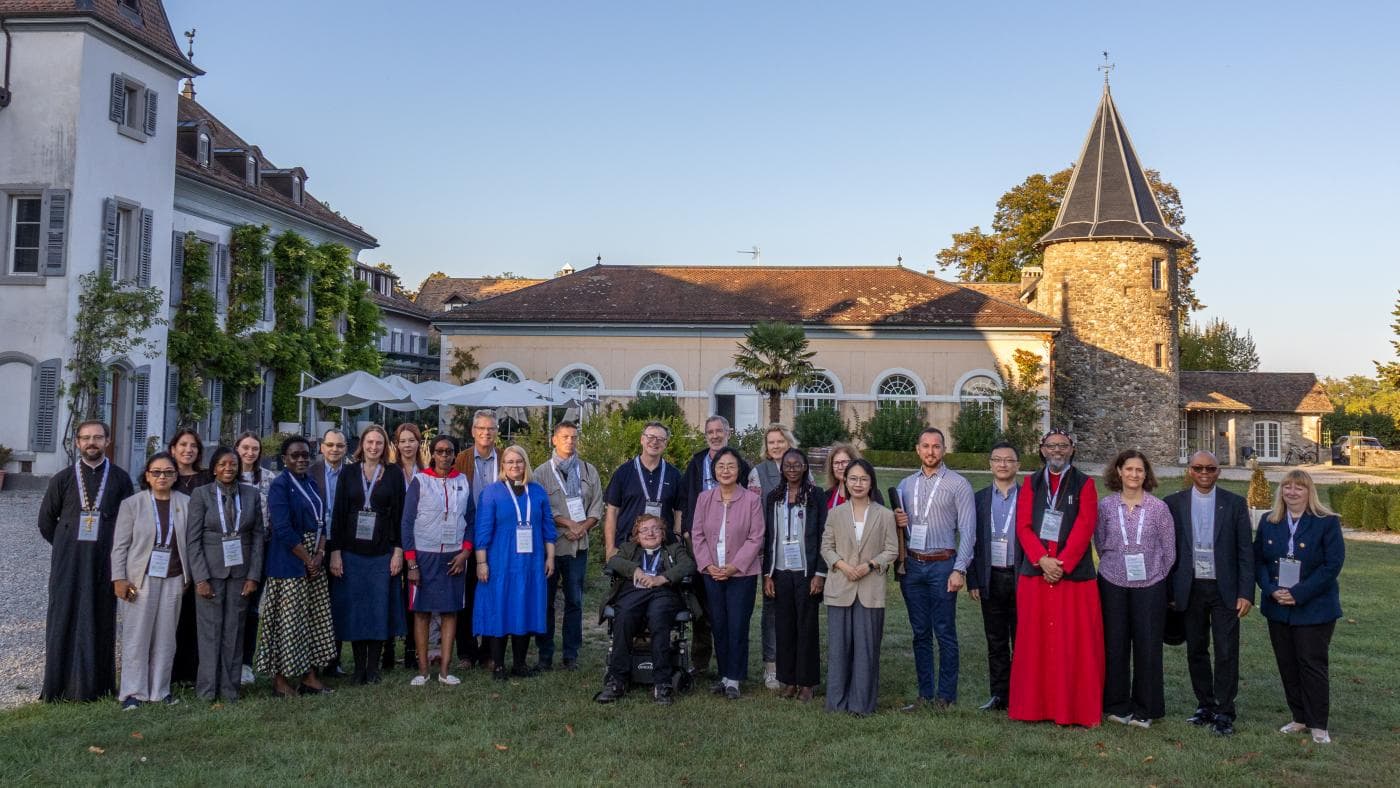
The World Council of Churches (WCC) has reviewed its global and regional education initiatives and outlined future priorities to strengthen theological learning, leadership development and cooperation among Christian churches worldwide.
The WCC Commission on Ecumenical Education and Formation (EEF) concluded its meeting at the WCC Ecumenical Institute at Bossey, Switzerland, with discussions centred on ongoing programmes, emerging networks and the future direction of ecumenical education. The meeting also coincided with celebrations marking the institute’s 80th anniversary.

Held under the theme “Ecumenical Formation as Ethos and as Programme,” the gathering brought commissioners together for theological reflection, strategic planning and dialogue with WCC leadership, faculty members and students.
Global and regional initiatives
A key focus was strengthening ecumenical formation through the Global Ecumenical Theological Institute (GETI) and Regional Ecumenical Theological Institutes (RETIs).
Dr Sara Gehlin of the Church of Sweden and University College Stockholm presented the outcomes of the 2025 Ecumenical Summer Academy, RETI Europe, held in Sweden under the theme “Ecumenical Peacebuilding in Times of War: The Legacy of Stockholm 1925.”
The programme combined online teaching with seminars and activities during an Ecumenical Week marking the centenary of the 1925 Stockholm Conference.
“Summer Academy students actively contributed to the jubilee programme as panel speakers. Moreover, students at University College Stockholm helped design, prepare, and implement the rich programme of the Ecumenical Summer Academy,” Gehlin said.
The commission also reviewed the North American Regional Ecumenical Theological Institute (NATI–RETI), held in Detroit and Toronto in August 2026, and welcomed preparations for a Latin American RETI planned for 2027. The initiative is expected to bring together churches, theological institutions and ecumenical networks from across the continent.
Commissioners also received the narrative and visual reports and final publication from GETI 2025, documenting the experiences, theological reflections and aspirations of young ecumenists who gathered in Egypt alongside the Sixth World Conference on Faith and Order.
Looking ahead to the WCC’s 12th Assembly in 2030, discussions explored how GETI could become more closely integrated into major ecumenical gatherings.
“We have an opportunity to reimagine what it means for GETI to take place alongside a major ecumenical gathering. Rather than remaining a parallel event, GETI should become an integral and active part of the assembly itself, where the theological reflections, lived experiences, questions and challenges of young ecumenists contribute directly to dialogue, discernment, and decision-making,” said Dr Ani Ghazaryan Drissi, WCC programme executive for Ecumenical Theological Education and GETI 2025 coordinator.
New networks to strengthen women's leadership
The commission reviewed efforts to expand opportunities for women theologians, particularly those facing barriers to mentoring, advanced studies and international academic networks.
Rev. Tamsyn Kereopa, an Indigenous Māori theologian and ordained minister of the Anglican Church in Aotearoa, New Zealand and Polynesia, presented an update on the WCC’s Global Ecumenical Indigenous Women’s Theological Network.
The initiative aims to address professional and academic isolation by creating opportunities for Indigenous women to connect, share knowledge and develop their leadership.
Planned activities include online meetings, research, publications, scholarships, leadership development, storytelling and intergenerational exchange. The network will be shaped by Indigenous women themselves, with potential links to GETI and RETIs also under consideration. An in-person launch is planned for 2028.
Prof. Dr Vassiliki Stathokosta, professor of Orthodox Theology and the Ecumenical Movement at the National and Kapodistrian University of Athens, presented the Orthodox Women Scholars Network, a global initiative developed by the WCC and the Finnish Evangelical Lutheran Mission.
The network seeks to promote collaboration, academic exchange, joint publications and ecumenical dialogue among women from Eastern and Oriental Orthodox traditions.
Its planned activities include scholarships, research initiatives and participation in international theological programmes such as GETI and RETIs. The official launch is scheduled for March 2027 at the Orthodox Academy of Crete in Greece.
Online course to widen access to ecumenical learning
The commission also welcomed the completion of Ecumenism 101, an online introductory course developed by one of its working groups to broaden access to theological education.
The course introduces learners to the history and theological foundations of the ecumenical movement, as well as the challenges it faces today. It is designed to make ecumenical learning accessible to a wider audience and will soon be available through the WCC website.
The meeting also recognised the Ecumenical Institute at Bossey's longstanding contribution to theological education and intercultural and interconfessional formation. Commissioners discussed how the institute could respond more effectively to the needs of churches and help prepare future generations of leaders.
Rev. Prof. Dr Meehyun Chung, moderator of the EEF Commission, expressed her appreciation for the meeting and the institute's 80-year legacy.
“I felt real companionship from the commissioners on our journey as a working commission. There was an honest evaluation of what we have done so far,” she said.
Chung also called for stronger connections between Bossey students and Swiss churches beyond the French-speaking region. She suggested that the institute could build closer links with theological faculties at European universities, noting that its location offers opportunities for academic collaboration.
She added that engagement with ecumenism was more important than ever.
The commission's deliberations will help shape priorities towards 2028 and beyond, with an emphasis on keeping theological education connected to the needs of churches and communities. The broader goal is to equip new generations to advance Christian unity, justice and reconciliation.

Clashes erupt in Argentina over delayed university funding law

University of Tokyo scientists develop robotic finger covered in living human skin
WCC reviews global education initiatives, sets future priorities

Sapienza, Bologna lead Italy’s 2026 university attractiveness ranking
Pay dispute forces Irish universities to cancel classes as staff strike
University of Tokyo scientists develop robotic finger covered in living human skin
Wits University and Bidvest launch R6 million research chair in AI and smart technologies

At least 30 children dead in Pakistan school roof collapse

Planning to study in Japan? Key changes to language certificates, tuition fees and student visas
China prosecutes former Central South University president Zhang Yaoxue on bribery charges

Clashes erupt in Argentina over delayed university funding law
University of Tokyo scientists develop robotic finger covered in living human skin
WCC reviews global education initiatives, sets future priorities
Sapienza, Bologna lead Italy’s 2026 university attractiveness ranking
Pay dispute forces Irish universities to cancel classes as staff strike
University of Tokyo scientists develop robotic finger covered in living human skin
Wits University and Bidvest launch R6 million research chair in AI and smart technologies
At least 30 children dead in Pakistan school roof collapse
Planning to study in Japan? Key changes to language certificates, tuition fees and student visas
China prosecutes former Central South University president Zhang Yaoxue on bribery charges
Copyright© educationpost.in 2026 All Rights Reserved.