


A decade-long investment aims to strengthen teaching, research and entrepreneurship while helping universities prepare young Africans for meaningful employment
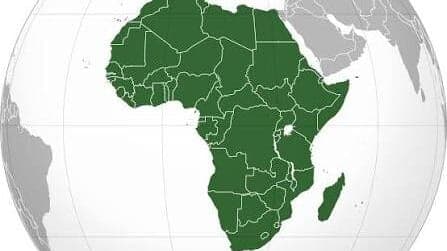
Millions of young Africans graduate every year with hopes of securing good jobs, but many struggle to turn their qualifications into meaningful employment. A new $500 million commitment from the Mastercard Foundation aims to help universities across the continent bridge that gap.
The Foundation will invest the money over the next decade to transform higher education in Africa, strengthening teaching, research, entrepreneurship and the transition from university to the workplace. The initiative comes as youth unemployment remains a major challenge and international development funding faces mounting pressure.

In an interview with AllAfrica’s Melody Chironda, Dr. John Nkengasong, the Foundation’s Executive Director for Higher Education, Collaboratives and Strategic Initiatives, described universities as essential drivers of Africa’s economic growth.
Nkengasong, a Cameroonian-American virologist and former director of the Africa Centres for Disease Control and Prevention (Africa CDC), believes sustained investment in higher education can help African countries develop the talent, research capacity and innovation needed to build stronger economies.
The commitment aligns with the Foundation’s Young Africa Works strategy, which aims to help 30 million young people access dignified and fulfilling work by 2030.
A central part of the effort is the Africa Higher Education for Transformation (AHEFT) Prize, which encourages universities to improve teaching, research, entrepreneurship and graduate employment prospects.
Rather than rewarding individual high achievers or isolated academic departments, the initiative focuses on institution-wide change. Universities are assessed on their impact, inclusion, student experience, community engagement and contribution to Africa’s development.
The first winners showcased different ways universities can respond to pressing social and economic needs. Their initiatives include expanding employment opportunities for refugees in Uganda, strengthening health workforce training in Rwanda, and advancing research and innovation to address societal challenges.
Beyond an initial $3 million grant, winning institutions will receive programme support and opportunities to build partnerships, collaborate with other universities and scale up their initiatives.
Over the next decade, the Foundation plans to support at least 150 institutions. Its network of more than 200 African higher education institutions is also expected to foster collaboration and encourage wider reforms across the sector.
The Foundation is extending its work through partnerships spanning healthcare, agriculture, climate resilience, digital transformation and education, reflecting the role universities can play in addressing challenges beyond the classroom.
For Nigerian students and young people across Africa, however, the investment's real value will be measured by the opportunities it creates. Better teaching, practical skills, stronger research and closer links between universities and employers could help graduates become better prepared for an increasingly competitive job market.
Yet universities cannot tackle youth unemployment alone. Governments, businesses and development partners must also help create jobs and provide young people with opportunities to put their knowledge and skills to use.
Ultimately, the success of the $500 million commitment will depend not simply on the amount invested, but on whether it brings lasting change to African universities and helps more young people move from graduation to meaningful, fulfilling work.

Clashes erupt in Argentina over delayed university funding law

University of Tokyo scientists develop robotic finger covered in living human skin

WCC reviews global education initiatives, sets future priorities

Sapienza, Bologna lead Italy’s 2026 university attractiveness ranking

Pay dispute forces Irish universities to cancel classes as staff strike
University of Tokyo scientists develop robotic finger covered in living human skin

Wits University and Bidvest launch R6 million research chair in AI and smart technologies

At least 30 children dead in Pakistan school roof collapse

Planning to study in Japan? Key changes to language certificates, tuition fees and student visas

China prosecutes former Central South University president Zhang Yaoxue on bribery charges

Clashes erupt in Argentina over delayed university funding law
University of Tokyo scientists develop robotic finger covered in living human skin
WCC reviews global education initiatives, sets future priorities
Sapienza, Bologna lead Italy’s 2026 university attractiveness ranking
Pay dispute forces Irish universities to cancel classes as staff strike
University of Tokyo scientists develop robotic finger covered in living human skin
Wits University and Bidvest launch R6 million research chair in AI and smart technologies
At least 30 children dead in Pakistan school roof collapse
Planning to study in Japan? Key changes to language certificates, tuition fees and student visas
China prosecutes former Central South University president Zhang Yaoxue on bribery charges
Copyright© educationpost.in 2026 All Rights Reserved.