


KU-MIRA will strengthen research careers, raise the visibility of women researchers and create pathways to academic leadership.
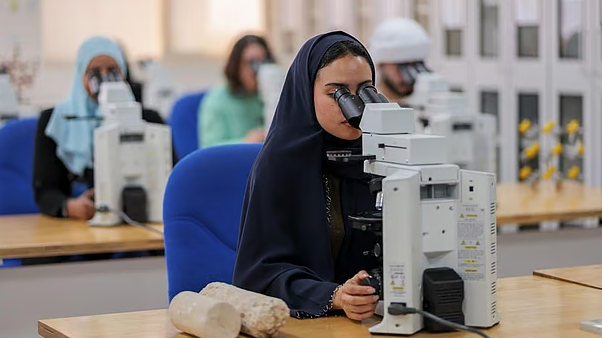
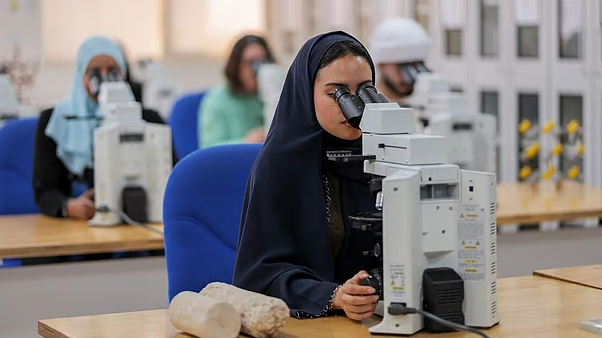
Khalifa University of Science and Technology in the UAE has launched a new initiative to help more women scientists advance their research careers, gain recognition for their work and move into leadership positions across science, health and engineering.
The initiative, KU-MIRA (Mentoring & Impact in Research & Academia), aims to build on the UAE’s investment in women’s education by strengthening opportunities for women to contribute to scientific discovery, excel in teaching and research, and take on greater leadership responsibilities.

The programme reflects the university’s broader ambition to develop scientific talent and strengthen the UAE’s knowledge-based economy.
Women already make up a significant share of Khalifa University’s academic and research community. They account for 59% of undergraduate students, 44% of PhD students, 34% of researchers and 19% of faculty members.
While these figures highlight women’s participation in higher education and research, the university sees further scope to increase their scientific influence, professional recognition and representation in leadership.
The challenge extends beyond the UAE. UNESCO reports that women account for 35% of science, technology, engineering and mathematics (STEM) graduates worldwide. Their representation in national science academies has risen from 12% in 2015 to approximately 19%, highlighting the continuing need to translate educational progress into greater influence in scientific institutions.
Professor Ebrahim Al Hajri, president of Khalifa University, said the initiative would build on the UAE’s investment in education, scientific capability and women’s advancement.
“KU-MIRA builds on this foundation by supporting women to excel in research and academia, expand their scientific influence, and assume greater leadership roles,” he said.
Al Hajri added that investing in scientific talent would help advance discovery, strengthen the university’s research ecosystem and support the UAE’s innovation ambitions.
KU-MIRA will operate through three complementary pillars designed to support women at different stages of their scientific careers.
Producing Science will focus on research productivity, academic progression and scientific excellence, while Amplifying Science will work to increase the visibility, recognition and influence of women scientists.
The third pillar, Sustaining Scientists, will emphasise mentorship, professional networks and supportive institutional environments to help women build long-term careers and progress into leadership.
As part of its visibility efforts, the university plans to establish a directory of women researchers at Khalifa University. The resource will showcase their expertise, research contributions and areas of specialisation, making their work more accessible to wider audiences.
The initiative will also introduce Women Shaping Science, a platform highlighting women scientists and academics whose research advances knowledge, addresses real-world challenges and helps prepare future generations.
By sharing their achievements and professional experiences, the platform aims to strengthen recognition of women’s contributions to science and inspire emerging researchers.
Khalifa University will implement KU-MIRA in phases and introduce measures to assess participation, research and teaching outcomes, academic progression and the initiative’s wider institutional impact. These assessments will help guide its development and track progress over time.
Dr Maryam Khaleel Alhashmi, associate professor of chemical and petroleum engineering, will serve as the initiative’s founding director. She will oversee its implementation, coordinate activities across the university and establish priorities to advance its objectives.
Through KU-MIRA, Khalifa University aims to turn women’s growing participation in education and research into greater scientific recognition, sustained career progression and stronger leadership, reinforcing the talent base needed to drive innovation and economic competitiveness in the UAE.

Abu Dhabi brings Arabic storytelling to museums and farms

UAE universities strengthen presence in QS Arab rankings 2027
UAE’s Khalifa University launches initiative to advance women scientists
Why Were the Meeting Records Made Public?
Significance of the Fifth Plenum
Abu Dhabi brings Arabic storytelling to museums and farms
UAE universities strengthen presence in QS Arab rankings 2027
UAE’s Khalifa University launches initiative to advance women scientists

Will AI Become Compulsory in Indian Schools? What NCERT’s New Curriculum Means
McMaster University researcher wins $250,000 fellowship to advance bone implant research

Abu Dhabi brings Arabic storytelling to museums and farms
UAE universities strengthen presence in QS Arab rankings 2027
UAE’s Khalifa University launches initiative to advance women scientists
Why Were the Meeting Records Made Public?
Significance of the Fifth Plenum
Abu Dhabi brings Arabic storytelling to museums and farms
UAE universities strengthen presence in QS Arab rankings 2027
UAE’s Khalifa University launches initiative to advance women scientists
Will AI Become Compulsory in Indian Schools? What NCERT’s New Curriculum Means
McMaster University researcher wins $250,000 fellowship to advance bone implant research
Copyright© educationpost.in 2026 All Rights Reserved.