


Kathryn Grandfield will use the award to develop advanced imaging techniques that could improve medical implants and reveal how bone forms at the atomic scale.
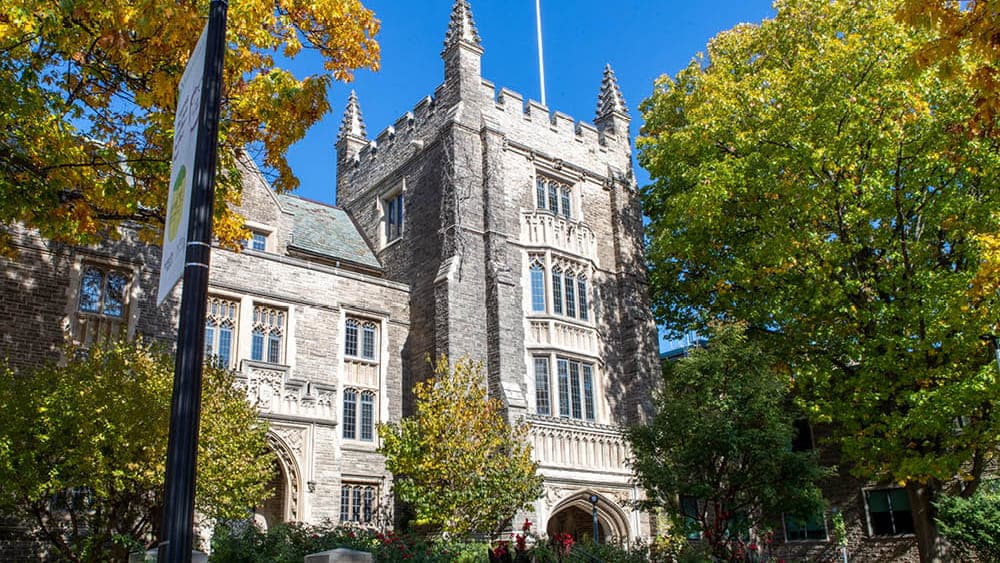
A fascination with a heart valve viewed under a microscope has grown into an award-winning research career for Kathryn Grandfield, a materials science expert at McMaster University who is now preparing to take her work to the next level.
Grandfield, an associate dean of graduate studies in McMaster’s Faculty of Engineering, has been named one of six recipients of the prestigious Arthur B McDonald Fellowship, which recognises outstanding early-career researchers in Canada’s natural sciences and engineering fields.

Announced recently, the fellowship, funded by the Natural Sciences and Engineering Research Council of Canada (NSERC), provides $250,000 in research funding to help recipients expand their laboratories and research programmes. It also frees them from teaching and administrative responsibilities so they can focus on their work.
For Grandfield, the recognition offers an opportunity to pursue ambitious research that could help scientists understand how bone interacts with medical implants and ultimately improve the design of devices such as hip replacements and dental implants.
From a school science camp to biomedical engineering
Grandfield’s interest in biomedical engineering began in high school when she attended a materials engineering camp led by Diego Mantovani, a biomaterials specialist at Université Laval in Quebec City.
During the session, Mantovani introduced students to research investigating why heart valves fail. Looking at samples through a microscope, Grandfield observed cholesterol build-up and defects in the tissue.
The experience changed her career ambitions. Although she had considered studying medicine, she realised engineering could also offer a way to improve human health by developing practical scientific solutions.
That early curiosity has since developed into a distinguished research career. Grandfield holds a Tier 2 Canada Research Chair in Microscopy of Biomaterials and Biointerfaces, and her work has featured on the covers of scientific publications such as Physics Today, Nano Letters and ACS Nano.
Despite her academic responsibilities and growing research programme, she remains closely connected to the work that first inspired her.
“I just want to go to work and look at interesting samples in my microscope,” Grandfield said.
Looking inside bone at the atomic scale
Grandfield’s research uses advanced imaging techniques to investigate the structure of biological materials and their interactions with engineered devices.
Her laboratory combines X-ray imaging with electron and ion beam microscopy, an approach known as correlative microscopy. By using multiple techniques to examine the same region, researchers can study materials at progressively smaller scales and gain a more complete understanding of their composition and behaviour.
The team examines tiny sections of bone, including areas where bone meets an implant, to understand how the two structures interact and whether the implant integrates successfully with the surrounding tissue.
Some of the samples studied are roughly 700 times smaller than a single strand of human hair.
Such detailed analysis is important because the success of a medical implant depends not only on its overall design but also on how its material interacts with the body at microscopic and atomic levels.
Grandfield’s research draws on biomimetics, an approach that takes inspiration from nature to solve engineering problems. By understanding how natural bone is structured, researchers can develop materials that better replicate its properties and potentially support stronger, more effective implants.
“If we want to develop new devices to replace bone tissue, we need to know what that tissue actually looks like first,” she said.
Fellowship to push research beyond the laboratory snapshot
The new funding will allow Grandfield and her team to pursue an ambitious goal: moving beyond static images to observe biological processes as they happen.
Her laboratory has identified previously unknown features in bone by examining structures at scales that earlier methods could not adequately reveal. The next step is to investigate how proteins interact with implant surfaces and how bone begins to form around them in real time.
The challenge is that many advanced electron microscopes operate in a vacuum, making it difficult to observe processes that normally take place in the body's fluid-rich environment.
Grandfield’s team is developing specialised holders containing tiny liquid-filled channels and collagen fibres. These systems allow researchers to investigate processes associated with bone formation under conditions designed to better mimic the biological environment.
The laboratory has also developed a method to examine fabricated biomaterials inside specialised holders, offering a way to screen materials more efficiently and assess how quickly they develop bone-like coatings.
The findings could help researchers identify promising materials earlier in the development process and improve the design of future medical devices.
For Grandfield, pursuing challenging questions and testing unconventional approaches has always been central to scientific progress.
“I want to be known for taking these big swings and these big risks, and for taking on challenging projects and delivering good science,” she said.
Recognition that opens doors for young researchers
Grandfield described the fellowship as a humbling recognition of the work carried out by her research team, whose experiments often require years of persistence and repeated attempts before producing results.
One of her most memorable moments after receiving the news came when a student called her to the laboratory to share an achievement: the team had successfully imaged a particular protein for the first time, completing work that had taken three years.
For Grandfield, the breakthrough captured the value of scientific research and collaboration more clearly than any award could.
She hopes the fellowship will help her strengthen her research programme while creating more opportunities for students and early-career scientists to develop their skills and pursue their own discoveries.
Her former students have moved into industry and academic positions around the world, contributing to a growing network of scientists and engineers.
Grandfield said she sees teaching and research as inseparable privileges, allowing her to expand scientific knowledge while preparing the next generation to take the field further.
The latest honour also continues McMaster Engineering’s recent success in the fellowship programme. Mechanical engineering associate professor Tohid Didar received the award last year, making Grandfield the second consecutive McMaster Engineering researcher to win the distinction.
In 2018, chemical engineering professor Todd Hoare received the NSERC EWR Steacie Memorial Fellowship, which was later renamed in honour of physicist Arthur B. McDonald.
For Grandfield, the new fellowship represents more than recognition of past achievements. It provides an opportunity to pursue high-risk scientific questions, deepen understanding of how bone and biomaterials interact, and help emerging researchers make discoveries of their own.

Will AI Become Compulsory in Indian Schools? What NCERT’s New Curriculum Means

American Express to Support 7,500+ Micro-Entrepreneurs and Artisans Across India
McMaster University researcher wins $250,000 fellowship to advance bone implant research
Jharkhand Schools Closed Till October 29 in Four Districts Amid Cyclone Arnab

University of New Brunswick to launch data science degree in 2027
Will AI Become Compulsory in Indian Schools? What NCERT’s New Curriculum Means
McMaster University researcher wins $250,000 fellowship to advance bone implant research

Vande Bharat Sleeper Train: Varanasi–New Delhi Route Approved, Check Route, Timings and Stops

DA Hike 2026: Centre Approves 3% Increase, Allowance Rises to 63%
Haryana Listed 500 CHEERAG Seats at School After Recognition Withdrawal, Records Show

Will AI Become Compulsory in Indian Schools? What NCERT’s New Curriculum Means
American Express to Support 7,500+ Micro-Entrepreneurs and Artisans Across India
McMaster University researcher wins $250,000 fellowship to advance bone implant research
Jharkhand Schools Closed Till October 29 in Four Districts Amid Cyclone Arnab
University of New Brunswick to launch data science degree in 2027
Will AI Become Compulsory in Indian Schools? What NCERT’s New Curriculum Means
McMaster University researcher wins $250,000 fellowship to advance bone implant research
Vande Bharat Sleeper Train: Varanasi–New Delhi Route Approved, Check Route, Timings and Stops
DA Hike 2026: Centre Approves 3% Increase, Allowance Rises to 63%
Haryana Listed 500 CHEERAG Seats at School After Recognition Withdrawal, Records Show
Copyright© educationpost.in 2026 All Rights Reserved.