


With 12.7 million university graduates entering the job market in 2026, employers’ growing demand for relevant internships and job-ready skills is making the transition from campus to employment harder.
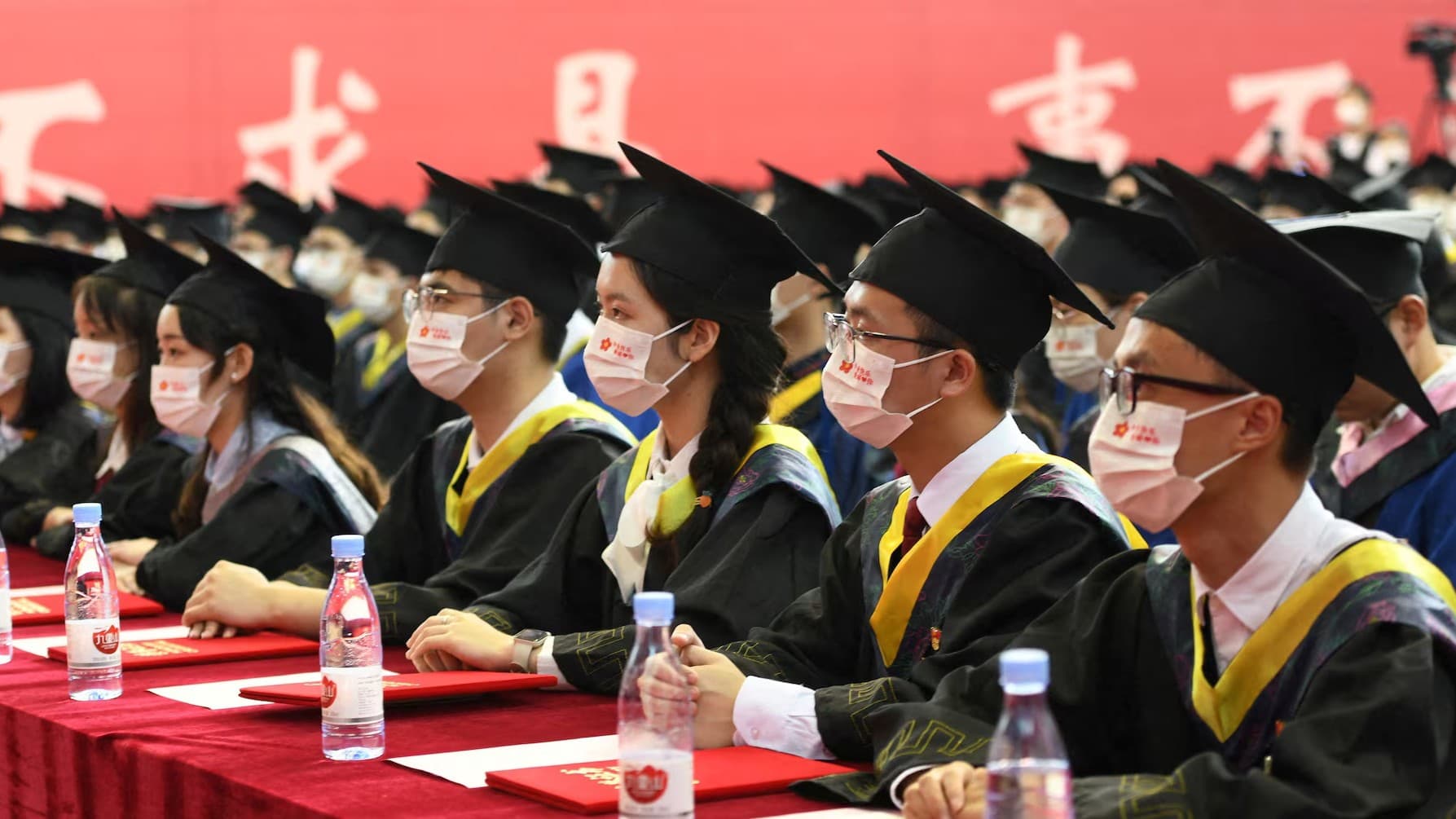
China’s youth unemployment rate declined to 18% in September from 18.9% in August, but young jobseekers continue to face a difficult employment market as companies increasingly prioritize relevant work experience over academic qualifications, according to the South China Morning Post.
Data released by the National Bureau of Statistics showed that unemployment among people aged 16 to 24, excluding students, eased during the month as some graduates found jobs.

However, the decline comes as China faces a record influx of university graduates. Around 12.7 million graduates entered the job market this year, intensifying competition for available positions.
In August, the youth unemployment rate matched its level a year earlier, reaching its highest point since Beijing changed its calculation methodology in 2023 to exclude students.
China’s job market remained sluggish in September, weighed down by weak domestic demand and intense competition among jobseekers.
Graduates struggle to meet employers’ expectations
Tang Qi, who holds a bachelor’s degree from Fudan University and a master’s degree from the University of Hong Kong, has struggled to secure interviews despite her academic qualifications and internship experience.
Before seeking an advertising job in July, the 24-year-old completed internships in accounting, advertising and human resources. However, she has received few interview callbacks.
“I thought interning in different industries would help me figure out what kind of work I wanted to do, but when it comes to job hunting, I’ve realised this is a weakness, as employers prefer candidates who have completed several internships in the same field,” she said.
Tang said companies increasingly expect new employees to contribute immediately rather than spend time acquiring skills after joining.
“Companies seem intent on getting the most out of new hires, expecting them to hit the ground running so they can avoid spending time and money training them from scratch.”
She also said employers frequently questioned her decision to take a gap year after graduating from university, raising concerns about how recruiters perceived breaks in employment.
“I was worried they would see it as a sign that I wasn’t resilient enough,” she said.
Her experience reflects the challenges facing graduates who must demonstrate practical, job-specific skills in addition to holding degrees, even when they have studied at leading universities.
China turns to AI and emerging industries to create jobs
Employment remains a key indicator of China’s economic health, with persistent labor market pressures compounded by concerns about artificial intelligence (AI) and its potential impact on jobs.
In June, Beijing unveiled an “employment-first” strategy for 2026-2030, pledging to use AI to generate employment opportunities and encourage entrepreneurship.
The strategy also identifies emerging industries, including the marine sector, as potential drivers of job creation.
Meanwhile, graduates are exploring alternative routes into employment as conventional career opportunities become harder to secure.
Some are enrolling in short-term vocational programs to acquire practical skills, including AI data labeling, while others are turning to gig work to earn an income.
Unemployment declines across other age groups
Unemployment also edged down among people aged 25 to 29, excluding students, falling to 7.4% in September from 7.5% in August, according to the National Bureau of Statistics.
China’s overall urban unemployment rate declined to 5.2% in September, compared with 5.3% in August.
Despite these improvements, the pressure on young jobseekers remains pronounced as record graduate numbers, weak domestic demand and employers’ emphasis on immediate workplace readiness continue to shape the employment market.

Tamil Nadu School Holiday Today: Schools Closed in 3 Districts; Chennai Update

Jhansi School Headmaster Arrested Over Alleged ₹2 Lakh Mid-Day Meal Fund Fraud

Lincoln Tech Expands LeadSquared Partnership to Deploy AI Agents in Student Admissions

FinX, IIBF Join Hands to Expand BFSI Job Opportunities for Banking and Finance Candidates

SSC CHSL 2026 Applications Drop 49%: 15.71 Lakh Candidates Apply for 2,536 Posts

Australian schools record thousands of student sexual misconduct reports as child safety concerns grow

Egypt insists international schools include Arabic, history in final scores

China’s Chery unveils AI companion robot designed to ease loneliness

New Zealand reforms could leave more students without school qualifications

Alfred Nobel’s will created one of the world’s most recognised prizes. Here’s how

Tamil Nadu School Holiday Today: Schools Closed in 3 Districts; Chennai Update
Jhansi School Headmaster Arrested Over Alleged ₹2 Lakh Mid-Day Meal Fund Fraud
Lincoln Tech Expands LeadSquared Partnership to Deploy AI Agents in Student Admissions
FinX, IIBF Join Hands to Expand BFSI Job Opportunities for Banking and Finance Candidates
SSC CHSL 2026 Applications Drop 49%: 15.71 Lakh Candidates Apply for 2,536 Posts
Australian schools record thousands of student sexual misconduct reports as child safety concerns grow
Egypt insists international schools include Arabic, history in final scores
China’s Chery unveils AI companion robot designed to ease loneliness
New Zealand reforms could leave more students without school qualifications
Alfred Nobel’s will created one of the world’s most recognised prizes. Here’s how
Copyright© educationpost.in 2026 All Rights Reserved.