


The US university will add survivor-support staff, work with New York State Police on independent investigations and expand campus-wide sexual violence prevention measures.
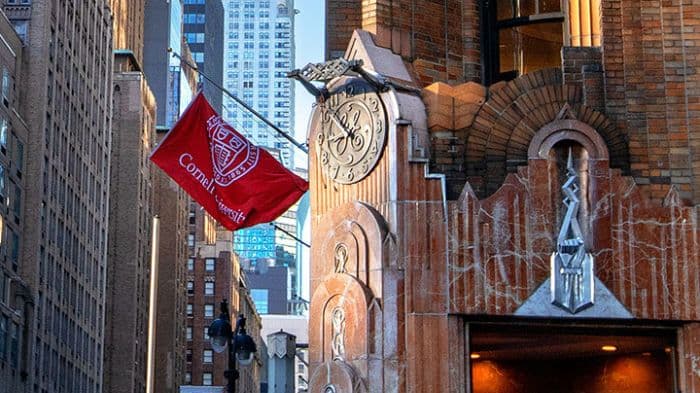
Cornell University has suspended parties and social events at Interfraternity Council (IFC) fraternity houses for the remainder of the 2026-27 academic year as part of a set of immediate measures to strengthen campus safety following a sexual assault case.
In a statement dated Oct 13, Cornell said the measures were intended to improve support for survivors, review fraternity life and address the social conditions contributing to sexual violence on campus.

The university said any fraternity that violates the suspension by holding an in-house party or social event will face an immediate emergency suspension. It will also work with students and faculty experts to develop safer alternatives for social gatherings.
The decision comes as Cornell faces protests and concerns from members of its community over campus safety and the prevalence of sexual violence against women.
Cornell to review fraternity life
The suspension will give the university time to conduct a thorough review of fraternity life and determine whether, and under what conditions, it can continue safely.
Cornell said it would invest university resources in establishing alternative social activities. The measures will be implemented while an independent review examines the university's policies and practices related to the case.
The review is being led by Sally Yates, a former US deputy attorney general, and is expected to identify practical steps for improving the university's response.
University to expand support for survivors
Cornell will add staff to its Office of Civil Rights, including a dedicated case manager to help people reporting sexual misconduct navigate university processes involving financial aid, academic accommodations, housing and billing.
The university is also working with the New York State Police to enable experienced, trauma-informed criminal investigators independent of Cornell to investigate allegations of sexual assault on campus.
Under the proposed arrangement, investigators would interview survivors who choose to pursue criminal charges and prepare investigative summaries for the appropriate law enforcement agency. Cornell said the arrangement would remain in place for the duration of the independent review.
Additional student-support staff will also be appointed to strengthen victim advocacy through the Sexual Harassment and Assault—Response and Education (SHARE) office. The university said it would expand prevention-focused programmes alongside planned investments in mental health resources.
Campus-wide prevention measures to be expanded
Cornell said sexual assault on campus cannot be addressed solely through restrictions on fraternities. It pointed to broader concerns about social behaviour and alcohol and drug abuse, while acknowledging that campus sexual violence extends beyond the fraternity system.
The university plans to accelerate recommendations made by its Presidential Task Force on Sexual Assault and broaden its work by involving students, faculty and other members of the campus community.
The task force will be reconstituted with a renewed focus on safer social engagement and ways to reduce the risk of sexual violence. Cornell also plans to expand education on bystander intervention and the responsibility community members have to protect one another.
National experts in sexual violence prevention and community safety organisations will be brought in to examine factors contributing to campus sexual violence and identify strategies to promote safer social environments.
University promises longer-term institutional changes
The university described the measures as initial steps towards systemic change, saying it would commit resources to sustain the effort beyond the immediate response.
Cornell's leadership said the independent review would examine related policies and practices, but argued that action could not wait until the review was completed.
The university said its broader objective was to create a campus where students' safety was not in doubt and where survivors could access support while allegations were addressed through appropriate processes.

Odisha Cabinet Approves Free Textbooks for 28.7 Lakh Students in Classes 9 and 10

Austria university funding cuts trigger student protests as thousands demand secure funding

French students stage fresh protests as thousands march across major cities

Cornell suspends fraternity parties for academic year after sexual assault case

University of Saarland loses students as HTW Saarland enrolment rises

‘Dear Italy, how much do you cost us?’ Students pitch tents over soaring rents

Australia passes bill to expand university access and support disadvantaged students

HBKU’s PlasmaPure advances to semifinals in global water desalination competition
Karnataka student elections return after 37 years: Why political restrictions and university polls remain contentious

Global education is shifting from simply going abroad to creating more flexible routes to opportunity

Odisha Cabinet Approves Free Textbooks for 28.7 Lakh Students in Classes 9 and 10
Austria university funding cuts trigger student protests as thousands demand secure funding
French students stage fresh protests as thousands march across major cities
Cornell suspends fraternity parties for academic year after sexual assault case
University of Saarland loses students as HTW Saarland enrolment rises
‘Dear Italy, how much do you cost us?’ Students pitch tents over soaring rents
Australia passes bill to expand university access and support disadvantaged students
HBKU’s PlasmaPure advances to semifinals in global water desalination competition
Karnataka student elections return after 37 years: Why political restrictions and university polls remain contentious
Global education is shifting from simply going abroad to creating more flexible routes to opportunity
Copyright© educationpost.in 2026 All Rights Reserved.