


The Qatar-based research team has qualified in two technical tracks of the XPRIZE Water Scarcity competition, becoming one of only three teams worldwide to reach the semifinals in both.
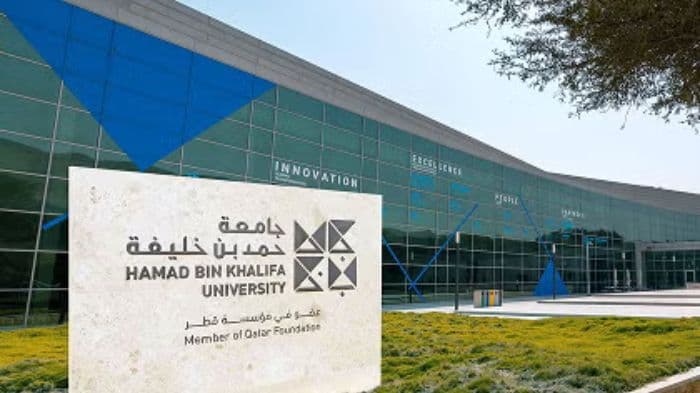
A research team from Hamad Bin Khalifa University (HBKU) in Qatar has advanced to the semifinals of the XPRIZE Water Scarcity competition in two categories focused on improving seawater desalination.
The PlasmaPure team, based at HBKU’s Qatar Environment and Energy Research Institute (QEERI), qualified in Track A, which focuses on system-level desalination innovations, and Track B, which covers new materials and methods for desalination.

According to the university, PlasmaPure is one of only three teams worldwide to reach the semifinals in both tracks and the only team from the Gulf region to achieve the distinction.
The international competition aims to develop desalination technologies that make seawater conversion more reliable, affordable and environmentally sustainable.
Two approaches to improving desalination
PlasmaPure is pursuing different technological approaches in the two competition tracks.
For Track A, the team is developing an integrated desalination platform that combines multiple technologies to increase water recovery while reducing energy use and environmental impacts. The system is also designed to support the management and recovery of valuable resources from concentrated brine, the salty residue left after desalination.
For Track B, the researchers are developing bio-inspired reverse osmosis membranes for demanding desalination conditions. Inspired by sharkskin, the membranes have engineered surfaces intended to reduce fouling and scaling while improving water transport.
The research particularly targets the high salinity and elevated temperatures encountered in the Gulf region, where desalination is important for water supply.
International research collaboration
Led by Dr Khaled Mahmoud, research director of QEERI’s Water Center, PlasmaPure brings together scientists and engineers from multiple disciplines.
The team builds on collaborations with HBKU’s College of Science and Engineering, the University of Montreal and Canada’s Institut national de la recherche scientifique.
The project reflects the role of research partnerships in combining expertise in materials science, engineering and water treatment to address challenges that affect arid regions.
QEERI executive director Dr Tareq Al Ansari said the next priority was to advance the technologies beyond laboratory development, scale them up and assess their potential for practical deployment.
Competition draws teams from 86 countries
XPRIZE Water Scarcity is a multi-year international competition designed to accelerate the development of desalination technologies.
The competition received 674 pre-registrations from 86 countries, with 143 teams progressing to the qualified-team stage for technical evaluation and physical testing.
The semifinal stage will involve further testing, technology scale-up and evaluation. Teams will need to demonstrate reliability, scalability and potential for real-world use as they progress through the competition.
For PlasmaPure, qualifying in both tracks provides an opportunity to test its integrated desalination system and bio-inspired membrane technology against the competition’s technical requirements.
The university has said its longer-term objective is to develop solutions that support more sustainable water production, resource recovery and water security in Qatar and other water-stressed regions.
University of Saarland loses students as HTW Saarland enrolment rises

‘Dear Italy, how much do you cost us?’ Students pitch tents over soaring rents
Kuwait University showcases academic programmes at international education exhibition
Pakistan HEC makes prior approval mandatory for sharing biological samples and health data abroad

Australia passes bill to expand university access and support disadvantaged students
‘Dear Italy, how much do you cost us?’ Students pitch tents over soaring rents
Australia passes bill to expand university access and support disadvantaged students
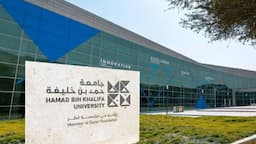
HBKU’s PlasmaPure advances to semifinals in global water desalination competition
Karnataka student elections return after 37 years: Why political restrictions and university polls remain contentious
Global education is shifting from simply going abroad to creating more flexible routes to opportunity

University of Saarland loses students as HTW Saarland enrolment rises
‘Dear Italy, how much do you cost us?’ Students pitch tents over soaring rents
Kuwait University showcases academic programmes at international education exhibition
Pakistan HEC makes prior approval mandatory for sharing biological samples and health data abroad
Australia passes bill to expand university access and support disadvantaged students
‘Dear Italy, how much do you cost us?’ Students pitch tents over soaring rents
Australia passes bill to expand university access and support disadvantaged students
HBKU’s PlasmaPure advances to semifinals in global water desalination competition
Karnataka student elections return after 37 years: Why political restrictions and university polls remain contentious
Global education is shifting from simply going abroad to creating more flexible routes to opportunity
Copyright© educationpost.in 2026 All Rights Reserved.