


UNESCO-led workshop brings together 23 institutions and regulatory bodies to develop flexible quality frameworks, strengthen regional cooperation and address the challenges of digital transformation and AI.
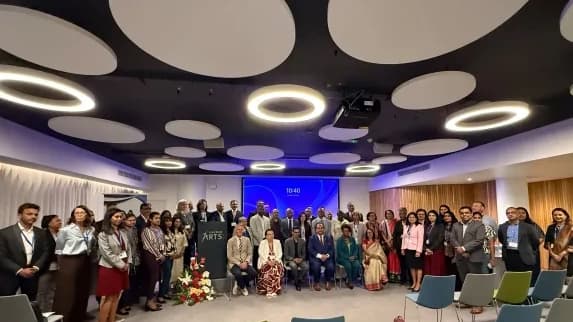
Mauritius and Seychelles are exploring more flexible and locally relevant approaches to higher education quality assurance, with a focus on strengthening institutional standards, embracing digital innovation and building closer regional cooperation.
The two island nations brought together higher education regulators, quality assurance professionals and academic representatives for a two-day UNESCO workshop in Port Louis on October 27-28, 2026. The discussions centred on developing quality assurance systems that reflect the distinctive needs, resources and priorities of smaller island states.

Organised jointly by the UNESCO Regional Office for Southern Africa and the Quality Assurance Authority of Mauritius, with support from the UNESCO Regional Office for Eastern Africa, the workshop brought together representatives from 23 higher education institutions and regulatory bodies across the two countries.
The initiative is part of a wider UNESCO effort to strengthen quality assurance across the Southern African Development Community (SADC) region. Previous workshops were held in Zimbabwe, Zambia, Eswatini, Lesotho, Botswana and Namibia, with representatives from more than 100 higher education institutions contributing to recommendations tailored to their national education systems.
A key message emerging from the Mauritius-Seychelles meeting was that quality assurance cannot rely on uniform frameworks. Instead, systems must be adapted to national circumstances, institutional capacities and the realities of delivering higher education in island environments.
Opening the workshop, Mauritius Minister of Tertiary Education, Science and Research Dr Kaviraj Sharma Sukon called for quality assurance mechanisms to move beyond paperwork and translate into meaningful improvements in classrooms and lecture theatres.
"We need to connect all our frameworks and our system to what is happening in the classroom. Very often, we might have a well-documented system, but the changes are not reflected in the classroom. The classroom practices remain the same," he said.
The minister urged participants to focus on what happens inside educational institutions, stressing that well-designed policies and documented procedures must lead to visible improvements in teaching and learning.
Building on findings from a pre-workshop survey, participants examined how Mauritius and Seychelles could draw on their respective expertise, institutional strengths and interconnected higher education systems to address common challenges.
Rather than adopting standardised quality assurance models, the discussions favoured adapting existing frameworks to the specific needs of island nations while preserving academic standards and accountability.
Regional cooperation and institutional readiness
Participants stressed that effective regional cooperation must be built on strong national foundations, including sound governance, institutional preparedness and active involvement of stakeholders.
They explored opportunities to connect regional expertise, exchange good practices and protocols, and introduce cross-country peer evaluations to strengthen transparency and objectivity in quality assessments.
The discussions also highlighted the potential for sharing quality assurance tools, making better use of limited resources and strengthening engagement between higher education institutions, employers and learners.
Joan Amade, Principal Quality Assurance Officer for Recognition and Evaluation of Qualifications at the Seychelles Qualifications Authority, underlined the importance of building professional relationships through such exchanges.
"Equally important is the spirit of partnership that brings us here. This workshop offers more than a programme of presentations and discussions; it provides a valuable space for dialogue, reflection, learning and collaboration," she said.
She added that learning from one another's experiences could help strengthen institutions and establish lasting professional relationships beyond the workshop.
Digital transformation and responsible AI use
Digital transformation emerged as another major priority, with 91% of respondents to the pre-workshop survey identifying it, including quality assurance in digital transformation, online learning and digital assessments, as an area requiring attention.
Participants discussed the need to strengthen institutional capacity to integrate digital technologies into curriculum development and academic delivery without compromising educational standards or equal access.
The discussions also highlighted the importance of developing institutional policies for the ethical use of artificial intelligence (AI), equipping faculty members with the skills to use AI responsibly and preserving human-centred teaching practices.
Participants further stressed the need to adopt technologies suited to available infrastructure, particularly in island settings where institutional resources and connectivity may vary.
Technology was viewed not merely as a means of improving administrative efficiency but also as an opportunity to strengthen quality assurance processes and improve the learning experience.
Dr Peter Wells, Head of Education at the UNESCO Regional Office for Southern Africa, said Mauritius and Seychelles could turn their distinctive characteristics into strengths as artificial intelligence, digital transformation and globalisation reshape higher education.
Their agility, capacity for innovation and opportunities for closer cooperation could help them build trust, improve learner outcomes and strengthen institutional performance, he indicated.
The workshop concluded with a shared understanding that effective quality assurance in Mauritius and Seychelles must be rooted in national realities while benefiting from regional cooperation and shared expertise.
By combining locally responsive frameworks with collective learning, both countries aim to build more adaptable and sustainable higher education systems, demonstrating that academic excellence depends not on the size of a country but on its commitment to quality and its ability to respond to changing educational needs.
Schools urged to make relationship education central to fight domestic violence in Australia
The Future Belongs to Those Who Can Collaborate Intelligently with AI

Diljit Dosanjh Delhi Concert Today: Traffic Restrictions from 1 PM, Check Roads to Avoid, Metro Timings and Parking Details
Why Are Women Still Only 20% of IIT Admissions? JEE Advanced 2026 Data Explained

Australia weighs screen time curbs and AI restrictions in schools
The Future Belongs to Those Who Can Collaborate Intelligently with AI
Diljit Dosanjh Delhi Concert Today: Traffic Restrictions from 1 PM, Check Roads to Avoid, Metro Timings and Parking Details
Why Are Women Still Only 20% of IIT Admissions? JEE Advanced 2026 Data Explained

Google adds hundreds of free textbooks to Gemini Notebook for students in India and US

NBEMS opens NEET Super Specialty 2026 applications: Check eligibility, dates and registration steps

Schools urged to make relationship education central to fight domestic violence in Australia
The Future Belongs to Those Who Can Collaborate Intelligently with AI
Diljit Dosanjh Delhi Concert Today: Traffic Restrictions from 1 PM, Check Roads to Avoid, Metro Timings and Parking Details
Why Are Women Still Only 20% of IIT Admissions? JEE Advanced 2026 Data Explained
Australia weighs screen time curbs and AI restrictions in schools
The Future Belongs to Those Who Can Collaborate Intelligently with AI
Diljit Dosanjh Delhi Concert Today: Traffic Restrictions from 1 PM, Check Roads to Avoid, Metro Timings and Parking Details
Why Are Women Still Only 20% of IIT Admissions? JEE Advanced 2026 Data Explained
Google adds hundreds of free textbooks to Gemini Notebook for students in India and US
NBEMS opens NEET Super Specialty 2026 applications: Check eligibility, dates and registration steps
Copyright© educationpost.in 2026 All Rights Reserved.